Church at Home Worship this Weekend March 6th-7th, 3rd lent

Please join us for worship this weekend, by clicking the video link below. We will enter into the grace of God through music, scripture, imagery, reflection, and prayer. This prayerful service is dedicated to those who are affected by COVID, asking for God’s grace to heal our hearts, minds, bodies, and souls.

To download the bulletin for this service. please click below.

Church at Home Worship 4th Sunday after Epiphany 1/31/2021

This Sunday, we offer you a special time of worship which will heal the wounds of your soul, inspire your heart, open your being to the truth revealed in scripture, and invite you to enter into Spiritual Communion with Christ and one another. This is our Virtual Worship where through imagery, music, and prayer, we settle into the glory of God.

To download a bulletin so you can participate in singing along, join in the prayers, and read the weekly announcements, check back this weekend.

To engage with Mother Barbara’s homily for this service, please check back this weekend.

Church at Home for This Christmas Day 12/25/2020

To access a virtual worship video which is a time of worship through prayers, sacred scripture, reflection and amazing music, please click below.

To download the bulletin for this service, so you can follow along with the service and sing the music, please click below .

To access Mother Barbara’s homily only, please click below

Church at Home for this Christmas Eve 12/24/2020

To access a virtual worship video which is a special time of worship through prayers, sacred scripture, reflection and amazing music, please click below.

To download the bulletin for this service, so you can follow along with the service and sing the music, please click below .

To access Mother Barbara’s homily only, please click below

Church at home Worship for 12/20/2020 4th Sunday of Advent

We want you to be able to be a part of our worshiping community in the safety of your own home. We are a gathered community in heart and spirit and we are grateful you are here with us. Click below for the Virtual Worship Service.

We invite you to download a bulletin so you can sing along with the hymns and share in the prayers. Click below for the bulletin for this service.

Click below for Mother Barbara’s Homily for this Service.

Click below for Mother Barbara’s Message to our Younger Ones

Take, eat, this is my body, given for you. Christ the King sermon

St. Andrew’s Episcopal Church

The Rev. Barbara Hutchinson

Christ the King Sunday

November 26, 2017

Take, eat, this is my body, given for you. In these simple yet remarkable words, Jesus gives us everything. In our outstretched hands, we receive whatever it is we are lacking in our heart, mind, body, or soul, be it hope, healing, joy, comfort, inspiration, challenge, insight, creativity, strength, or a taste of what is yet to come in our lives. It is a moment which we would talk about as sacramental, meaning that it is an outward expression of inward grace or, in simpler language, it means Jesus is there, in that bread, in that grace of acceptance we feel in our hearts, and in that pull toward our own wholeness, in God’s righting what has gone wrong in our lives, Jesus is there.

In our gospel lesson today, Jesus asks us to make every moment sacramental, and tells us how to do this. First is to see Jesus in every moment by looking at the need that is before us. Who is hungry, either for food or for respect and dignity? Who is feeling exposed or naked? Who is being imprisoned by jail cell doors or by poverty or addiction or race?  Who is heart-sick and needs the touch of a human hand upon theirs? Take, eat, this is my body which is given for you. See my body around you. See me in the need of others.

Jesus then asks us to be Jesus in each of those moments, by having the heart of Jesus. That’s the point behind receiving communion – that our hearts might be shaped and formed, so only love, whose origin is divine, will flow from us, so we will see the need in others and we will care. As hard as it is to be present to someone in need, whether it be grief or hardship or shame or rejection, we will stand with them as their companion and champion. Take eat, this is my body, which is given for you. Be my body, my heart for others.

Finally, Jesus asks us to do for or do to Jesus in each of those moments, by moving from caring to action, by imaging Jesus is each of those people before you, and asking you for help. These instructions aren’t merely metaphors, just as Jesus is not a metaphor. Jesus intends for us to actually put the plate of homemade food before the hungry person. Jesus intends for us to make that phone call to the person we know is lonely, or bring that casserole to the family in need, or talk to the person with kindness, even if we can’t understand them well due to their foreign accent. Jesus calls us into “Kingdom living,” which means seeing and responding to each moment sacramentally, as though Jesus were in the conversation, the interaction, the need. Take, eat, this is my body given for you. Do this for me, for my face is in each of the faces you see.

In Matthew’s gospel, today’s story is Jesus’ last teaching opportunity before he is crucified, so we have to imagine Jesus has saved the most important for last. Jesus is saying to us that our actions matter. We are to be accountable to what Jesus has asked us to do. This really is non-negotiable. You may notice that Jesus’ last teaching has nothing to do with orthodoxy, right belief, or how the church is to be structured, but rather, it’s all about orthopraxy – walking the walk, being authentic, making a difference in the world, being accountable for our choices or the choices others make on our behalf. We are living an authentic Christian life when we receive the bread on Sunday and on Sunday afternoon, as we plan our week ahead, we orient our lives to feeding the hungry, clothing the naked, visiting the sick and imprisoned, and welcoming the stranger. Jesus did all of these things, which is why, when we do them, these moments are sacramental. Take, eat, this is my body, which is given for you. In receiving the broken bread, we become Christ’s body, so that we can see, be, and do for Jesus, so we can be sent out into the world to move it toward justice, where wrongs will be set right, and only God’s love will pour from all hearts.

When I was working with the results from the Friday evening exercise at our Diocesan Convention, one person responded to the question, “What is your burning desire?” by saying he wanted to stop doing all the church activities and get out there and feed the hungry, clothe the naked, etc. I was relieved to see this person wasn’t a member here at St. Andrew’s, because it said to me that that parish had lost its sense of Jesus’ imperative to make a difference in the world by looking around us and meeting the needs of others. Many times, churches can get self-absorbed or focused on activities of the people who come to church all the time, but forget those who are still outside the walls of the church. Jesus’ message today is a good reminder that we as individuals and as a parish should always use this as our criterion for making decisions about what to do or how to be or how to spend our money –  do our actions meet a physical or spiritual hunger? Do they provide protection for those who feel naked, exposed, or vulnerable? Do they open our hearts so we love as Jesus did, unconditionally and with the desire to heal in every moment? Do they welcome those who may not have felt at home in church before? This is gospel work. Jesus makes that very clear today. This is why two of the promises we make in our baptismal vows are centered on how we make the love of God real to others in concrete ways. We promise to seek and serve Christ in all persons, loving our neighbors as ourselves, and to strive for justice and peace among all people, respecting the dignity of every human being. These promises cover it all. If we live into these two vows, through our choices and actions, we will indeed make each moment sacramental. We will indeed feed the hungry, clothe the naked, welcome the stranger, and visit the sick and those in prison.  Take, eat, this is my body, given for you.

Our actions matter, for through them, we enter into a knowledge and experience of Jesus, and that is our salvation. You may notice that when you hand someone a plate of food that you have lovingly prepared at the community meal, or listen to their story, or offer to help them get to their doctor’s appointment the next day, or when you make someone feel really welcome when they sit next to you in the pew, or when, as our young people did, you meet people of different backgrounds, like we did at the ESL class, or when we created a garden for people imprisoned by domestic violence, that you feel a particular closeness to God. That’s Jesus being there. That’s what sacramental living, or Kingdom living is all about.

Today is Christ the King Sunday. It is a day when we celebrate a number of attributes of Jesus, but in particular these two: first, Jesus is the Lord of lords, the King of kings, which means Jesus’ power is over all of the world. This means that if all is not well, it is not the end. This is particularly comforting in our world today, when each week it seems there’s some new thing to be alarmed by, either here in our country or elsewhere around the world – some natural or human evil released into the world. It’s good to know that this is not the end. Jesus will have the last word. Our story from Ezekiel reminds us that, when the Israelites strayed from YH, YH allowed them to stray, permitted them to be oppressed, so they could choose to return. They were never separated from the love of God, who is presented as the metaphor of the Good Shepherd in that story, but they were allowed to wander, living in the wilderness for some time before ultimately being brought back into the fold. This story gives us hope that this will happen to our world also. That, as Desmond Tutu predicted, if we each drop our kindness into a bucket, eventually that bucket will overflow, and goodness will reign. That’s God’s dream and intention for us. Each time we feed the hungry, clothe the naked, welcome the stranger, visit the sick and imprisoned, we are adding to the kindness in the bucket and helping God’s reign come near. Each time we make these choices, we are acknowledging that Christ is Lord of lords, King of kings, and God’s goodness will prevail. Take, eat, this is my body, which is given for you – so you can become Jesus in the world.

The second attribute of Jesus we raise up today is that there is judgment involved. That’s what kings do, they judge their subjects. If we had believed the stories from our last two Sundays were of the real Kingdom of God, not the fake Kingdom of God others presented, this statement might cause us some consternation. That “king” would have slammed the door on all those unprepared, all those without the appropriate resources, all those who lived in a place of fear or punishment. And if we were honest, we’d acknowledge that we’ve been in those places ourselves, and we’d be looking at the outside of a closed door. But here’s something interesting: those described, those unprepared, those without resources, those who live in fear, sound a lot like the people Jesus is instructing us to care for – those who are hungry, vulnerable, imprisoned by fear or paralyzed by oppression. This is when we realize Jesus is a really different kind of king.  Jesus, as the King of kings, cares about justice, cares about everyone, cares about righting the wrong ways of the world. Here’s a way this could play out. Jesus as the King of kings, the one who cares about justice, can be good news for the bullies and those bullied. Jesus as the King of kings says that the power of Jesus will work with those who feel the need to prove themselves to be better or stronger than others, by giving voice to his or her victims, which of course has been the whole “#me too” movement, raising voices together to say this isn’t the way of the Kingdom, or by being the force behind laws or school rules that make this behavior unacceptable, and by drawing the bullies into a place of healing the deep hurts or rejection that is at the root of this behavior. This is also good news for those bullied, for God will be their companion and champion. Jesus will be with them. And if Jesus is there, then we will be also. Jesus knows what it is like to be bullied and was able to create new life from this violence and aggression. Jesus, through our actions, will do that for those who find themselves in this situation. Take, eat, this is my body, given for you, so you can do this for and to Jesus himself.

We will break bread together shortly and in receiving it, we will be given everything, all that we need to be whole, all that we need to make the world a better place, all that we need to see Jesus in every moment, to be Jesus in every moment, and to do for or to Jesus in every moment. Our life experiences are our daily bread, as are our times of joy and sorrow, courage and fear, strength and weakness, abundance and scarcity. As we allow Jesus’ body to be broken so we may become it, may we also allow Jesus to break open our daily bread, our lives, so that Jesus may come within. Let us allow Jesus to be our Lord of lords, King of kings, acknowledging that his way is our way and the way toward justice in our world. Amen.

Taking a risk for love – Proper 28 Year A

St. Andrew’s Episcopal Church

The Rev. Barbara Hutchinson

Proper 28 Year A

November 19, 2017


Last week we called her Mary, the one who was scorned, the one who was shut out from the lavish wedding feast, the one punished because she didn’t have her life all put together, or the one who didn’t have the resources to purchase extra oil for her lamp (maybe because she had shared with others because they had none and she had extra), or maybe because life was particularly hard in that moment and she didn’t really feel like celebrating and chose not to have all that she needed to walk through those heavy doors, because she didn’t want to pretend to be happy or she didn’t want to be judged by others. We know she didn’t really miss out. As it turned out, there wasn’t a celebration at the wedding feast anyway, because there was no bride, there was no union to rejoice in. But rather Mary showed up at another party in town that evening, where they anointed each other with tears of joy, for the bride and bridegroom were there together: Jesus and the followers who became the church, and there was a lavish meal which fed their souls, as well as their bodies.

This week, let’s call the person who is scorned for his inability to “be it all” and “do it all” Mark, and let’s put him into modern context.

Mark is the youngest of three sons, and considerably so. Sometimes when his parents talk with other adults about him, he listens to their snickers and hears the word “accident” mentioned. He doesn’t know quite what that means, but he gets it that it’s not so good. He loves his older brothers and has always looked up to them, but recently, now that he’s in middle school, he feels some rather odd feelings emerging, some rather dark emotions, such as resentment or jealousy, and he spends his life confused, withdrawn, and most days finds himself wanting to crawl into a hole and disappear. Oh, his oldest brother, Jack, is amazing. He’s gotten straight “A’s” from the first grade through high school. He is in all the gifted classes and the Ivy League colleges are searching him out, and to top it off, the universities are offering him full academic scholarships, which really delights their parents, for money is tight. It sometimes feels to Mark that Jack is the favored son, but then there’s the middle son, James, or Jimmy as his friends call him. He is so fun-loving, everyone seems attracted to him like a magnet and he has trouble deciding what to do on weekends, for the many choices offered him. Jimmy isn’t gifted academically but he makes good grades and stays out of trouble – oh, and he’s fantastic at sports. He’s on the travel team for soccer, then basketball, then softball. His room is so full of trophies, Mark nearly trips on them any time he ventures into James’ room. Half the trophies at the middle school have his name of them.

Mark sees the teachers’ delight when he comes into their classroom on the first day of school, referring to him as Jack and Jimmy’s brother, but the teacher’s eyes lose their sparkle, once he starts handing in his homework or see him sit sullenly by himself during recess. He knows he’s not good at anything and so do his teachers. He’s tried for a while and made mostly B’s and C’s, but that hardly seemed worth the effort. Then finally, he just quit trying. He could never live up to his “gifted” oldest brother, so why even try? Now he makes C’s and D’s, with a few F’s mixed in. He’s not very good at sports either. He’s tried just about everything: soccer, basketball, track, but he is just a klutz at everything. Compared to his brother out there, he looks like an old lady trying to play sports, so he just quit. Interestingly though he was pretty good at the clarinet, which is something neither of his brothers could play. But he found he didn’t really like to practice. Sometimes he even wondered if he really hated to practice, or if he was just scared that he will never be really good, even if he did practice.  Or afraid that if he was really good at playing the clarinet, his parents wouldn’t notice, and that would be worse than anything. It was easier to not even try. It was safer to not even try. The mantra his parents say to him each day is, “You’re not living up to your potential.” Mark responds, in his head, “Well, how would you know? You’re too busy taking Jack off to colleges or sitting for hours on the bleachers in the steamy high school gym watching James. What do you even know about your stupid klutzy son?”

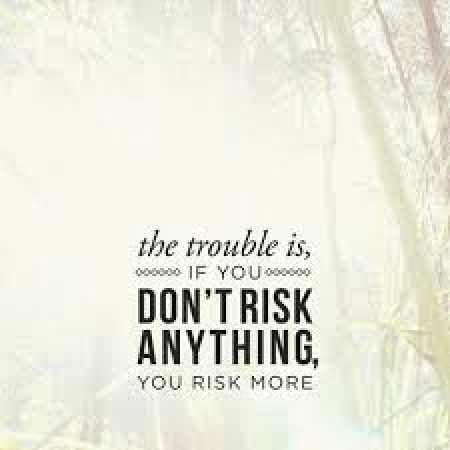
Mark found it safer not to try. Mark found it easier to put up with his parent’s chastisement than to risk failing at something, or to risk being good at something, afraid his parents wouldn’t even notice.

The familiar story we heard today in our gospel reading, the parable of the talents, can easily and not incorrectly be interpreted as admonition to lavishly use the gifts God has given us to multiply them so the Kingdom of God can come near to all people. But we’ve all heard that sermon before and although important, it can be fairly easy to dismiss or to be heard in a way that reinforces what we’re already doing, without providing any challenge or place to stretch.

So, I’m going to offer you an alternative, because like last week, it’s really important to remember the context of the parable we heard last week and this one – this is Holy Week. Jesus is preparing to die and has a few last moments to distinguish for the disciples what the Kingdom of Heaven looks like (the one fashioned after Jesus’ teaching, healing, and gathering the discarded into community through his love) and the one which will be presented by false prophets, a fake Kingdom of Heaven. This is like parents dropping their children off at college and not being able to refrain from saying, “And you’ll meet new friends, and they may think some things are right to do that you think are wrong, so don’t follow them there. Trust what you know about how we’ve raised you. Stay steady in that truth of who you are and who we have been to you.”

The challenging perspective in our parable today is when we see within it the fear of taking risk, for what does that say about what we believe about God? The third servant, like the third son, was afraid of the master (like the son of his parents), and chose not to risk either failing at something (investing the money and losing it, or in Mark’s case showing his parents yet again he isn’t good at anything) or risk being good at something (making a profit or being chosen for the middle school band) and not getting the recognition desired, that they both seemed to crave, so they could believe for a moment that they had value. For the servant, we may ask, “How would he know how much interest is enough? What would be enough? Could there be too much? Would his master think he was being greedy?” His fear of getting it wrong paralyzed him from doing anything at all, other than hiding the money in the ground. I imagine we can all remember times when fear paralyzed us as well.

Now you may have noticed that our parable presents two different images of the master, and if we imagine the master to be an allegory for God, we can connect one image of the master to the real God and the other image of the master to the fake or false prophecy of God. The first master, or God, we are introduced to is generous and trusting in his servants’ ability to handle his entire treasure as he heads out on a trip. There is no need for specific instructions, for whatever they do, will be fine, for he trusts them to do their best.

The second image of the master is one who is harsh, arbitrary in expectations and demands and is to be feared, for he punishes unpleasing results, even though he hadn’t told the slaves what he expected to happen with the talents given to them. This sounds a bit like a capricious God, one who changes his mind and expects you to keep up.  My sense is this portrayal is the prophecy of the false God.

Since we potentially have two images of God to connect with, let’s see what difference it makes to be in relationship with each one.

If we are in a relationship with a God who is generous and trusting, we most likely feel loved. And feeling loved, we can return that love and our deepest desire is to do what is best with what has been entrusted to us. It’s a way of honoring the generosity bestowed upon us.   Although we may feel a bit of fear at the magnitude of the responsibility to do what is pleasing in the eyes of this God, like we may feel the weightiness of the responsibility of caring for the earth that God has entrusted into our care, we often find this awe gives way to the trust we also feel from this God, which translates into an encouragement to dare to risk to do our best for the God who we know will take whatever we may offer, however scant or limited or broken, and will make good out of it. This generous and trusting God knows our hearts and sees the goodness and truth in us, even if we don’t, and just as when a parent, or a spouse, or a friend loves us unconditionally, we are willing to risk a bit, to take a step forward in faith, to live into the mystery a bit, knowing that person or God will delight in our efforts and not condemn us with less than stellar results. We often call this grace, this state of being, which we can enter into because of the goodness and loving character of the God we believe in.

The other God in our parable, the one that shows what the Kingdom of Heaven is not like, is the angry and vengeful God who casts this servant off into isolation and horror. A natural response to this kind of person or God is one of paralyzing fear, walking on eggshells, working hard not to be noticed, for if I am not seen, then I cannot be punished or banished or abused. Being in relationship with this type of God or person would most likely cause us to shut down insight, creativity, and engagement with a Spirit that may take us in unchartered and risky waters.

Richard Rohr, in his book, The Divine Dance, says that we become like the God we believe in. I would turn that statement a bit to add, we become like the God we believe in or the one we need to believe in to justify our behavior. This means, if we believe in an angry and judgmental God, one who casts people out into darkness and gnashing of teeth, then we can justify our being that way too. If we believe God slams shut the door of the Kingdom of Heaven on people who are unprepared or don’t try hard enough, then we too can slam that door on a good part of the people of the world and feel justified by it. But then we have to ask the question, “Is that what we really believe about God?” and if so, “Why?” “Why don’t we believe in the reshaping, the reformation, the transformation that Jesus offered us on the cross, that spoke only of God’s love for all humankind?” In this act of love, God didn’t punish the ones who got it wrong or weren’t prepared, but rather died so that they could live, and have life abundantly. And living abundantly means being willing to risk because God has given us all that we need, and more.

The other God presented in the parable, the generous, loving God, the one who gives his whole treasure away, the one which shows the character of the Kingdom of Heaven, follows along with Desmond Tutu’s statement, “If it’s about love, then it’s about God. If it’s not about love, then it’s not about God.” This is a God who gathers the scattered, draws near the injured, attracts the rejected, and draws them to the table. If we believe in this God, then we too will be one to gather the scattered, we too will sit with those at our community meals, because Jesus is already there with them and we want to be where Jesus is, w too will visit in the prison, feed the hungry, and clothe the naked.

As we say in our collect on Friday mornings during Morning Prayer, “Jesus stretched out his arms on the hard wood of the cross so that everyone may come within his saving embrace.” Believing in a God who would do that for us, and thus calls us to do that for everyone else, can feel risky. And if it is risky, then perhaps it is of God, for it does seem to me that God is the greatest risk-taker of all. God trusts us, we fallible humans, with each other and with God’s creation, and built into that trust in always intention and invitation to redemption and transformed living. When we believe in a loving God who takes risks for us, who loves us into being, then I believe we too can become risk-takers for love. This is what this parable can teach us. Be risk-takers for love.

We often say fear is the opposite of faith, largely because each time the angels show up in scripture, they begin their conversation with “Do not be afraid” for fear can prevent us from seeing, hearing, and loving God. Do not be afraid, my friends. Above all else, God has entrusted you with your love of God and it is right and good to share that love boldly with others. We can’t get that wrong, for that always will be pleasing in God’s sight.

Amen.


Shall we call her Mary?

St. Andrew’s Episcopal Church

The Rev. Barbara Hutchinson

Proper 27 Year A

November 12, 2017

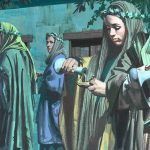
Shall we call her Mary? That woman in the photograph I used in my weekly e-newsletter, that I said I wanted to preach on today – did you notice her? How did you read her facial expression as she was watching the other bridesmaids fill their lamps with oil, while turning their backs toward her? Sometimes when I settled my eyes on her, I saw shame or regret in her furtive looks toward the others. Sometimes, I noticed envy. Other times I saw a hint of disgust. For she will be left behind. She will not have enough oil in her lamp to join in the procession to the wedding feast. And no one will share with her.

I think we should call her Mary, maybe because she has the same blue-colored robe that Mary, the mother of Jesus is often depicted in. But I like to call her Mary because there are so many Marys in our gospel stories and a Mary always seem to be present at the most important moments of Jesus’ life, and this story seems to have that same level of importance. If a Mary is always around at these important or liminal times, maybe that means we too can be around at Jesus’ important or liminal moments too, not being transported back in time, but being present to the moments Jesus shows up in our lives, here and now. Oh, the many Marys — Mother Mary, who birthed God into this world, Mary, Martha’s sister, who sat at Jesus’ feet, soaking up his teachings, Mary who lavishly poured the contents of her alabaster jar upon the feet of Jesus, offering him comfort and adoration, while foreshadowing the anointing of his body soon to be crucified, and Mary, the Magdalene, who was the first one to see the resurrected Jesus, the first apostle, who ran to tell others the good news of the risen Christ. The name Mary may have been used so frequently in the gospels because it was a common name of the time, or maybe because its frequent use allows us to see it as a generic name, and therefore one we can take upon ourselves, allowing us to see ourselves in each of those situations. Our story today seems to be one of those important moments in Jesus’ life, when he’s working hard to reveal a truth to his disciples that he really wants to leave with them.

The setting of this parable is incredibly important to understanding the message. For if we don’t know that this story is told to Jesus’ disciples alone, on the Mount of Olives, in the tension of Holy Week, when Jesus traces his steps back and forth across the Kedron Valley, setting the rhythm of threatening the status quo in Jerusalem and retreating at night into the safety and warmth of his friends’ home, and if we don’t understand that Jesus knows he will die soon, that in fact he’s orchestrating his death, we won’t comprehend the urgency of the situation, of Jesus’ giving an answer to his disciples who are struggling with the idea of his death, let alone not grasping in any shape or form what this second coming is all about, when it will be here, and what the signs will be when it comes, we can easily think this parable is about rewarding the smug, the self-focused, the selfish, the uncaring, the ones who intentionally divide communities between those who have and those who have not, for these bridesmaids who brought extra oil, but looked out for only themselves, seem to be the ones rewarded. They’re the ones who go to the wedding feast. They’re the ones on the inside of the closed door.

If we take this parable out of context, it would appear that Jesus is rewriting the beatitudes, the imperatives for faithful living which he started his ministry with, on that hill, overlooking the Sea of Galilee. The rewrite may look something like this:

Instead of blessed are those who are poor in spirit, Jesus would say, “blessed are the overly confident”, instead of blessed are those who mourn, Jesus appears to be saying, “blessed are those who cause the tears to run down the cheeks of those scorned by others”, instead of blessed are those who are meek, Jesus would be saying, “blessed are those who are haughty”, instead of blessed are those who hunger for righteousness, “blessed are those who are comfortable with their privilege”, instead of blessed are the peacemakers, Jesus would be saying, “blessed are those who rip families apart”. Nothing about this parable seems right – and it isn’t.

Matthew, who uniquely tells this particular parable, is addressing the issue of what a false reality of the Kingdom of Heaven looks like. The gospel writer knows the people in the community, several generations after the death of Jesus, are wondering when this is all going to happen, and they’re hungry to latch onto any reality of the Kingdom, even if it is false. They’re tired of hoping without seeing any sustained movement toward the Kingdom proclaimed by Jesus, because they’re exhausted from combating the forces that tell them power and might rule, and they’re afraid none of the story of Jesus is true. The stories told to them of the miracles of Jesus or the love that seemed to pour from him all the time, gathering people from the fringe and drawing them near seem distant and merely a faded memory. They are weary. They are afraid. They are losing hope, and Matthew’s Jesus needs to make it clear to his disciples what the false prophets would raise up as the Kingdom of Heaven, and he wants to make the example so distinct from what he had been talking about that the disciples would readily know it wasn’t this. It was not, nor never would be, a closed door for those who didn’t come on time, or those who weren’t prepared, or those who didn’t know yet they were invited to come on in.

There are times when I listen to the news, and all I hear about are mass shootings each week, the last one in a church of all places, and I can’t help but wonder if that could happen here at St. Andrew’s someday, and I don’t know what to do with that fear. Or I hear about devastating hurricanes and raging forest fires and I wonder what has happened to our earth, if we’ve done irreparable damage. Or I hear the news plastered with stories of the immoral behavior of our elected officials, or there’s a push toward war when all other options have not yet been explored, or division among families due to their political points of view, and I’m afraid, and I’m not sure what to do with that fear. I am tempted to lose hope and I begin to wonder if anything I am doing really has any impact in bringing in the Kingdom of Heaven. Maybe you feel that way too.  I sometimes get weary of waiting, of endlessly waiting for some sustained movement toward the Kingdom of Heaven and I get frustrated with all the obstacles that seem always strewn in its path. I wonder “Why can’t we all just get along?” A simple yet profound question. Why is this so hard? And I can understand why some church-goers feel foolish for believing it will ever happen, that the Kingdom will ever be near enough to touch, to taste, to revel in, and they drift away from church, from community, from hope.

We began our recent Diocesan convention by asking participants to name their hearts’ desires or share the deepest dilemma they are dealing with – One response was: “What does ‘make all things new’ mean? How long will it take?” It’s the same question the hearers of Matthew’s gospel were wrestling with. It was stunning to me the number of people responding to that opening question at the convention spoke about fear, concern over divisions due to differences of race, economic status, or opinions, a sense of hopelessness, and concern about survival from a natural disaster as what is most on their hearts – probably 1/3 of the people gathered that evening. If we contrast with these generalized fears, some real-life fears many of us or our neighbors have – how will they afford health care, what happens if I lose my job, will I have the strength to endure the darkness of the night, or the dark place of my soul which I meet each day – we understand how sometimes it can be easier to grasp onto a false reality than to wait for and to live into the true one of Jesus.

So, the question raised by our parable is: “how do we live in hope of the light Christ brings, when the rest of the world seems so dark?”

Part of that answer is found in our parable when we look at the characters and find there is no bride mentioned. There is no bride at the wedding feast. The custom was for the bridegroom to go to the bride’s home on their wedding day, settle with the bride’s father on the dowry, and then she and the bridegroom would process with the bridesmaids to the wedding feast, where the celebration would begin. Although the door to the wedding banquet was closed and the tables were laden with a feast, there was no union between the bridegroom and the bride, for she was not there. There was no celebration, there was no joy.  The uncaring, smug, self-centered bridesmaids, who were unwilling to share their oil with those in need, afraid that if they did, they wouldn’t have enough for themselves, found themselves in a place that felt empty, and stilted, and without joy.

If we use the common allegory of Jesus as the bridegroom and the church as the bride, our story tells us that the bride, or the church, did not show up, because we know the church does not exist where there is not love; the church does not exist where there is not sharing of resources; the church does not exist where there is division. Oh, there might be church buildings filled with people who do not love, but the living and moving and breathing Body of Christ does not show up where there is not generosity, where there is not trust, where there is not love.

There was another party going on in town that night. One where the rejected, the tired, the weary, the lonely, the ones who mourn, the poor in spirit, the meek, the peacemakers were gathered, where the healing love of Jesus flowed through and around them, where they anointed each other, maybe not with expensive oil, but with tears of joy, for Jesus was with them.

The church shows up, our church shows up when we readily offer ourselves and our resources to each other, when we ask the question, “What do you need?” or “How can I support you in the cold dark night, where fear and trembling settle in upon your soul and weigh you down like a heavy down comforter, almost making it difficult to breath?” The church shows up, our church shows up, when we acknowledge our vulnerability before God and each other, or when we acknowledge that we can’t be prepared for everything, and instead chose to trust that it is Jesus who opens the door, invites us in, and prepares the feast.

The false prophets may say to us, “You just need to work harder!” or “Claim what you’ve earned as your own!” or “Figure out for yourself what you can give away, don’t let God lead you, for you will end up with not enough!”

Mary, our woman in blue, scorned, rejected, dismissed, whose eyes, perhaps filled with contempt, or flooded with tears, but also turned to see the truth of Jesus. We can too. We can figure out how to wade through the dark times we often find ourselves in. We can trust Jesus is present with us as we make tiny steps toward the fulfillment of the Kingdom, and trust that they count. We can find strength knowing that there are people here who will be with us and love us and share with us and care about us. We can come to the feast, the banquet, the table laden with more than we could ever ask for or imagine, the altar. In the darkest of times, light will shine, and the Kingdom of Heaven will be born anew in our hearts, when our eyes are turned to see the truth of Jesus. Amen.


Veteran’s Day Homily — The Lord said “who shall I send and who will go for us” and I said “Here am I; send me.”

SERMON FOR VETERANS DAY 2017

NOVEMBER 5, 2017

Mr. Michael Stitt

The Lord said, “Whom shall I send and who will go for us” And I said “Here am I; send me.

Forty-eight years ago, I took an oath ,something I still live by today.

I, Michael Stitt, do solemnly swear that I will support and defend the constitution of the United States against all enemies, foreign and domestic, that I will bear true faith and allegiance to the same and I  will obey the orders of the President of the United States and the orders of the officers appointed over me according to regulation and the uniform code of military justice, SO HELP ME GOD.

This is the oath that anyone entering any branch of the military takes.  It is the beginning of a long road to becoming a veteran.

Next Saturday November 11th is Veterans Day. A day for picnics, maybe a trip to a park, hiking or fishing and all kinds of sporting events.  Then there are the parades, school bands, scouts, marching units and the veterans, three generations strong.  Most people along the parade route will cheer and wave but some will laugh and jeer.  I feel sorry for those that do this. They don’t know that most of these veterans have seen the horrors of war, they endured hardship that we can only imagine and they came home to fight a personal battle for what they saw.  Just so we can enjoy the freedom that we have today.

Cindy and I are a family of veterans.  Most of Cindy’s family served during WW2, my great-great grandfather served in the Union army during the civil war, my grandfather in WW1, my father and uncles in WW2, I in Viet Neman during the Cold War, our son in Iraq and Afghanistan, and several other countries that most people don’t know exist, our grandson is a 1st Lt in the Army serving in Germany and our grand son-in-law is in Japan serving in the Air Force.  For almost  three years a blue star flag hung in our window, I wouldn’t wish that on anyone.  A blue star flag is a small banner that is hung in a window.  The number of stars indicates now many children of that household are in the service of their country during wartime.  I have read that because of the all-volunteer military only two percent of United States families have someone in the service.  In some ways, this is good but it puts a great burden on so few.

I have also read and heard people saying that  veterans are heroes.  We are not heroes.  I like to think that we are just ordinary people that have done extraordinary things.  I have met some outstanding and brave men and women during my time in service.  Medics who risk their lives to save others, doctors and nurses working tirelessly, snipers who spend days, weeks alone watching for the right moment, men who stood their ground knowing they were outnumbered. Pilots who provided  cover fire and helicopter pilots that flew into enemy fire to get their men out of harm’s way. Then there were the chaplains, men of God of all faiths who went out armed with only a bible and communion set. Well, except one Catholic priest I knew who always had his bible in his pocket, a 45 strapped to his waist and 12-gauge shotgun over his shoulder.  He often said “I might be a man of God but if I’m going to heaven from the field of battle I’m taking someone with me for company”.

I have always considered my time in service easy, at least compared to my forefathers and son. As most of you know I was a cook.  In Viet Nam, I worked in the Commanding Generals Club of the 25th division and the rest of my service was spent in hospitals in the states and Germany.  My time was not without some excitement.  In Viet Nam, I would hear the rockets passing over head headed for the airfield that was their favorite target. At night, I could see mortar rounds being lobed toward our compound.  As was the case of many of us that traveled highway one, there was a sniper who would shoot at us, he was such a poor shot that no one shot back thinking that he would be replaced with someone better. While flying with the General one day, I got to watch a B-52 strike, you didn’t see the plane, you couldn’t hear the bombs but for an area one mile wide and three miles long nothing was left except piles of burning earth.  The worst I saw and will always remember is the aftermath of it all. The damage done to the mind, body and spirit of a lot of brave men.

I was also fortunate to meet many interesting and famous people.  A lot of one, two, three, and four star generals and the grandson of Gen. George Patton.  Many government officials and a vice president that wasn’t supposed to be where he was.  Bob Hope, he was as funny off stage as on, Neil Armstrong, that was a great honor and the rest of the cast of the USO show.  While stationed at Brook General Hospital in Texas I met and talked with Lady Bird Johnson in the Presidential suite, President Johnson had just had a heart attack and was at Brooke for treatment, of course my son had to beat that by having lunch with Laura Bush while in Iraq. In Germany I was stationed at the 97th General Hospital in Frankfurt. One day the wife of a Russian officer was brought in, she had suffered a stroke and because she was a military dependent she couldn’t go to a civilian hospital.  Since I had a high security clearance I was assigned to her care team.  Can you imagine this was at the height of the cold war, Russia and the United States weren’t exactly friendly and this poor Russian woman is in an  American Army hospital. Not only was I her cook, I was also her food taster, did I mention she didn’t quite trust me. My proudest moments came several years after leaving the service.  The first being when my son graduated from officer candidate school and I was allowed to give him his first salute, a few years later his son followed in his footsteps and I was there to give my grandson the first salute of his career.

When most people think of veterans day we think of people going to war in defense of our way of life.  We see Army Special Forces, big tanks and guns, the big ships of the Navy, the fighter jets and bombers of the Air Force and Marines storming a coast line.  Most people don’t see the Coast Guard  saving people from a sinking ship or plucking people off of rooftops after a flood.  They don’t see military doctors and nurses treating people after a disaster or the Air Force loading their big cargo planes with much needed supplies. The National Guard being called out in the middle of the night to search for lost hikers and the Reserves being called to protect and serve areas ravaged by storms.  We forget about the Marines and their toys for tots and the children’s homes and hospitals all over the world getting supplies and equipment they need because a soldier cared.

This veterans day let’s not forget the real heroes.  The wives, husbands and children who had to watch us leave for far off places.  They endured being without their spouse, fathers and mothers for months sometimes years at a time.  They endured the loneliness hardships, not knowing when or if we would return, all while we were serving our country.

There is a little poem I think about this time of year.

Some people dream the dream

Some people live the dream

Some people defend the dream

God bless the defenders

The Lord said “who shall I send and who will go for us” and I said “here am I; send me. Amen.

Keep those rivers flowing (Sermon for River Sunday)

Michael Nailor

St. Andrew’s Shippensburg

October 29, 2017

River Sunday

Matthew 28:1-10

After the sabbath, as the first day of the week was dawning, Mary Magdalene and the other Mary went to see the tomb. 2 And suddenly there was a great earthquake; for an angel of the Lord, descending from heaven, came and rolled back the stone and sat on it. 3 His appearance was like lightning, and his clothing white as snow. 4 For fear of him the guards shook and became like dead men. 5 But the angel said to the women, “Do not be afraid; I know that you are looking for Jesus who was crucified. 6 He is not here; for he has been raised, as he said. Come, see the place where he[a] lay. 7 Then go quickly and tell his disciples, ‘He has been raised from the dead,[b] and indeed he is going ahead of you to Galilee; there you will see him.’ This is my message for you.” 8 So they left the tomb quickly with fear and great joy, and ran to tell his disciples. 9 Suddenly Jesus met them and said, “Greetings!” And they came to him, took hold of his feet, and worshiped him. 10 Then Jesus said to them, “Do not be afraid; go and tell my brothers to go to Galilee; there they will see me.”

Keep Those Rivers Flowing

Grace, peace and forgiveness to us all from Jesus Christ, our Lord! Amen!

Thanks to Mother Barbara for inviting me to be a part of the preaching for this Seasons of Creation Worship series. My name is Michael Nailor and I am a member of St. Matthew’s in Sunbury.  I am a Candidate for Holy Orders in the Diocese of Central Pennsylvania.  This is the step before ordination into the ministry and life of a Vocational Deacon in our church.  Our diocese maintains the Stevenson School for Ministry that enables people like me to discover our gifts for ministry and to listen to what God is calling us to do.  I know that St. Andrew’s is a supporter of the school and diocese-wide efforts in continuing education – and for that I thank you all.

Since this is “River Sunday” I’d like to end my introduction with details of my recent adventures on the Nile, the Ganges or the Amazon.  Instead, I’m afraid, it’s the Yellow Breeches, the Conodoguinet, and the Susquehanna.  I am not a great river adventurer, but this week has been instructive to me as I thought back over my relationships with rivers in my life.  I realized that I have never lived farther than about 5 miles from a river in all my life with most of it spent less than 10 blocks from a river. I’ve spent more time on them than in them – from the jazz cruises on The Hiawatha, a paddlewheel riverboat in Williamsport, to an ill-fated attempt to cross the I-95 bridge at Havre De Grace on foot.

The sheer volume of our river is almost unimaginable.  Each day it delivers 25 billion gallons of water into the Chesapeake.  However, as we are all aware, the Susquehanna is severely degraded by nitrogen and phosphorus pollution and other contaminants. Excess animal manure, agricultural runoff, improperly treated sewage discharges, and urban and suburban storm water create local water quality problems and pollute the Bay. Additionally, abandoned mine drainage, failing septic systems, vehicle exhaust, and coal fired power plant emissions, and, in some parts of the River, toxins like PCBs and mercury have severely contaminated the River’s once pristine waters. We are called this River Sunday to find ways to decrease agricultural runoff through nutrient management programs.  We are called this River Sunday to upgrade current sewage treatment facilities.  We are called this River Sunday to adopt effective storm water controls.  We can agree, I hope, that a healthy Susquehanna River results in a greater quality of life for the millions who call the watershed their home.

In addition to learning about specific problems with our river, I also learned a bit about the role that rivers play in Holy Scripture.  From the four rivers of the Garden of Eden in Genesis to the river that flows through the City of God in Revelation – I’d suggest that we are never that far from a river in the stories of the Bible as well.  My favorite river description comes from Ezekiel 47:

“Then he brought me back to the entrance of the temple; there, water was flowing from below the threshold of the temple towards the east… Then he led me back along the bank of the river… I saw a great many trees on the one side and on the other.  He said to me, ‘This water flows toward the eastern region… and when it enters the sea, the sea of stagnant waters, the water will become fresh.  Wherever the river goes, every living creature that swarms will live, and there will be very many fish, once these waters reach there.  It will become fresh; and everything will live where the river goes.’”  This freshening, life-giving image of the river flowing east from the temple is attractive to me.

As we think about rivers together this morning perhaps we can draw some connections between them and our relationship with our Creator-God.  The life-giving power of rivers that Ezekiel sketches takes me back to the source and the abundance of rivers themselves.  Where exactly does all that water come from?  The actual amount may ebb and flow but as God has promised us in the reading from Genesis this morning, through a covenant, symbolized by the rainbow, that until the end of time natural cycles will continue: seedtime and harvest, cold and heat, summer and winter, daytime and nighttime.  Just as waters bubble to the surface in springs above Cooperstown, NY to furnish a never-ending supply the Susquehanna – the grace of our God is always bubbling away for us.  The volume of streams and creeks throughout the watershed add to that initial stream to form a truly great river.

This summer as I worked as a chaplain intern in Jefferson Hospital in Philadelphia I was overwhelmed by incredible abundance of God’s love that is available for everyone – to be a healing power and a comfort in times of loss.  Yet I was also saddened that so many people cut themselves off from that love – or worse yet are unaware of God’s love.  I have a hard time imagining anyone going through the lowest points in their lives without access to the love of God.  Often in the hospital I would be frustrated by the fact that there is such an abundance available for people but through guilt or shame, folks had closed themselves off from the flow of God’s love.  It’s a little like paving over the spring of the river with a parking lot.  You know how that will end.   Flowing water – given long enough – is persistent and will clear out all blockages in its way.  As we might feel called to clear a section of streambed of debris to improve our physical environment, can we do the same for our fellow human beings? Can we help to clear away some of the garbage that gets in the way of other people who need the gift of life that God’s love – fully understood, fully realized – can give?

Just as the river in Ezekiel flows from the Temple and the river in Revelation flows from the throne of God – our Gospel today points us to one of the greatest symbols of God’s love flowing into the world – the empty tomb.  Imagine a spiritual river flowing out of the empty tomb filling the whole world.  And the first folks to put their toes in that river are Mary Magdalene and the other Mary.  Thank God for the faithfulness of these women.  They went, as Matthew says, to see the tomb, to investigate. Where were the men?  Fled to Galilee.  And what did the angel tell these two faithful Apostles to do?  They were to go tell the others that Jesus was raised and “indeed he is going ahead of you to Galilee.  There you will see him.” Jesus is going ahead of them into the world – not going away from the world.  Like a mighty river rising from a very small source, Jesus’s presence and his love is still spreading from that source – the empty tomb – to fill our entire world. That is the picture that Matthew in his last chapter wants to leave us with.  There is no ascension story at the end of Matthew’s gospel.  The book ends with our great commissioning to “make disciples of all nations.”  Get busy working in the world to make others aware of the love of God!  And the final sentence of the Gospel is a final reminder as the love of God flows out to include all people: “And remember, I am with you always, to the end of the age.”  Just like the promise in Genesis that cycles would follow on cycles, just as the promise of the river that it would always flow, Jesus is promising to be with us – not remote in some far-off throne room in heaven – but to be as near to us as that river.  Surrounding us in God’s love, bringing life to everything that Jesus touches.

We humans are drawn to rivers.  Over 50% of the world’s population lives closer than 2 miles to a river, and only 10% of the population lives further than 6 miles away from one.  We have an obligation, a covenant with future generations to keep them clean, refreshing and attractive.  As God keeps the covenant with us to keep our rivers flowing, may we recognize added urgency to keep our physical and spiritual rivers flowing in our lives for others both today and in the future.


Seasons of Creation #3 Wilderness: How do we think about, “God doesn’t give us more than we can handle”?

St. Andrew’s Episcopal Church

The Rev. Barbara Hutchinson

Seasons of Creation #3: Wilderness

October 22, 2017

“God doesn’t give us more than we can handle.” A common saying. Perhaps you’ve heard it many times in your life, or have even spoken it yourself. It’s a saying I’ve always pushed back against from a place deep within my gut, not necessarily understanding why, until I studied theology, and then I knew why. My image of God doesn’t include someone sitting upon a throne in heaven, dolling out bad things to people at opportune times, with the purpose of disrupting or destroying their lives, always attentive to the balance of good and evil in their lives at any particular moment, so people can be just on the edge of the good— or worse yet, bringing on the bad thing in life to selected people at the worst possible moments of their lives, just when they are starting to turn things around, or when they are spiraling downward.

My image of God is a flow of love, a source of desire for goodness for each part of the created world, a pull deep within each one of us for wholeness, and an inherent life-force reaching toward a rich and abundant life designed for everyone, lived within the healing embrace of Christ.

So how would I, how do you, reconcile this image of a God who looks at us through eyes of love, with the God conjured up in this popular saying that seems to imply God is actively involved in bringing bad things into our lives?

I’m not sure why we say, “God doesn’t give us more than we can handle.” Do you? Maybe it’s because when our lives are hard, and we feel out of control, our deepest yearnings are for someone or something to be in control, and even this if implies that God hands out the hardness of our lives, we’re willing to attribute that to God, rather than to simply acknowledge that our lives are out of our control.

Or perhaps it is to give ourselves a spiritual pep-talk, to bolster our strength to get through whatever difficulty we are enduring. If God thinks we can do it, then, by God, we can!

Or maybe, because it’s the only way we can figure out how we can bring God into our deepest, darkest times. Maybe we so desperately want God to be a part of our lives during times which test us, that any type of participation we can attribute to God is good.

Now, maybe that’s the key – maybe behind that almost flippant statement that “God doesn’t give us more than we can handle” is the deep desire that God be a part of the pain of our life.

Now, THAT’S something I can actually believe to be true! Who wouldn’t desperately want God to be a part of our lives’ struggles? The only people who wouldn’t are those who think God is incompetent, untrustworthy, or uncaring. But for those of us who can stretch our way into believing that God is to be trusted, then for us, the struggles we encounter can become transformational. For if God is within them, there is a chance for change. We can find that we can be changed for the better, we can come out the situation stronger, with a clearer sense of who we really are, what really matters to us, and what we are to do in this world, and we can imagine God’s involvement in the situation making a difference. The chance to change. That’s the invitation that is in the statement, “God doesn’t give us more than we can handle.” If God is a part of it, of either drawing us into experiences that shatter us at our core, that break open the façade that we are in control of everything, or make us look at life from a new perspective, or if God merely “sits with us” in the pain, then there’s a chance for change, toward clarity of who we are and what we are to do in the world.

This is exactly what happened to Jesus as the Holy Spirit led him into the wilderness for a time of testing and temptation, as we heard in our gospel today. We understand Jesus not as something separate from us. Because of the incarnation, we can enter into what Jesus did, truly following him, not just honoring who he was. Our text today tells us that the Spirit draws us into times of testing, not because God desires Jesus to have hardship in his life, or us to have hardship in ours, but so that we can come out of the time of testing and temptation stronger, as Jesus did, in our sense of identity and purpose in the world.

There are no surprises in our gospel story today. We expect that Jesus will be able to resist the devil, who is often described as one who attacks, misleads, deceives, diverts, discredits or slanders. Jesus is God incarnate, so of course, we know, or at least want to believe, God’s power of goodness will be stronger than any temptation offered by the force of evil.

But what I think we often fail to see is the transformative power of the wilderness, the time when we feel stripped to the core, as Jesus was, for 40 days and 40 nights, for Jesus was changed through the experience, and therefore we can be also. Jesus comes out with a clearer sense of his identity and purpose, and he’s famished, not just physically, but spiritually, he is ravenous to begin his ministry. That’s the piece we are invited into. Every time we want to say, “God doesn’t give us more than we can handle”, we are invited to look into the possibilities of this situation, for us to know what we care most about. If we don’t go into that place of self-reflection or exploration of how God desires us to be when we get to the other side, then, I believe, we’ve missed the point, and we’re stuck in a relationship with a God who purposefully doles out bad things in our lives, rather than a God who sits with us in them and draws us into new life. We must ask ourselves the poignant question, “What are we famished for?”

I often speak of a cycle of deconstruction and reconstruction in our spiritual lives, the pulling apart of what is known or predictable or under our control, (the deconstruction part,) and the subsequent re-assembling of the pieces into something new – the reconstruction part. I believe God is the force behind both and that the two processes happen simultaneously. Which is to say, God doesn’t wait until things fall apart in our lives to begin to pay attention to us and then to imagine how to put them back together, in a new more life-giving way, but rather, the pulling apart and the reassembling happen at the same time. Our text today and our focus this Sunday on this wilderness time in our spiritual lives introduce to us a whole other step – that moment when we realize we want more, that we yearn for something that feels more complete; when our hearts are filled with a hope for a fullness we have only yet seen a glimpse of; when we imagine a better way of life, born from the ashes of what was. Christian living is a straining forward for what is yet to come, not what was.

These moments of yearning, of passion, of hope, are liminal times, when we can identify an anticipation of being changed into something new, when we know we will hardly recognize ourselves when we look back after this moment in time, that somehow the angst will be gone, the worry will disappear as the mist rises from the valley in the early morning, when something new will define who we are. Certain moments in my own life have this liminal quality, when I could anticipate a brand-new beginning — my wedding day, the days of my children’s births, when I became a mother, and which changed my life forever, when I had a greater clarity of my identity and purpose, or my ordination as a priest, when I suddenly realized what God had in mind for me all along. These are liminal times, when there has been a yearning for something new to embrace, when I have felt more aligned to God, when I have been aware that something even more spectacular than I could ever imagine awaited me. You have those moments too. They are awaiting you, because the God I believe in doles out pregnant opportunities to each one of us, all the time.

Jesus, in his time in the wilderness, learned a few important facts about himself and the God he was manifesting on our earth: God would satisfy his needs for what he was hungry for, God would keep him safe, and God’s view of domination and prestige was the reverse of the world’s – one of humility and servanthood.

Jesus, through his temptations, shows us that it is when our lives are difficult that we chose who we will be. Like Jesus, there will be times when we are hungry, when we are tempted to doubt God’s faithfulness, times when we are tempted to reach for power or align ourselves with those who do, so we can feel safe, rather than live and make decisions as Jesus did, as God’ servant.

And yet, there are important times when we will be famished like Jesus, when we will ask ourselves the questions Jesus did: “Who am I to be?” “What will matter most to me?” “What does God have in mind for me?” “Where am I starving to make a difference in the world?” These are such important questions for us to ask ourselves, for it is within these answers that the Kingdom of God will emerge.

Many of us know from real experience that it is through times of trial and tribulation, or even temptation, that there is an opportunity for us to become our best selves. Now my experience, when people are in a place of distress or testing, their first response is not always their best response. So sometimes, finding our real selves requires patience, of ourselves, or of others, to allow God to do God’s work. But God will do God’s work. I deeply believe this.

And walking through and out of wilderness does come down to trust that God is God, and we are not. We can trust God to do God’s part, which is always and forever loving us into wholeness. Then we need to ask ourselves if we are doing our part, are we being trustworthy to God, are we joining our imagination with God’s as to what we can do with our lives, and then are we boldly living that way. Our faithfulness means we can see into another’s person’s heart and find truth; that we can become a presence of healing balm in that raw and hurtful situation we see unfold before us; that we can release the power of love, the shalom or wholeness each of us yearn for with those we encounter.

So, in times of trial, we can see an invitation to perceive what God is already creating anew – that’s the reconstruction part – but we can also see an invitation to identify our own yearnings, and that’s the transformative part, when we do that reflective part in our soul, to see if our yearning is aligned with God’s, because that’s our ticket out of wilderness, aligning our purpose with God’s purpose for us, for then we can move onto River Sunday, when all becomes recreated and new.

I will still bristle every time I hear someone take comfort in the statement, “God doesn’t give us more than we can handle”, because it still conjures us in my mind an image of an old man in heaven, doling out good or bad things in our lives, like one may deal a deck of cards, some getting the wild cards that protect them from the natural occurrences of the game of life, while others deliberately getting the ones which make you lose your turn or start all over – but when I hear that phrase, for I am sure I will because it’s part of our popular, yet un-analyzed theology, I’ll say to that person, “Yes, that’s right – God has drawn you into, and is here with you, in this bad time, so how are you using this time to be clearer about who you are, stronger about what you are to do in the world, and deeper in your trust in God’s providence, as Jesus did, when he was drawn into the wilderness by the Spirit?

That’s right. And the point that is that it should leave you hungry – starving to trust God more, to know yourself more, to yearn to become more of what God has in mind for your life, and be clearer in what you are to be doing in this world. “How is that working for you?” I’d ask. For being Christian is not a passive stance of taking life as it comes, but one of finding the chance for change hidden in each adversity, discovering what we are famished for, discovering what wholeness we want to work toward that will make the world a better place, and for holding before us the glimpse of the fullness God is offering us that can become our beacon of hope. Amen.

Being Led into and Out of Exile- sermon for Seasons of Creation #2: Land

St. Andrew’s Episcopal Church

The Rev. Barbara Hutchinson

Seasons of Creation #2: Land

October 15, 2017

If we as an American nation were to create a written, non-partisan snapshot of the life of our country today and hand it to someone who, let’s imagine, doesn’t know our history, or if we were to place this honest account of who we are today into a time capsule, to be opened hundreds of years in the future, and ask that reader to create our backstory, the influences, the choices, the consequences that brought us to where we are today – that would be similar to the process of how the story of the Garden of Eden was written. The stories of the creation and the expulsion of Adam and Eve from the Garden of Eden, which we have labelled in recent history as “the fall”, can be seen as an ancient warning tale. This story was produced by Israelite sages, working with and editing older ancient and Near Eastern sources, most likely during the exilic period, which means the time the Israelites were held in captivity by the Assyrians in the city of Babylon. In the aftermath of their failed monarchy, they were attempting to understand their historic experiences of royal exploitation, civil war, erosion of the wilderness traditions, and their eventual conquest and dispossession. They had entered into a stage of fruitful self-reflection on the origin of human oppression and violence that had brought their people – and all other tribal people—nearly to extinction. Something had gone fundamentally wrong with the human journey, of which Israel’s national trauma was but a symptom.

The Israelites, no longer a united nation, found themselves separated from their homeland, exiled from what they perceived to have been their perfect state, a living situation within and around the temple of Jerusalem, so they needed to talk about why that exile had happened. They sensed a separation from God, since they experienced the fullness of God’s presence in the temple, which was now 900 miles from them, and they needed to reflect upon what went wrong with their relationship with God. Was God angry at them? Was it something they did to bring God’s wrath upon them? Or was this exile somehow due to their forgetting their tribal ways, of failing to continue to live in concert and partnership with the land, by building a civilization which brought people away from the land, which upset the natural balance between humankind and the creation? They wanted to create a backstory that would explain their sense of disconnection from their homeland and from God, that would explain the systems of domination rampant in their world, and to explain the killing on both sides.

Jonah, who is referred to in our gospel, faces a similar situation in Ninevah, which is also a city of the Assyrians, which was to Jonah a symbol of overwhelming and ruthless imperial power, a people who took pride in their power and their reputation of their capital city being known as a “city of blood.”

The story of the Garden of Eden is the attempt by the Israelites to explain what influences, decisions, and consequences brought them to the current state of exile, with the intention of understanding what change was required of them to live again in right relationship with each other, with God, and with all of creation.

Eve picked the apple from the tree of knowledge of good and evil. We have often been taught to interpret this act as disobedience to God, for God had forbidden Adam to eat this fruit, and although, according to the story line, Eve was not yet created when this edict was given, we assume Eve somehow knew this intuitively or that Adam had shared this with her. The fact remains that Eve chose to have knowledge, to have her eyes opened to an increased sense of awareness of the world around her. She chose to move out of the safe and idyllic container made for her by God, where there was no work, but also no challenge, no real engagement, no real purpose, where life would have been fine, pleasant, but perhaps a little boring. Instead she decided to “go for the ring on the carousel”, to live into the gusto of what life could be, to encounter the good and the bad, the joy and the pain, the place of birth and death, the place of right and wrong decisions, all whose consequences carry forward.

This life she chose sounds a lot like the life Jesus challenges us to live. Can you hear his voice saying to you, “Stay awake! Be alert! Be ready for the Kingdom of God, which is near, around and within you. Fully engage the world and bring my kingdom about. It is not going to be easy, but it will be good.” Although Jesus reminds us of the need for solitude, Jesus rarely implies we should be passive about life, but rather implores us to fully engage in it.  We know from our own experiences that when we do, when our eyes are opened, this new awareness brings us into a new state of vulnerability, (that’s the hard part that comes with opening our eyes to the knowledge of good and evil) which Adam and Eve understood in our creation story, and brings us also the opportunity to accept responsibilities for our mistakes along the way and change.

Richard Rohr, a contemporary theologian, speaks of this “alive” place that Eve found herself in upon eating of the tree of the knowledge of good and evil, and which we too can find ourselves in, as being alive in the movement of the Spirit. He says, “When the Spirit is alive in people, they wake up from their mechanical thinking and enter the realm of co-creative power. As in Ezekiel’s vision, the water flows from ankles to knees to waist to neck as the New Earth is hydrated. Like Pinocchio, we move from wooden to real.”

Because of the choice that Eve made, and the choices that Israel made, life had perhaps become fuller, but also definitely harder. For the knowledge to see good and evil meant constantly struggling with people who would have different points of view regarding what constituted each polarity. There would be division amongst the people, which would lead to some wanting to influence or control others to their point of view. One can imagine Israel, with their codification of God’s laws into the 10 Commandments, as a way to set in stone this delineation of what is good, so their children’s children will learn, and ultimately their world can be restored to the place of original contentment and containment by God or of God.

Jonah too attempted to codify or put into a container the people worthy of God’s mercy, love, and compassion, deciding for himself that the Ninevites would not be in that box. He didn’t want God to save these most unlikely people, for they were evil, by all accounts of the world’s standards. Jonah, like so many of us, didn’t have the self-reflective stance of the Israelites when writing their backstory, to include the possibility that he too may have erred, he too may be in need of God’s love, mercy, and compassion, and if it’s there for him, it’s there for everyone.

Exile features heavily in our stories today, whether it is within Jonah, the interior exile he lived in without acknowledging his own need for God’s mercy, love, and compassion, or with the people of the nation of Israel who wrote the story of the Garden of Eden. We have Adam and Eve exiled from the Garden, Jonah exiled into a foreign land, Jesus predicting his exile into the darkness of the tomb, separated from human life. These places can feel dark and lonely and we can be aware of our separation from that which gives us life.

Today we celebrate our second Season of Creation, the Land. Although we can think of the abundance of the land, we can also be reminded of our exile from the right relationship with the Land, which can be traced to the time when we began to take more from the land than we needed or was right to take.

Wendell Barry is quoted as saying, “we all live by robbing nature, but our standing of living demands that the robbery shall continue”. Our excessiveness of need has shifted that relationship God set up for us from caretaker of Creation to owner or exploiter, when we began to ask our earth to over-produce crops which would be shipped to the other side of the world for a self-generated appetite for food not locally produced, when we strip the animals of their natural habitat when we deplete the rainforests, when we extract and deplete the fossil fuels, when factory farming releases vast and dangerous quantities of carbon dioxide and methane into our atmosphere, when our intensive agriculture produces fragmented and inhospitable environments for wild animal and plant species, we realize something has gone terribly wrong.

Just like the Israelites, we realize we are in a place of exile from what is right. When we enter into the awareness of this alienation, when we speak with facts around the change in our climate, we can be propelled into the next season of creation, our next season of spirituality: wilderness. Although that sounds like something to avoid, it’s actually a time when we acknowledge our yearning to restore our world to wholeness, when we engage in gathering facts and resources to know how to make a better and more equitable balance between the needs of humankind and the needs of the created world. When trying to move a global community into a place of knowledge of the good and evil we have done, or may continue to do, into a global community which yearns for the good, we can understand why people are so divided about the reality and the need for change. Change happens at different rates for each of us. It’s a big job to get us all into exile and beyond. However, Adam and Eve were two people who each ate the apple, each gained the knowledge of good and evil. Maybe there’s hope embedded in that story that tells us that there will be a time when all people will be on the same page about righting our relationship with God’s creation.

This place of exile can be uncomfortable, which could be why Al Gore named his report on global warming as “An Inconvenient Truth”. We often want to avoid going into this place, yet I believe it is God’s mercy, love, and compassion that opens our eyes, that propels us into exile, into this place of noticing, and sitting in the darkness of self-reflective behavior for a bit, not just blaming others, as Jonah did, but like the Israelites, of feeling the alienation between what we are doing and the job God gave us to do, care for the earth and for all the living creatures set under our care.

As we find ourselves in exile, as a people of God, or in our individual souls, we are invited to look at what container we have placed ourselves in and ask ourselves the questions: “Do we stay there because although it’s a bit dark, and we see only dimly, that it feels safe or comfortable or without challenge?” For often in our containers, the light is low, and we may not be able to see the false parts we have become, the inaccurate assumptions of others we carry forward, the wrongs to others and to our land we have done, and we chose to settle for this life, not fully lived. It’s not a bad way to live; it’s easier, in fact; but when I’ve lived in that place, I’ve always known there’s something richer within it or beyond it, that will take work to get to.

Because Jesus stayed in the tomb, contained with the earth, with the massive round stone rolled across its entrance, Jesus sanctified, made holy, saturated with the presence of God, the darkened container he was put in, and therefore sanctified all the darkened containers we put ourselves into. But the point of the story of Jesus is that he didn’t stay there. And his resurrection invites and implores us not to stay there either.

God’s mercy, love, and compassion draw us into these places of alienation and disconnect. We resist going there often, sometimes by saying, “We’ve always done it that way” as a reason not to move into that place of uncertainty, where the old begins to fade away before we can see the new. Or sometimes we resist the draw into exile because it’s easier to fortify the sides of our containers with bolstered arguments or fiery threats.

But the pattern of faithful living, that paschal mystery we often speak of, moves us into a place of exile, of self-reflection, of noticing the places of disconnect between what God has asked of us and what we are doing, to the land, or in our lives, or in our relationship with God, for they are all connected, of acknowledging what we have done or left undone that has caused harm. But then the Spirit turns us again toward God, when God’s mercy, love, and compassion can strip from us all that we have falsely created, to return us to what God has created within and around us.

If we listen closely enough, in these times of exile, which our own lives may be in now, or our country may be in right now, we can hear God’s voice saying, “Come and see, I am bringing you to a new way of experiencing me. Come and see.”

Amen.