Seeing salvation

Lord, you now have set your servant free *
to go in peace as you have promised;
For these eyes of mine have seen the Savior, *
whom you have prepared for all the world to see:
A Light to enlighten the nations, *
and the glory of your people Israel.

While I was at Holy Cross Monastery in August, I noticed this odd occurrence of my body often sighing. These emphatic exhalations and sighs were not intentional on my part, were audible to others, and I wondered about them. It wasn’t a “sigh too deep for words”(Romans 8:26). I didn’t feel sadness or loss, but rather somehow having entered into a regular process of release, of emptying space in my soul for something new, and this was happening in and through my body. I found it quite curious at the time, for I had imagined my soul at the monastery being filled up not emptied at this spiritual retreat time in preparation for my pilgrimage, but as always, when we journey with God, what we plan or consider to be our pilgrimage or path of exploration often takes a different turn.

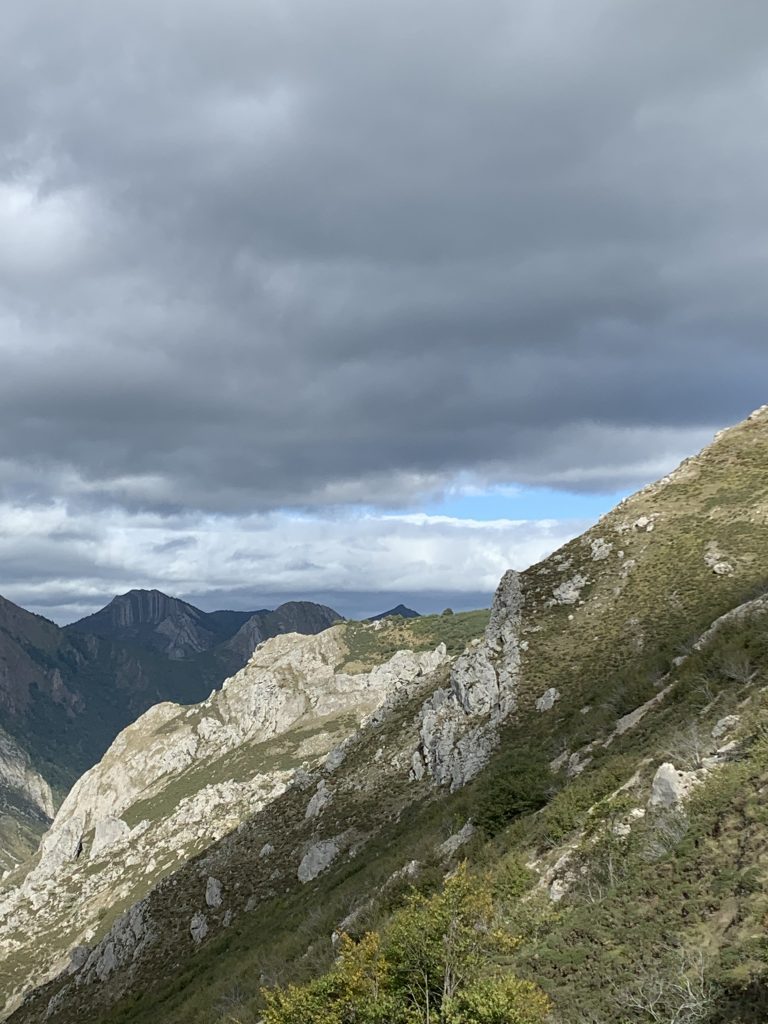
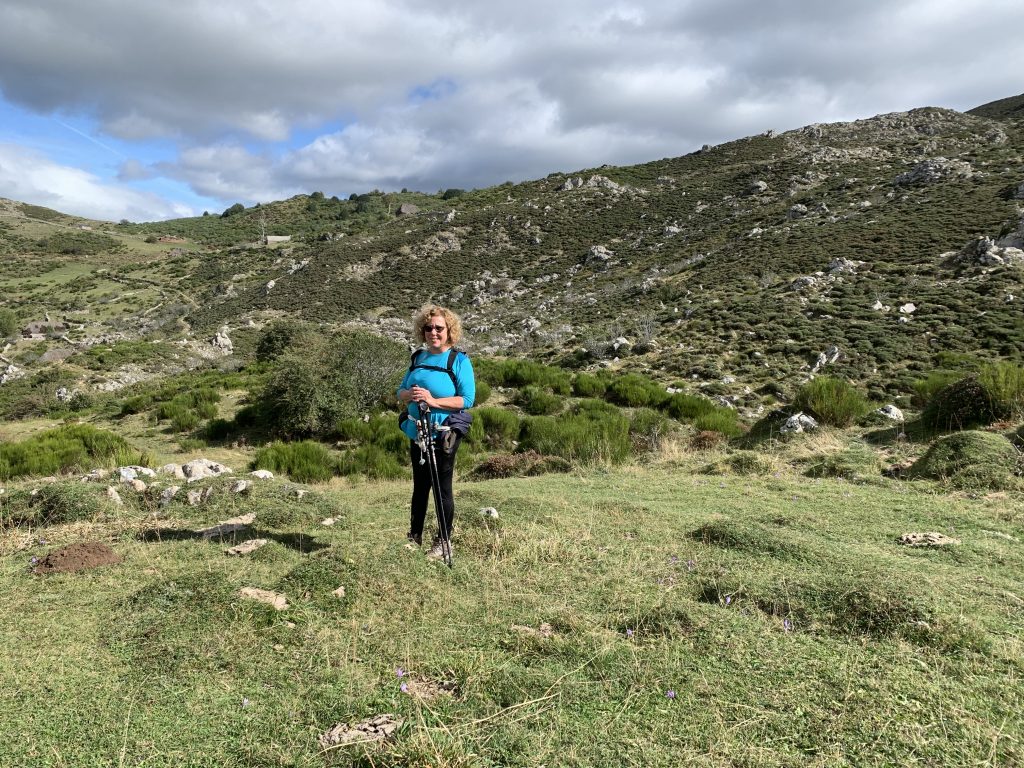
This week, when I climbed the mountains of Austouria, as our bus weaved its way on the narrow switch backs in the breathtakingly beautiful region of the Natural Park of Somiedo, I knew what this new spiritual practice of sighing and release was all about — here was the spot where I could breathe deep cleansing breaths, inhalations that drew into my body and soul the pure magnificence of God. Tears rushed to my eyes, my heart felt alive and my soul complete as I connected with the glory of God found in these mountains.

Truly, the words of the Song of Simeon came into my heart —

Lord, you now have set your servant free *
to go in peace as you have promised;
For these eyes of mine have seen the Savior, *
whom you have prepared for all the world to see.

As you remember, these words burst forth from Simeon’s mouth as he held baby Jesus when presented at the Temple by his parents. Simeon was marking the inner transformation of his soul, an awareness that he now knew a fullness of grace and joy that had forever changed him and which, in Simeon’s case, would change the whole world too.

There was an inner transformation of my soul as well on that mountain top that allowed me to breathe in the magnificence and glory of God that has forever changed me. As always, I don’t see the complete picture yet. I don’t know how this will unfold in my heart, except I know it is good. I connected with a soul-place— a geographic location which grabbed my soul and stretched it wider than I could ever have imagined, never to be the same again: holding, embracing, adoring and living God’s beauty and fullness in a new brand new way.

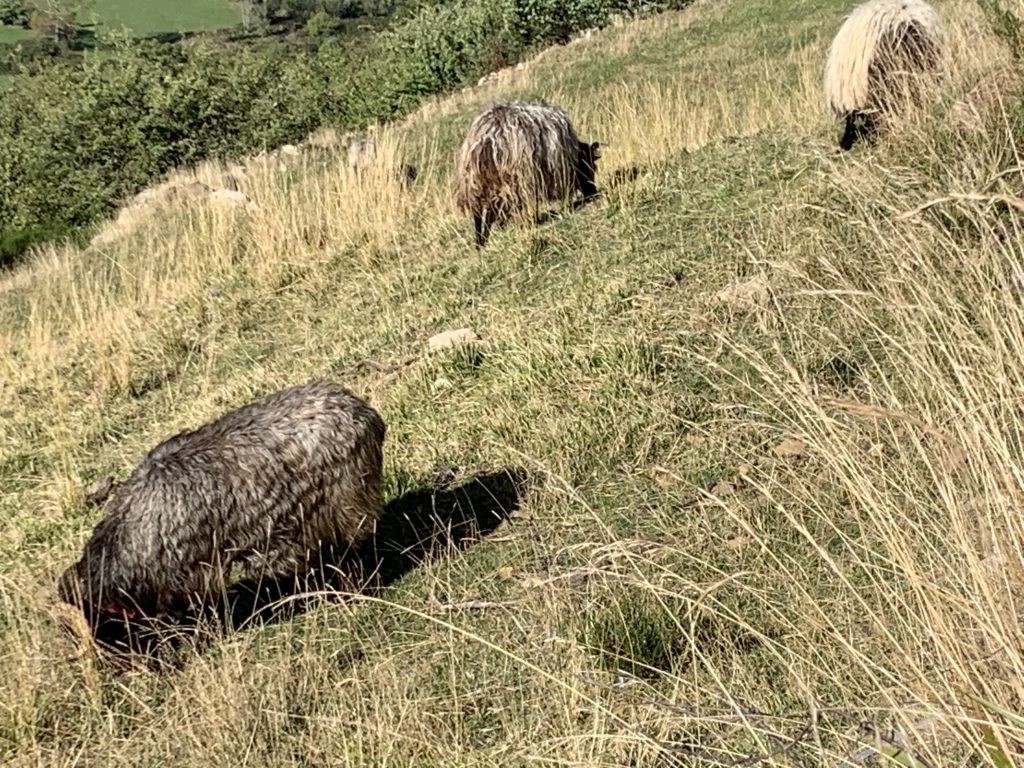
Since Simeon’s words so automatically leapt into my heart, I have spent time pondering what it means to have seen the Savior. I know I was pulled to the mountains where I could see the fullness of the glory of God— I know somehow I saw my salvation. But how does that translate into my life? Could it be God wants to draw my attention to the woolly sheep in the fields, to the shepherds who “held up the altar of the world” (which had been my focus from the Holy Land trip) so I could see the gift of a simple life lived within the natural rhythms of the seasons?

Wonderful wooly sheep grazing in the mountains
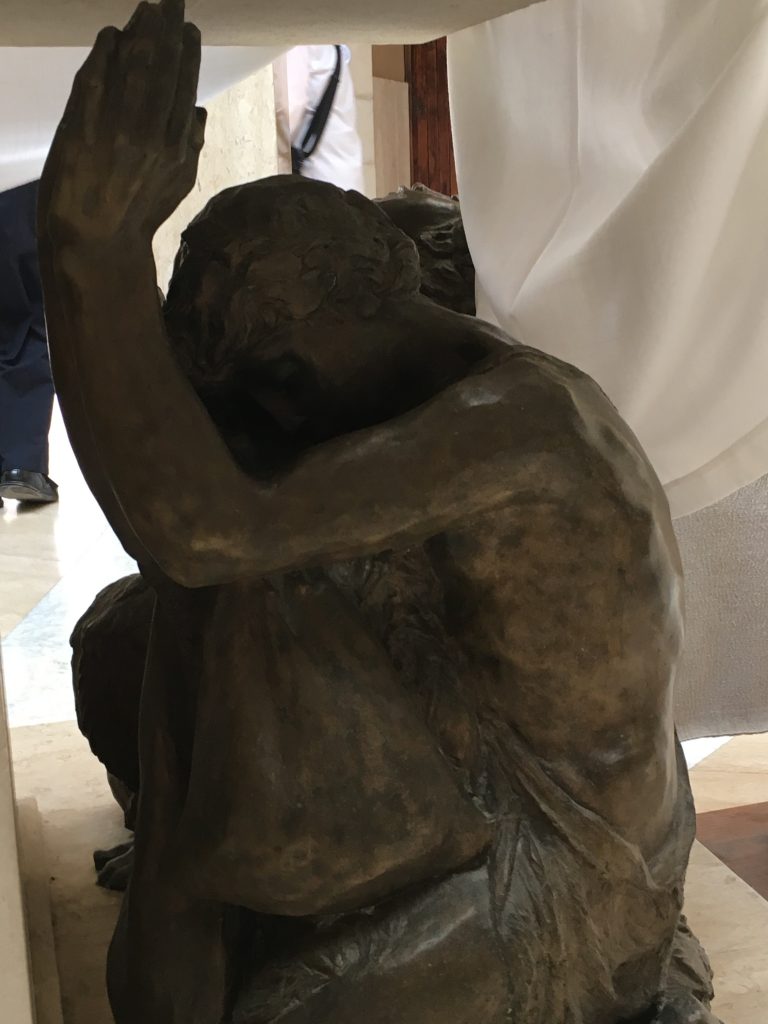
At the chapel at Shepherd’s Field in Bethlehem

Could it be that God wants me to see the expansiveness and never ending opening of possibilities in life, as each time we climbed to a different peak of the mountains, whole new vistas of beauty opened before our eyes?

Or could it be that God wants to me live with the awareness that with every step in life, our faithful and only appropriate response is “wow”, which I must have uttered hundreds of times on our hike?

It was remarkable to have the experience of my soul attaching to a particular place, to know I was in a spot I was called to and that my soul deeply resonated with, which somehow went beyond what I had felt before as a thin place.

My soul-place, where my heart was fully open to the magnificence of God.

This was not only a place where I felt the presence of God — but it was a place where God had a particular message waiting for me to discover. This experience speaks to me directly about the implications of the incarnation on our own lives — the magnificence and healing grace of the God who created it all also and always shows up to us in particular situations.

Perhaps the most important “wow” we can know in our heart is that God is always ahead of us, before us on the trail, with intentionality offering us particular messages that will unwrap and unfold our salvation, our awareness of the glory of God in our present life. Perhaps this is what seeing our Savior means — listening for, attending to, and embracing the message God has waiting for us — ahead and beyond our imaginations — in places foreign yet oddly already known to us — in the particularity of our lives set within the great expansiveness of God.

I now have a touchstone, a soul-place where God drew me toward and into to change my life, not to stay stuck there, but to return to in my heart whenever I need the assurance of the warmth, love, and grace of God. My deepest prayer is to live life with the same fullness and expansiveness I felt on that mountain. I am grateful for the opportunity to do that with each one of you.

Guide us waking O Lord and guard us sleeping;
That awake we may watch with Christ
And asleep we may rest In peace.

Take, eat, this is my body, given for you. Christ the King sermon

St. Andrew’s Episcopal Church

The Rev. Barbara Hutchinson

Christ the King Sunday

November 26, 2017

Take, eat, this is my body, given for you. In these simple yet remarkable words, Jesus gives us everything. In our outstretched hands, we receive whatever it is we are lacking in our heart, mind, body, or soul, be it hope, healing, joy, comfort, inspiration, challenge, insight, creativity, strength, or a taste of what is yet to come in our lives. It is a moment which we would talk about as sacramental, meaning that it is an outward expression of inward grace or, in simpler language, it means Jesus is there, in that bread, in that grace of acceptance we feel in our hearts, and in that pull toward our own wholeness, in God’s righting what has gone wrong in our lives, Jesus is there.

In our gospel lesson today, Jesus asks us to make every moment sacramental, and tells us how to do this. First is to see Jesus in every moment by looking at the need that is before us. Who is hungry, either for food or for respect and dignity? Who is feeling exposed or naked? Who is being imprisoned by jail cell doors or by poverty or addiction or race?  Who is heart-sick and needs the touch of a human hand upon theirs? Take, eat, this is my body which is given for you. See my body around you. See me in the need of others.

Jesus then asks us to be Jesus in each of those moments, by having the heart of Jesus. That’s the point behind receiving communion – that our hearts might be shaped and formed, so only love, whose origin is divine, will flow from us, so we will see the need in others and we will care. As hard as it is to be present to someone in need, whether it be grief or hardship or shame or rejection, we will stand with them as their companion and champion. Take eat, this is my body, which is given for you. Be my body, my heart for others.

Finally, Jesus asks us to do for or do to Jesus in each of those moments, by moving from caring to action, by imaging Jesus is each of those people before you, and asking you for help. These instructions aren’t merely metaphors, just as Jesus is not a metaphor. Jesus intends for us to actually put the plate of homemade food before the hungry person. Jesus intends for us to make that phone call to the person we know is lonely, or bring that casserole to the family in need, or talk to the person with kindness, even if we can’t understand them well due to their foreign accent. Jesus calls us into “Kingdom living,” which means seeing and responding to each moment sacramentally, as though Jesus were in the conversation, the interaction, the need. Take, eat, this is my body given for you. Do this for me, for my face is in each of the faces you see.
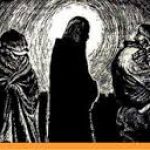
In Matthew’s gospel, today’s story is Jesus’ last teaching opportunity before he is crucified, so we have to imagine Jesus has saved the most important for last. Jesus is saying to us that our actions matter. We are to be accountable to what Jesus has asked us to do. This really is non-negotiable. You may notice that Jesus’ last teaching has nothing to do with orthodoxy, right belief, or how the church is to be structured, but rather, it’s all about orthopraxy – walking the walk, being authentic, making a difference in the world, being accountable for our choices or the choices others make on our behalf. We are living an authentic Christian life when we receive the bread on Sunday and on Sunday afternoon, as we plan our week ahead, we orient our lives to feeding the hungry, clothing the naked, visiting the sick and imprisoned, and welcoming the stranger. Jesus did all of these things, which is why, when we do them, these moments are sacramental. Take, eat, this is my body, which is given for you. In receiving the broken bread, we become Christ’s body, so that we can see, be, and do for Jesus, so we can be sent out into the world to move it toward justice, where wrongs will be set right, and only God’s love will pour from all hearts.

When I was working with the results from the Friday evening exercise at our Diocesan Convention, one person responded to the question, “What is your burning desire?” by saying he wanted to stop doing all the church activities and get out there and feed the hungry, clothe the naked, etc. I was relieved to see this person wasn’t a member here at St. Andrew’s, because it said to me that that parish had lost its sense of Jesus’ imperative to make a difference in the world by looking around us and meeting the needs of others. Many times, churches can get self-absorbed or focused on activities of the people who come to church all the time, but forget those who are still outside the walls of the church. Jesus’ message today is a good reminder that we as individuals and as a parish should always use this as our criterion for making decisions about what to do or how to be or how to spend our money –  do our actions meet a physical or spiritual hunger? Do they provide protection for those who feel naked, exposed, or vulnerable? Do they open our hearts so we love as Jesus did, unconditionally and with the desire to heal in every moment? Do they welcome those who may not have felt at home in church before? This is gospel work. Jesus makes that very clear today. This is why two of the promises we make in our baptismal vows are centered on how we make the love of God real to others in concrete ways. We promise to seek and serve Christ in all persons, loving our neighbors as ourselves, and to strive for justice and peace among all people, respecting the dignity of every human being. These promises cover it all. If we live into these two vows, through our choices and actions, we will indeed make each moment sacramental. We will indeed feed the hungry, clothe the naked, welcome the stranger, and visit the sick and those in prison.  Take, eat, this is my body, given for you.

Our actions matter, for through them, we enter into a knowledge and experience of Jesus, and that is our salvation. You may notice that when you hand someone a plate of food that you have lovingly prepared at the community meal, or listen to their story, or offer to help them get to their doctor’s appointment the next day, or when you make someone feel really welcome when they sit next to you in the pew, or when, as our young people did, you meet people of different backgrounds, like we did at the ESL class, or when we created a garden for people imprisoned by domestic violence, that you feel a particular closeness to God. That’s Jesus being there. That’s what sacramental living, or Kingdom living is all about.

Today is Christ the King Sunday. It is a day when we celebrate a number of attributes of Jesus, but in particular these two: first, Jesus is the Lord of lords, the King of kings, which means Jesus’ power is over all of the world. This means that if all is not well, it is not the end. This is particularly comforting in our world today, when each week it seems there’s some new thing to be alarmed by, either here in our country or elsewhere around the world – some natural or human evil released into the world. It’s good to know that this is not the end. Jesus will have the last word. Our story from Ezekiel reminds us that, when the Israelites strayed from YH, YH allowed them to stray, permitted them to be oppressed, so they could choose to return. They were never separated from the love of God, who is presented as the metaphor of the Good Shepherd in that story, but they were allowed to wander, living in the wilderness for some time before ultimately being brought back into the fold. This story gives us hope that this will happen to our world also. That, as Desmond Tutu predicted, if we each drop our kindness into a bucket, eventually that bucket will overflow, and goodness will reign. That’s God’s dream and intention for us. Each time we feed the hungry, clothe the naked, welcome the stranger, visit the sick and imprisoned, we are adding to the kindness in the bucket and helping God’s reign come near. Each time we make these choices, we are acknowledging that Christ is Lord of lords, King of kings, and God’s goodness will prevail. Take, eat, this is my body, which is given for you – so you can become Jesus in the world.

The second attribute of Jesus we raise up today is that there is judgment involved. That’s what kings do, they judge their subjects. If we had believed the stories from our last two Sundays were of the real Kingdom of God, not the fake Kingdom of God others presented, this statement might cause us some consternation. That “king” would have slammed the door on all those unprepared, all those without the appropriate resources, all those who lived in a place of fear or punishment. And if we were honest, we’d acknowledge that we’ve been in those places ourselves, and we’d be looking at the outside of a closed door. But here’s something interesting: those described, those unprepared, those without resources, those who live in fear, sound a lot like the people Jesus is instructing us to care for – those who are hungry, vulnerable, imprisoned by fear or paralyzed by oppression. This is when we realize Jesus is a really different kind of king.  Jesus, as the King of kings, cares about justice, cares about everyone, cares about righting the wrong ways of the world. Here’s a way this could play out. Jesus as the King of kings, the one who cares about justice, can be good news for the bullies and those bullied. Jesus as the King of kings says that the power of Jesus will work with those who feel the need to prove themselves to be better or stronger than others, by giving voice to his or her victims, which of course has been the whole “#me too” movement, raising voices together to say this isn’t the way of the Kingdom, or by being the force behind laws or school rules that make this behavior unacceptable, and by drawing the bullies into a place of healing the deep hurts or rejection that is at the root of this behavior. This is also good news for those bullied, for God will be their companion and champion. Jesus will be with them. And if Jesus is there, then we will be also. Jesus knows what it is like to be bullied and was able to create new life from this violence and aggression. Jesus, through our actions, will do that for those who find themselves in this situation. Take, eat, this is my body, given for you, so you can do this for and to Jesus himself.

We will break bread together shortly and in receiving it, we will be given everything, all that we need to be whole, all that we need to make the world a better place, all that we need to see Jesus in every moment, to be Jesus in every moment, and to do for or to Jesus in every moment. Our life experiences are our daily bread, as are our times of joy and sorrow, courage and fear, strength and weakness, abundance and scarcity. As we allow Jesus’ body to be broken so we may become it, may we also allow Jesus to break open our daily bread, our lives, so that Jesus may come within. Let us allow Jesus to be our Lord of lords, King of kings, acknowledging that his way is our way and the way toward justice in our world. Amen.

Where have you found God in the forests? Or the “forest” times of your life?

St. Andrew’s Episcopal Church

The Rev. Barbara Hutchinson

Seasons of Creation Year A: Forest

October 8, 2017

There are moments in our lives, sometimes fleeting or seemingly nearly beyond our grasp, when we catch a glimpse of something beyond the ordinary, when everything lines up and everything seems right. We may describe these moments as “being in the flow”, or of a sense of wholeness or peace that overcomes us, or experiencing a surge of newness, or a spark of creativity, or a place of deep and holy nourishment, or stumbling into a thin place. These come to us by grace, for we can never orchestrate them, but only enter into them when they are revealed to us. While in these states, we are experiencing what this Forest Season of Creation is all about – that living place where nourishment abounds, where both birth and death happen, where the life-force is strong, where there is a sense of being held as part of a greater whole.

Last week at our spiritual retreat at Holy Cross Monastery, I invited us to identify these moments of “forest creation” in our lives, for you see, each Season of Creation, in my understanding, aligns with a Season of Spirituality. This season of creation, the forest, echoes the Garden of Eden, that descriptive metaphor which speaks of a time when all of creation, including humankind, was in balance and in right relationship with the will of God. I took my journal, found a quiet spot, surrounded by the trees, and began my own spiritual reflection. It was not difficult for me to identify many “forest” moments of my life. In fact, that part flowed so easily that my mind naturally began to gather those moments into spiritual categories, such as moments of healing, giving or receiving hospitality, my soul being captured through the beauty of music, shared love, or handing you the bread, the Body of Christ, and knowing deep within, that I was handing the Body of Christ to the Body of Christ, an incredibly transcendent moment.

But then something interesting happened. I began to associate the word atonement, which we understand as having something to do with Jesus’ death on the cross and our salvation, with a feeling of alignment and wholeness, at-one-ment, at-one-with-God-ment, as Richard Rohr, a contemporary theologian, would explain. And I realized that some of my most painful moments were also at-one-with-God-moments. That gave me a lot to think about as I recalled a close friend of mine, who held her daughter as she died, feeling that completeness of being close to Danielle and to God, in a profound and life-giving way. In the worst possible moment of her life, there was something being offered to her by God that didn’t make everything okay, but somehow made everything holy. This is how creation and the cross fit together today. Because of Jesus’ death and resurrection, all that we might understand as separate or broken or lost or tragic, is that, but not only that. For Jesus’ resurrection means that everything that ends has a new beginning built into it. Because Jesus experienced the full joy and pain of humankind, God sanctified both, and our salvation is our journey. This is God’s invitation to a place of “forest” creation, that alive place that holds both birth and death, joy and pain, and where there is a mutuality of shared love, hospitality, and a surge toward newness. It is this paradox of Christian faith that allows us to place within our liturgy the Prayers of People we will read at the 10 a.m. service, which are full of lightness and happiness and celebration of the birds of the sky and the fish of the sea, with the Act of Remembrance after the violent act of the shooting in Las Vegas.

Our “forest” or creation experiences often do happen in the forests. One of my earliest childhood memories of sense the presence of God (although I didn’t talk about it that way then) was sitting in the tree in my backyard, for hours on end. I was a child who often sought solitude. The tree’s trunk had split, so there was a convenient, natural seat formed where the two trunks split from the main one, which seemed to be God’s invitation to sit awhile, be still and be aware of the presence of God. Maybe your “forest” experiences happen when you take walks in the woods, or as you drive Rt. 15 along the Susquehanna River and you see the brilliant yellow, gold, and red leaves shimmering against the river, and your breath is taken away. I think our forests can be a place for us to be inspired by God, to be invited by God deeper into God’s presence, to be healed by God as the wind through the branches seems to lift the heaviness in our hearts, all of which reconnects us to the metaphoric original state of wholeness, the Garden of Eden.

We can understand the relationship between our actual forests or our forest experiences elsewhere to our redemption through Jesus’ death and resurrection, because through them we are always invited back into the ongoing creative force of God, but our texts today draw us into a much broader context, where we can begin to see the relationship between our redemption and that of God’s created world.

In our text from Genesis we hear the account of creation which is chronologically after the one in which God created the world in seven days, but this one was written first. This was the original way the ancient Israelites reflected upon the world and imagined its beginning, told in a way that held their deepest values about the created world and our relationship with it. There are a few things that stand out in this passage: Humankind was made from the dust of the earth, out of which God created every other living thing. We are made from the same substance as the plants and the trees, and the animals who inhabit them. Humankind was not set above the rest of the created order, nor was humankind created in isolation from the rest of the created order, nor was earth a mere stage for human drama. Humankind was set in intimate relationship with its environment. The first “job” or vocation given to humankind was to care for God’s creation, even before humankind was instructed to “love God and love our neighbor”. Each time we work at restoring or caring for the earth, we are doing what God asks of us. Each time we pick up debris from the stream, each time we harvest the forests in sustainable ways, each time we raise organic crops, each time we attend to the amount of fertilizer we place upon our lawns, each time we plant native plants in our gardens, each time we find ways to bring back plant or animal diversity in our local area, we are doing what God asks of us, has asked of humankind from the beginning of time.

There are a lot of sad facts about our forests. There have been more forests cleared from 1850 to the present, nearly 170 years, than in all of previous history. Due to population growth and deforestation, the amount of forest cover available to each person has declined globally by 50% since 1960. One quarter of all the total animals will be lost in the next 40 years. I thought about this last year when they built that huge P&G Warehouse – where did all the animals who were living in those fields go? There are some very sad and scary facts about our changing earth, and they are important to us if we understand that God gave us the job to care for it.

And we can take inspiration from and hear an invitation to participate in the restoration of all of the created world, humankind and all else, all formed from the same matter, the dust of the earth, from our gospel today. It’s the familiar story of Nicodemus, a rabbi, who feels a draw toward Jesus, without understanding why. He senses truth within Jesus and begs to understand, and Jesus seems to speak in riddles. What does “born again” mean? In John’s gospel, this term does not refer to a “spiritual or individual” rebirth, but rather to a new way of living in the world here and now. This isn’t eternal life that Jesus is referring to, as we might interpret it, meaning immortality in heaven, but rather as experiencing God’s presence here and now—and then living into it. This is describing our atonement moments – our ‘at-one-with-God-moments’ which draw us back into the original creativity of God, our original vocation or job given to us by God of caring for the Earth, that life-force of God which continues to unfold in our lives and in the lives of all created beings. The job God gave us was to care for creation, so that means we need to work to be open to these at-one-ment moments, to move into the creative life-force of God, so that we can be active agents to support God’s plan of salvation, for us and for all creation.

There’s one story I’d like to tell you, that I believe puts this all together for us – the fact that we’re made of the same matter as the rest of our created world, the fact that our first job is to care for our world (the plants, the animals, the forests, and the sea), the fact that because of the cross, Jesus sanctified us and all creation to be active participants of God’s salvation plan for the world, which doesn’t just include us, and the fact that our redemption means that new life can always come from what we believe to be endings.

Last month, Bill and I travelled to the Adirondacks, where I had the honor marrying two amazing people, Daniel and Kristin, whom I knew from a different part of my life. That invitation alone was pure joy, joining in a celebration where God is making something brand new, something whole and complete, out of what is already wonderful. A week or so before the wedding, Daniel reached out to me and asked if I would do “double duty”. His cousin, aged 54, had died that past year, sadly carrying on the legacy of premature heart problems. Daniel asked if I would be there when they buried his ashes and say a prayer. Of course I would. That’s a true and deep honor to meet people in their moments of deepest need. I arrived at the set time in the morning, travelling down a dirt road to reach the final destination, a family cabin on the lake, which had witnessed love born again and again, lives changed and shared, hopes grown, life experienced in its fullness. I wore my clergy collar, a pair of black jeans, and a warm sweater as cool air drifted off the lake. I met the mother of the son who died, as she held in her hands a seedling of a tree. My heart melted. We hugged, we shared, we know we could get through this together. We walked to the front of the cabin, looking at the water, encompassed by the living world around us – the trees of all shapes and sizes. The mother was carrying what appeared to me to be a seedling to plant on top of the ashes we would bury. This was not true. The container was one which held the ashes of her deceased son, settled in the bottom, so the seedling’s roots could be settled around them and planted together. Ashes to ashes, dust to dust. Lots to think about. The whole family gathered to choose the right spot for the burial and the planting of this tree. They settled on a spot, which they had cleared so there would be enough light for the seedling to grow. When one of the men took the strong shovel, and pierced the earth, what appeared was a fibrous network of roots, strong and true, roots that were supporting the large giant trees nearby. All of the soil was rich compost, of an earthy color, not like the dark brown seemingly manufactured compost we buy at Lowes. It was full of life’s energy, yearning to create new life, full of priceless nourishment. The mother planted the seedling, tapped the soil around it so it would stay in place. Someone else had fashioned a cross out of splintered  wood found nearby, and placed it purposefully and with reverence near the seedling. We held hands, said the Lord’s Prayer, and felt renewed. I will never look at Ash Wednesday the same way again. Ashes to ashes, dust to dust has a new meaning to me, now having a visual to attach to what the redemption of us as people and the redemption of the created world looks like. God did not create us in isolation from the earth; God did not create the earth to be the stage for our drama. God created us to care for the earth and all its inhabitants. May we always grow in our understanding of how to do that, to live into those at-one-with-God moments, so that we may return to the ongoing life-force of creation within each one of us, which connects us to our Creator. Amen.


Pilgrimage: Returning to the Place of our Resurrection Part II

So yesterday, I was reunited with a place of resurrection by completely surrendering to God, through my prayers at the Western Wall. It was a powerful opening within me that burst open my awareness of my love of God.

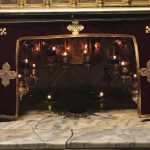
Today, we travelled to Bethlehem, which is only 7 miles from Jerusalem. For some reason, the physical distance between these important points in the Biblical narrative are much less than I had imagined. We had the amazing opportunity to arrive at the Church of the Nativity, which is built upon the spot where Jesus was born, where heaven and earth were joined, to open us for us our salvation, at the time to receive the invitation to celebrate the Eucharist with the Franciscan monks in the grotto of the Star of Bethlehem (the location of the manger).

2016-10-31-07-34-52
The Star of Bethlehem, the place designated as the birthplace of Jesus.


We received the bread of life in Bethlehem, the city whose name means, “House of Bread”. The mass was held in Latin, but somehow the rhythm of the Eucharist was familiar to all and our experience transcended words we did not comprehend.


2016-10-31-07-37-06
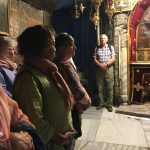
Mother Betsy and Mary Grace, preparing for the Eucharist in this holy spot.


The second part that God showed me today in my pilgrimage to the place of resurrection is our connection to the suffering of the world. Prior to the Eucharist, we met in a nearby grotto, which when excavated, revealed the bones of many babies, the Holy Innocents, the babies as our prayer named as “those who bore the price of our salvation”.  I was painfully aware that our salvation certainly came at the expense of Jesus’ life, but also others have deeply suffered as a result of the love God released into the world upon Jesus’ birth, the love which others feared and felt threatened by (and still do). When we surrender to God, we bear the suffering in our world. That’s just part of it we must be willing to embrace.

I’ve learned this past year, often through my reading of Richard Rohr, that we cannot separate the “mountain top experience” of Eucharist in the grotto where Jesus was born with the suffering which resulted from this glorious act. They are the part of the same; two sides to a coin. We must embrace both of them to be fully Christians.

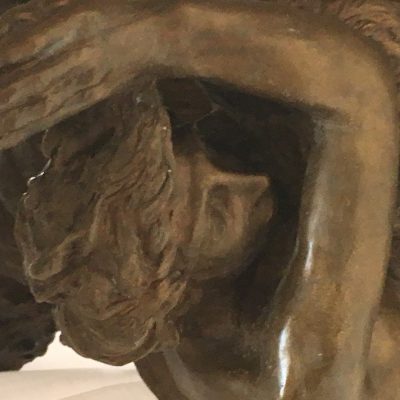
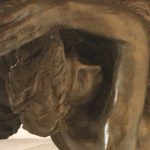
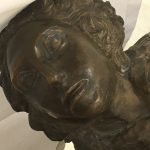
We then went to the Church of the Angels, which was astonishing! It was at the shepherd’s field, where the shepherds heard the message from the angels and ran into Bethlehem (not nearly as far away as I had previously imagined). The chapel was simple and true and we sang “The Shepherds watched their flocks by night” and it was a holy time. But what struck me most was the altar. I lifted the altar cloth to reveal these amazing statues of angels holding up the altar. And isn’t it true — that it is our humility, our prayer, our watchfulness, and our turning our faces toward God which hold up the altar of God, where Jesus’ love can be broken open. Don’t you think that it is our response of love that opens and supports the release of love borne to all people through the Eucharist?

2016-10-31-11-14-53
Shepherd holding up the altar

2016-10-31-11-14-34
Prayer holding up the space for God to be released.

2016-10-31-11-14-23
Human humility opening the way for God’s love to be released.


2016-10-31-11-13-45
Shepherd’s face turned toward God.

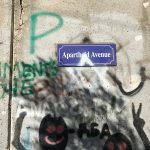
We also went by “The Wall”, the dividing wall that separates Israel from the occupied territory of Palestine. It’s ugly and oppressive. I have learned this is a very complex situation (Israeli and Palestinian relations) that I can’t yet understand, but want to know more and yearn to see the “Prince of Peace” who was born in this tiny town of Bethlehem to reign in this conflicted area.

2016-10-31-10-06-542016-10-31-10-05-38


Surrender, Suffering, Salvation. These words and movements of our hearts seem to flow together for me in a brand new way. Thanks be to God!

Tomorrow we head out into the Judean desert to celebrate the Eucharist as the sun rises, then off into Petra. This is the ultimate trip of a lifetime. I feel so blessed to be here, as I hold you all in my prayers. I can’t wait to share this all with you upon my return. Many blessings and much love to you all, Barbara+

I’ll post a gallery on facebook of more photos.