We welcome you to our worship this week. Thank you for being a part of us!
Category: Healing

Universal Christ Book Group
We gathered this week in a time of conversation regarding the book by Richard Rohr, The Universal Christ. What I am noticing that completely delights me is that people are asking very basic questions. One might imagine that means they are at the beginning of their spiritual journey. Oh, not so! It actually means they have travelled quite a distance, so they can begin to wonder and question within their faith, where they are not satisfied with what they were always told was true, but rather, they want to know the truth deep within them.
We began our conversation around original sin or original goodness. It is interesting to note that the focus on original sin with the emphasis on the 2nd creation story (the fall) rather than the 1st creation story (the goodness of all creation) came into being in the 4th and 5th centuries and was not a part of the early church writings or theology. It was a very interesting conversation.
This discussion led us naturally into the exploration of the question — if we focus solely on the life of Jesus, without considering his death, what do we learn about the nature of God, about ourselves, and about our relationship with God? A corollary question is — if we focus solely on the death of Jesus, without considering his death, what do we learn about the nature of God, about ourselves, and about our relationship with God?
Some answers offered were:
About his life: Jesus was a teacher, healer, lover, walked alongside people, never gave us, believed people were capable of change, and had a perseverance about him that was astonishing.
About his death: Jesus understands vulnerability and woundedness, there are things worth pushing up against (power, oppression) that is worth risking everything (causing “good trouble”), and that Jesus can enter into, understand, and redeem our suffering.
When we put all of this together, we can realize that we are in relationship with a God who loves us, believes in us, invites us to grow and change, walks alongside us in vulnerability and woundedness and redeems it (offers new life) and is asking us to be healers, which at times, means pushing up against that which is not of God.
We then engaged in a contemplative exercise on Gratitude, launched from Rohr’s statement, “The only way, then, to increase authentic spirituality is to deliberately practice actually enjoying a positive response and a grateful heart.” We drew to heart a recent experience for which we were grateful and asked the following questions:
- Describe the event (who, what, when, how)
- What do you most savor about the experience?
- What or who was altered through the experience?
- What part of God was revealed in the experience? (reconciliation, forgiveness, compassion, love, healing, awakening)
- How can you imagine this exercise influencing your next moment, experience, or the rest of your life?
We meet every other Thursday at 2 p.m. If you would like to join our group, you are very welcome to do so. Just email Mother Barbara for the Zoom link.
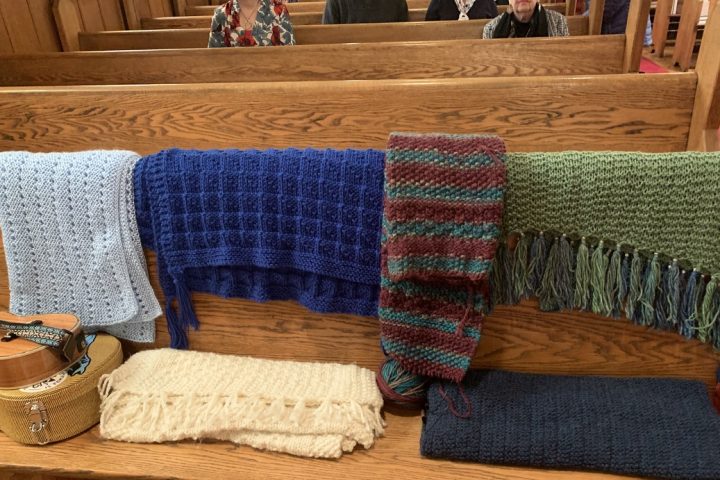
Prayer Shawl Ministry
The Holy Spirit has drawn us into another extension of our desire to offer Christ’s healing to all people. We gather now as a group to knit prayer shawls, those wonderful, warm shawls that we create with prayer and yarn which become real manifestations of God’s love through our hands. We are so blessed to be able to offer someone in need, either in times of grief or health concerns, a prayer shawl. We all bless the shawls in church prior to giving them away, so they are from all of us at St. Andrew’s, and offered in and through the love of Christ.
All are welcome to join this ministry. We gather on the first Sunday of each month at 11:30 a.m. in the Parish Library for conversation, knitting advice, and prayer. If you are in need of a prayer shawl, please let Mother Barbara know so we can get knitting away for you!

Taize Contemplative Service
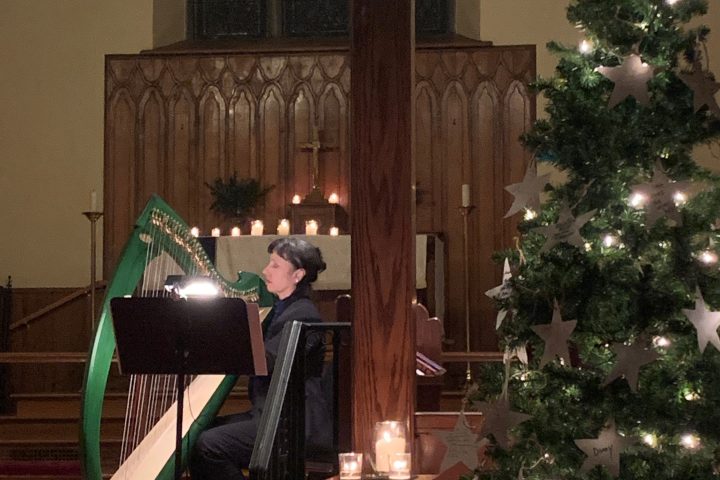
We gathered in candlelight, turned our hearts toward the holiness drawn near to us by the harpist, and settled into holy and sacred space. Through chanting, prayer, quiet, intimacy, and the celebration of the Holy Eucharist, we found a new expression of the love of God made real to us in community.
We offer these Taize Contemplative Eucharists on the first Saturday of every other month as a way to draw those of us who find God through contemplative practices in community as a pathway to wholeness.
We share a light supper afterwards so that we can continue the communion shared in the Eucharist.
All are always welcome!
Blue Christmas Service
We began our beautiful service tonight with the following prayer:
God of abundant mercy, you have given us grace to pray with one heart and one voice, even though our hearts are broken and our voices tremble with grief and sorrow. Comfort, comfort, Lord, your holy people. Comfort those of us who sit in darkness, mourning beneath our sorrow’s load. Speak to us of the peace that awaits us, of the balm of healing for our weary and wounded souls. We ask all this, trusting in the promise you have made to hear the prayers of two or three who have gathered in the Name of your Holy Child, Jesus. Amen.
This prayer gathered our thoughts, drew us together in love, and offered us the space to allow our most vulnerable selves to be present to God and to each other.
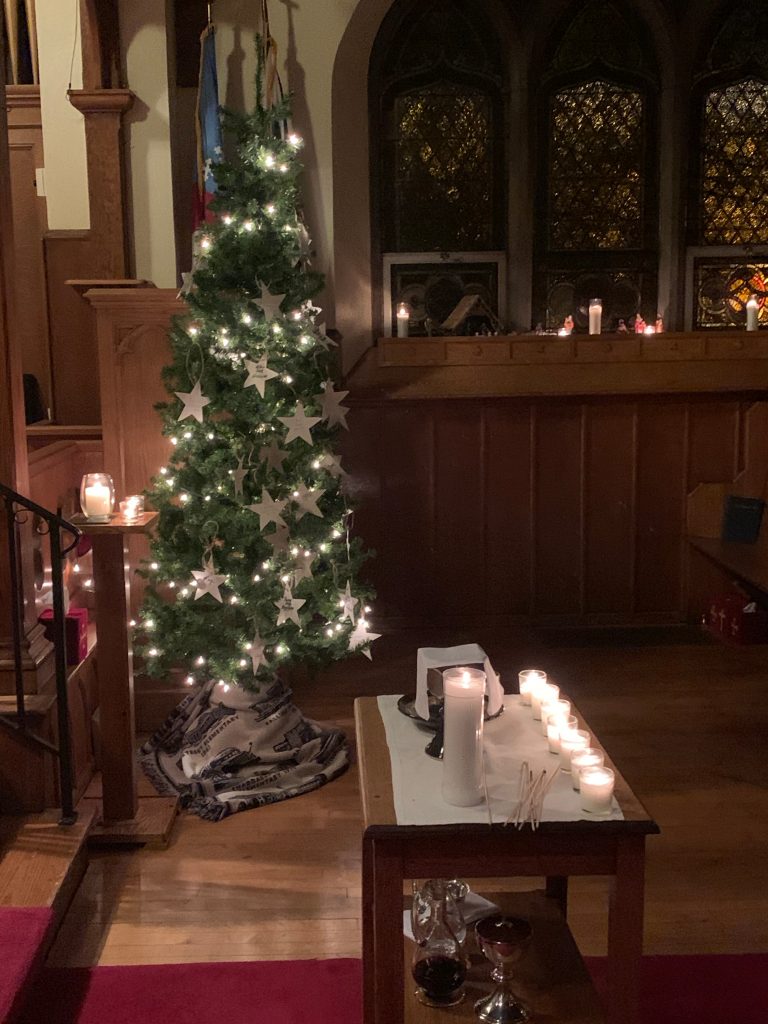
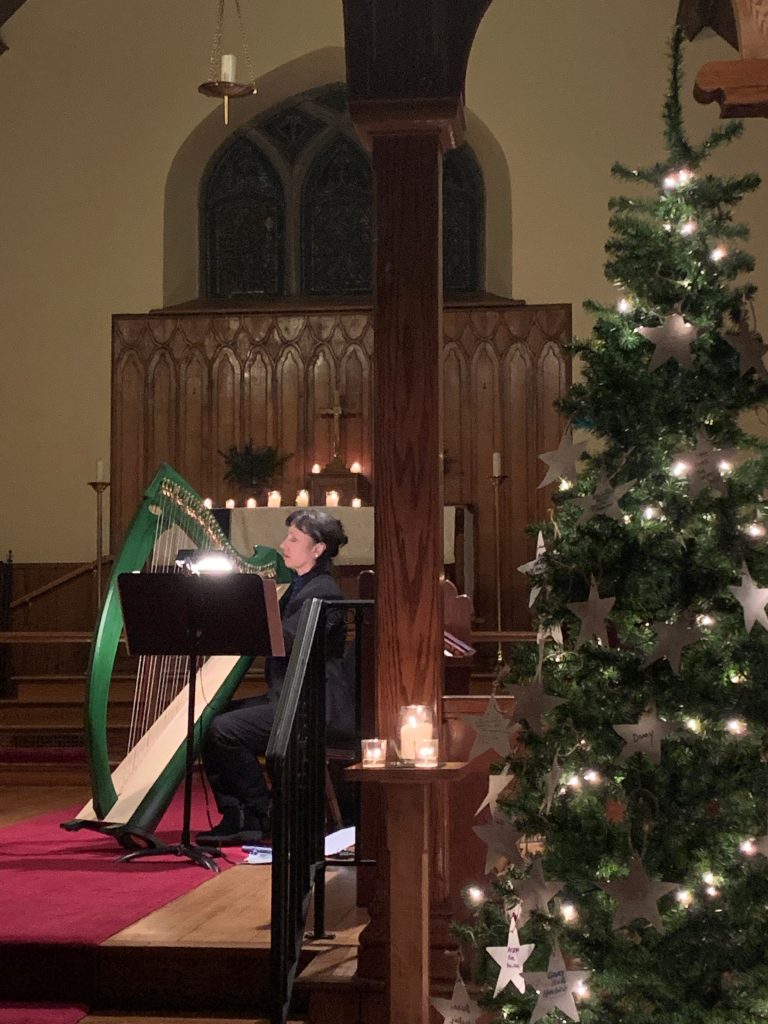
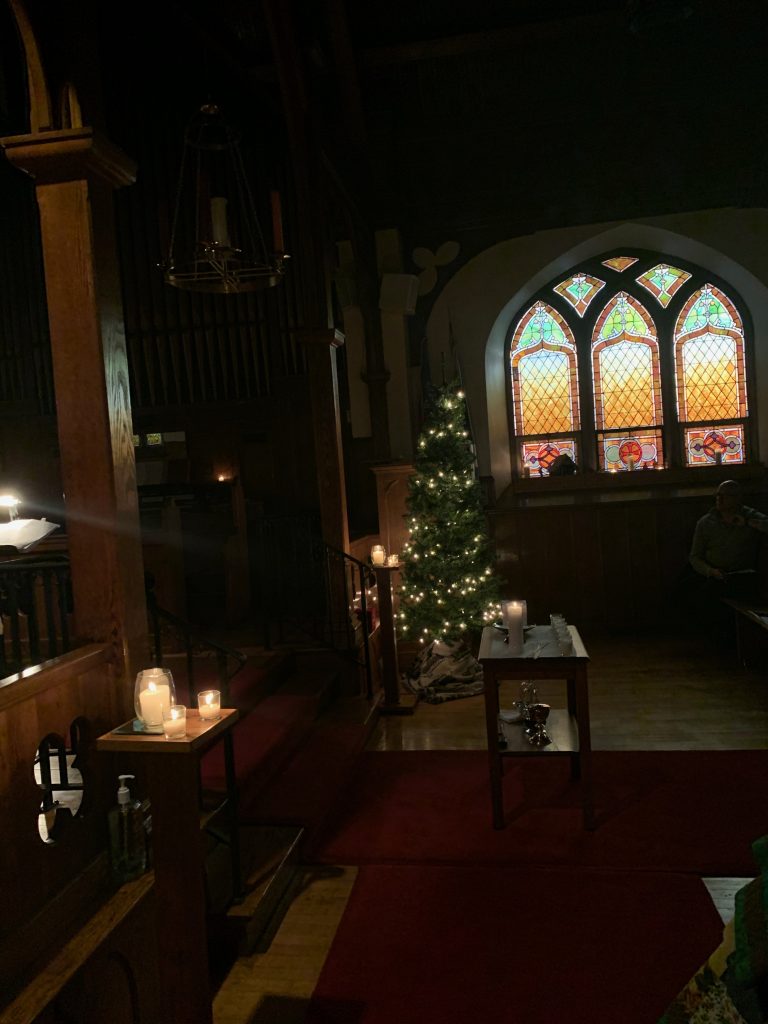
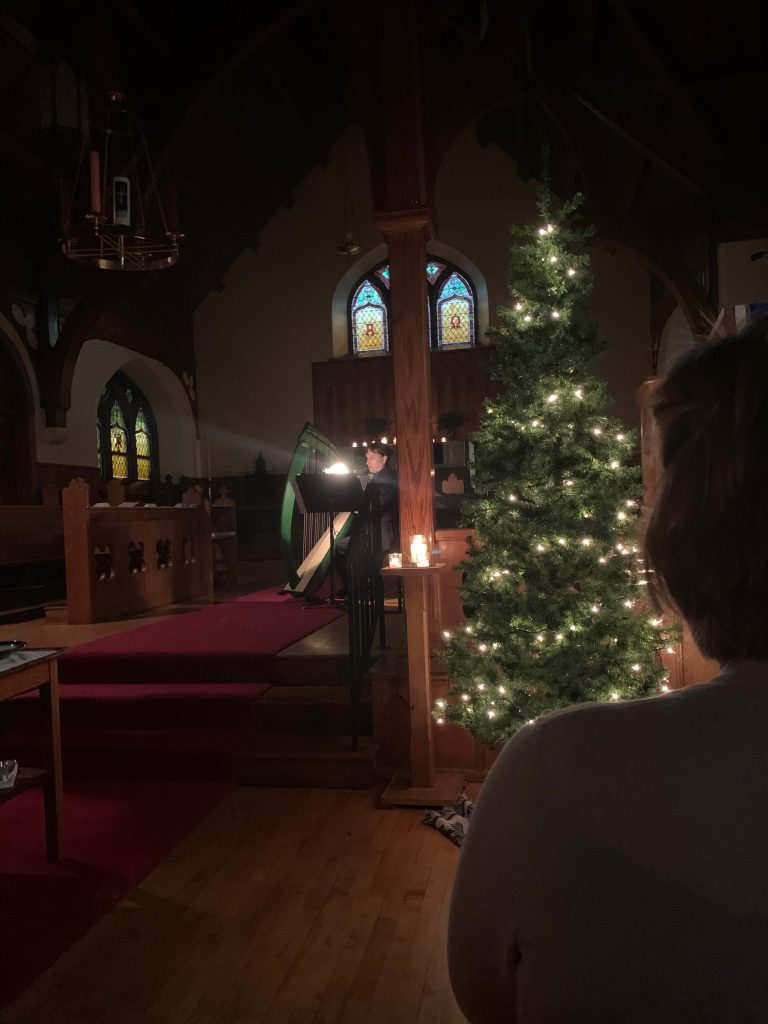
Our worship service today was meditative, moving, and healing as we came forward to offer our deepest pains and most fervent prayers to the healing grace of God. The music from the harp soothed our souls and and lifted our hearts as we sat in prayer and in the beauty of our sanctuary. There was great meaning in writing the names of the people whom we love but see no more or the deepest prayers from our souls on stars, which we then hung on the Advent tree. We were very blessed too to welcome new people into our worship. God’s mercy and grace abounded.
Our closing blessing offers us much wisdom and direction in how to faithfully live our lives:
The Blessing My friends, life is short, and we do not have much time to gladden the hearts of those who make this earthly pilgrimage with us, so be swift to love, and make haste to do kindness, and the blessing of God, who comes to us as Creative Presence, Saving Grace and Life-giving Spirit be upon you and all whom you love this night, and forever more.

Approaching the Gospels Together
On the first Sunday of the month we gather to explore the gospels together, using a Contemplative Dialogue approach which encourages everyone’s participation and which understands that wisdom is found in the hearts of everyone gathered. Today was no exception. We compared the texts of Mark, Matthew, and Luke and many unsettling topics settled into our hearts. Sometimes the path toward knowledge and truth lead us into difficult places first. We traveled a bit into what unclean spirits mean to us today, how do we name evil, how does evil divide us, what happened to the evil spirits when they were cast aside, and perhaps most importantly, why did the forces of evil recognize Jesus as the Son of God but the goodness within people didn’t. What’s that about? Good questions, right? No easy answers, that’s for sure. But good soulful conversation. Please join us next month for our next exploration.
Take, eat, this is my body, given for you. Christ the King sermon
St. Andrew’s Episcopal Church
The Rev. Barbara Hutchinson
Christ the King Sunday
November 26, 2017
Take, eat, this is my body, given for you. In these simple yet remarkable words, Jesus gives us everything. In our outstretched hands, we receive whatever it is we are lacking in our heart, mind, body, or soul, be it hope, healing, joy, comfort, inspiration, challenge, insight, creativity, strength, or a taste of what is yet to come in our lives. It is a moment which we would talk about as sacramental, meaning that it is an outward expression of inward grace or, in simpler language, it means Jesus is there, in that bread, in that grace of acceptance we feel in our hearts, and in that pull toward our own wholeness, in God’s righting what has gone wrong in our lives, Jesus is there.
In our gospel lesson today, Jesus asks us to make every moment sacramental, and tells us how to do this. First is to see Jesus in every moment by looking at the need that is before us. Who is hungry, either for food or for respect and dignity? Who is feeling exposed or naked? Who is being imprisoned by jail cell doors or by poverty or addiction or race? Who is heart-sick and needs the touch of a human hand upon theirs? Take, eat, this is my body which is given for you. See my body around you. See me in the need of others.
Jesus then asks us to be Jesus in each of those moments, by having the heart of Jesus. That’s the point behind receiving communion – that our hearts might be shaped and formed, so only love, whose origin is divine, will flow from us, so we will see the need in others and we will care. As hard as it is to be present to someone in need, whether it be grief or hardship or shame or rejection, we will stand with them as their companion and champion. Take eat, this is my body, which is given for you. Be my body, my heart for others.
Finally, Jesus asks us to do for or do to Jesus in each of those moments, by moving from caring to action, by imaging Jesus is each of those people before you, and asking you for help. These instructions aren’t merely metaphors, just as Jesus is not a metaphor. Jesus intends for us to actually put the plate of homemade food before the hungry person. Jesus intends for us to make that phone call to the person we know is lonely, or bring that casserole to the family in need, or talk to the person with kindness, even if we can’t understand them well due to their foreign accent. Jesus calls us into “Kingdom living,” which means seeing and responding to each moment sacramentally, as though Jesus were in the conversation, the interaction, the need. Take, eat, this is my body given for you. Do this for me, for my face is in each of the faces you see.
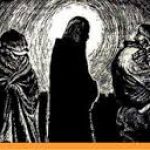
In Matthew’s gospel, today’s story is Jesus’ last teaching opportunity before he is crucified, so we have to imagine Jesus has saved the most important for last. Jesus is saying to us that our actions matter. We are to be accountable to what Jesus has asked us to do. This really is non-negotiable. You may notice that Jesus’ last teaching has nothing to do with orthodoxy, right belief, or how the church is to be structured, but rather, it’s all about orthopraxy – walking the walk, being authentic, making a difference in the world, being accountable for our choices or the choices others make on our behalf. We are living an authentic Christian life when we receive the bread on Sunday and on Sunday afternoon, as we plan our week ahead, we orient our lives to feeding the hungry, clothing the naked, visiting the sick and imprisoned, and welcoming the stranger. Jesus did all of these things, which is why, when we do them, these moments are sacramental. Take, eat, this is my body, which is given for you. In receiving the broken bread, we become Christ’s body, so that we can see, be, and do for Jesus, so we can be sent out into the world to move it toward justice, where wrongs will be set right, and only God’s love will pour from all hearts.
When I was working with the results from the Friday evening exercise at our Diocesan Convention, one person responded to the question, “What is your burning desire?” by saying he wanted to stop doing all the church activities and get out there and feed the hungry, clothe the naked, etc. I was relieved to see this person wasn’t a member here at St. Andrew’s, because it said to me that that parish had lost its sense of Jesus’ imperative to make a difference in the world by looking around us and meeting the needs of others. Many times, churches can get self-absorbed or focused on activities of the people who come to church all the time, but forget those who are still outside the walls of the church. Jesus’ message today is a good reminder that we as individuals and as a parish should always use this as our criterion for making decisions about what to do or how to be or how to spend our money – do our actions meet a physical or spiritual hunger? Do they provide protection for those who feel naked, exposed, or vulnerable? Do they open our hearts so we love as Jesus did, unconditionally and with the desire to heal in every moment? Do they welcome those who may not have felt at home in church before? This is gospel work. Jesus makes that very clear today. This is why two of the promises we make in our baptismal vows are centered on how we make the love of God real to others in concrete ways. We promise to seek and serve Christ in all persons, loving our neighbors as ourselves, and to strive for justice and peace among all people, respecting the dignity of every human being. These promises cover it all. If we live into these two vows, through our choices and actions, we will indeed make each moment sacramental. We will indeed feed the hungry, clothe the naked, welcome the stranger, and visit the sick and those in prison. Take, eat, this is my body, given for you.
Our actions matter, for through them, we enter into a knowledge and experience of Jesus, and that is our salvation. You may notice that when you hand someone a plate of food that you have lovingly prepared at the community meal, or listen to their story, or offer to help them get to their doctor’s appointment the next day, or when you make someone feel really welcome when they sit next to you in the pew, or when, as our young people did, you meet people of different backgrounds, like we did at the ESL class, or when we created a garden for people imprisoned by domestic violence, that you feel a particular closeness to God. That’s Jesus being there. That’s what sacramental living, or Kingdom living is all about.
Today is Christ the King Sunday. It is a day when we celebrate a number of attributes of Jesus, but in particular these two: first, Jesus is the Lord of lords, the King of kings, which means Jesus’ power is over all of the world. This means that if all is not well, it is not the end. This is particularly comforting in our world today, when each week it seems there’s some new thing to be alarmed by, either here in our country or elsewhere around the world – some natural or human evil released into the world. It’s good to know that this is not the end. Jesus will have the last word. Our story from Ezekiel reminds us that, when the Israelites strayed from YH, YH allowed them to stray, permitted them to be oppressed, so they could choose to return. They were never separated from the love of God, who is presented as the metaphor of the Good Shepherd in that story, but they were allowed to wander, living in the wilderness for some time before ultimately being brought back into the fold. This story gives us hope that this will happen to our world also. That, as Desmond Tutu predicted, if we each drop our kindness into a bucket, eventually that bucket will overflow, and goodness will reign. That’s God’s dream and intention for us. Each time we feed the hungry, clothe the naked, welcome the stranger, visit the sick and imprisoned, we are adding to the kindness in the bucket and helping God’s reign come near. Each time we make these choices, we are acknowledging that Christ is Lord of lords, King of kings, and God’s goodness will prevail. Take, eat, this is my body, which is given for you – so you can become Jesus in the world.
The second attribute of Jesus we raise up today is that there is judgment involved. That’s what kings do, they judge their subjects. If we had believed the stories from our last two Sundays were of the real Kingdom of God, not the fake Kingdom of God others presented, this statement might cause us some consternation. That “king” would have slammed the door on all those unprepared, all those without the appropriate resources, all those who lived in a place of fear or punishment. And if we were honest, we’d acknowledge that we’ve been in those places ourselves, and we’d be looking at the outside of a closed door. But here’s something interesting: those described, those unprepared, those without resources, those who live in fear, sound a lot like the people Jesus is instructing us to care for – those who are hungry, vulnerable, imprisoned by fear or paralyzed by oppression. This is when we realize Jesus is a really different kind of king. Jesus, as the King of kings, cares about justice, cares about everyone, cares about righting the wrong ways of the world. Here’s a way this could play out. Jesus as the King of kings, the one who cares about justice, can be good news for the bullies and those bullied. Jesus as the King of kings says that the power of Jesus will work with those who feel the need to prove themselves to be better or stronger than others, by giving voice to his or her victims, which of course has been the whole “#me too” movement, raising voices together to say this isn’t the way of the Kingdom, or by being the force behind laws or school rules that make this behavior unacceptable, and by drawing the bullies into a place of healing the deep hurts or rejection that is at the root of this behavior. This is also good news for those bullied, for God will be their companion and champion. Jesus will be with them. And if Jesus is there, then we will be also. Jesus knows what it is like to be bullied and was able to create new life from this violence and aggression. Jesus, through our actions, will do that for those who find themselves in this situation. Take, eat, this is my body, given for you, so you can do this for and to Jesus himself.
We will break bread together shortly and in receiving it, we will be given everything, all that we need to be whole, all that we need to make the world a better place, all that we need to see Jesus in every moment, to be Jesus in every moment, and to do for or to Jesus in every moment. Our life experiences are our daily bread, as are our times of joy and sorrow, courage and fear, strength and weakness, abundance and scarcity. As we allow Jesus’ body to be broken so we may become it, may we also allow Jesus to break open our daily bread, our lives, so that Jesus may come within. Let us allow Jesus to be our Lord of lords, King of kings, acknowledging that his way is our way and the way toward justice in our world. Amen.

Where have you found God in the forests? Or the “forest” times of your life?
St. Andrew’s Episcopal Church
The Rev. Barbara Hutchinson
Seasons of Creation Year A: Forest
October 8, 2017
There are moments in our lives, sometimes fleeting or seemingly nearly beyond our grasp, when we catch a glimpse of something beyond the ordinary, when everything lines up and everything seems right. We may describe these moments as “being in the flow”, or of a sense of wholeness or peace that overcomes us, or experiencing a surge of newness, or a spark of creativity, or a place of deep and holy nourishment, or stumbling into a thin place. These come to us by grace, for we can never orchestrate them, but only enter into them when they are revealed to us. While in these states, we are experiencing what this Forest Season of Creation is all about – that living place where nourishment abounds, where both birth and death happen, where the life-force is strong, where there is a sense of being held as part of a greater whole.
Last week at our spiritual retreat at Holy Cross Monastery, I invited us to identify these moments of “forest creation” in our lives, for you see, each Season of Creation, in my understanding, aligns with a Season of Spirituality. This season of creation, the forest, echoes the Garden of Eden, that descriptive metaphor which speaks of a time when all of creation, including humankind, was in balance and in right relationship with the will of God. I took my journal, found a quiet spot, surrounded by the trees, and began my own spiritual reflection. It was not difficult for me to identify many “forest” moments of my life. In fact, that part flowed so easily that my mind naturally began to gather those moments into spiritual categories, such as moments of healing, giving or receiving hospitality, my soul being captured through the beauty of music, shared love, or handing you the bread, the Body of Christ, and knowing deep within, that I was handing the Body of Christ to the Body of Christ, an incredibly transcendent moment.
But then something interesting happened. I began to associate the word atonement, which we understand as having something to do with Jesus’ death on the cross and our salvation, with a feeling of alignment and wholeness, at-one-ment, at-one-with-God-ment, as Richard Rohr, a contemporary theologian, would explain. And I realized that some of my most painful moments were also at-one-with-God-moments. That gave me a lot to think about as I recalled a close friend of mine, who held her daughter as she died, feeling that completeness of being close to Danielle and to God, in a profound and life-giving way. In the worst possible moment of her life, there was something being offered to her by God that didn’t make everything okay, but somehow made everything holy. This is how creation and the cross fit together today. Because of Jesus’ death and resurrection, all that we might understand as separate or broken or lost or tragic, is that, but not only that. For Jesus’ resurrection means that everything that ends has a new beginning built into it. Because Jesus experienced the full joy and pain of humankind, God sanctified both, and our salvation is our journey. This is God’s invitation to a place of “forest” creation, that alive place that holds both birth and death, joy and pain, and where there is a mutuality of shared love, hospitality, and a surge toward newness. It is this paradox of Christian faith that allows us to place within our liturgy the Prayers of People we will read at the 10 a.m. service, which are full of lightness and happiness and celebration of the birds of the sky and the fish of the sea, with the Act of Remembrance after the violent act of the shooting in Las Vegas.
Our “forest” or creation experiences often do happen in the forests. One of my earliest childhood memories of sense the presence of God (although I didn’t talk about it that way then) was sitting in the tree in my backyard, for hours on end. I was a child who often sought solitude. The tree’s trunk had split, so there was a convenient, natural seat formed where the two trunks split from the main one, which seemed to be God’s invitation to sit awhile, be still and be aware of the presence of God. Maybe your “forest” experiences happen when you take walks in the woods, or as you drive Rt. 15 along the Susquehanna River and you see the brilliant yellow, gold, and red leaves shimmering against the river, and your breath is taken away. I think our forests can be a place for us to be inspired by God, to be invited by God deeper into God’s presence, to be healed by God as the wind through the branches seems to lift the heaviness in our hearts, all of which reconnects us to the metaphoric original state of wholeness, the Garden of Eden.
We can understand the relationship between our actual forests or our forest experiences elsewhere to our redemption through Jesus’ death and resurrection, because through them we are always invited back into the ongoing creative force of God, but our texts today draw us into a much broader context, where we can begin to see the relationship between our redemption and that of God’s created world.
In our text from Genesis we hear the account of creation which is chronologically after the one in which God created the world in seven days, but this one was written first. This was the original way the ancient Israelites reflected upon the world and imagined its beginning, told in a way that held their deepest values about the created world and our relationship with it. There are a few things that stand out in this passage: Humankind was made from the dust of the earth, out of which God created every other living thing. We are made from the same substance as the plants and the trees, and the animals who inhabit them. Humankind was not set above the rest of the created order, nor was humankind created in isolation from the rest of the created order, nor was earth a mere stage for human drama. Humankind was set in intimate relationship with its environment. The first “job” or vocation given to humankind was to care for God’s creation, even before humankind was instructed to “love God and love our neighbor”. Each time we work at restoring or caring for the earth, we are doing what God asks of us. Each time we pick up debris from the stream, each time we harvest the forests in sustainable ways, each time we raise organic crops, each time we attend to the amount of fertilizer we place upon our lawns, each time we plant native plants in our gardens, each time we find ways to bring back plant or animal diversity in our local area, we are doing what God asks of us, has asked of humankind from the beginning of time.
There are a lot of sad facts about our forests. There have been more forests cleared from 1850 to the present, nearly 170 years, than in all of previous history. Due to population growth and deforestation, the amount of forest cover available to each person has declined globally by 50% since 1960. One quarter of all the total animals will be lost in the next 40 years. I thought about this last year when they built that huge P&G Warehouse – where did all the animals who were living in those fields go? There are some very sad and scary facts about our changing earth, and they are important to us if we understand that God gave us the job to care for it.
And we can take inspiration from and hear an invitation to participate in the restoration of all of the created world, humankind and all else, all formed from the same matter, the dust of the earth, from our gospel today. It’s the familiar story of Nicodemus, a rabbi, who feels a draw toward Jesus, without understanding why. He senses truth within Jesus and begs to understand, and Jesus seems to speak in riddles. What does “born again” mean? In John’s gospel, this term does not refer to a “spiritual or individual” rebirth, but rather to a new way of living in the world here and now. This isn’t eternal life that Jesus is referring to, as we might interpret it, meaning immortality in heaven, but rather as experiencing God’s presence here and now—and then living into it. This is describing our atonement moments – our ‘at-one-with-God-moments’ which draw us back into the original creativity of God, our original vocation or job given to us by God of caring for the Earth, that life-force of God which continues to unfold in our lives and in the lives of all created beings. The job God gave us was to care for creation, so that means we need to work to be open to these at-one-ment moments, to move into the creative life-force of God, so that we can be active agents to support God’s plan of salvation, for us and for all creation.
There’s one story I’d like to tell you, that I believe puts this all together for us – the fact that we’re made of the same matter as the rest of our created world, the fact that our first job is to care for our world (the plants, the animals, the forests, and the sea), the fact that because of the cross, Jesus sanctified us and all creation to be active participants of God’s salvation plan for the world, which doesn’t just include us, and the fact that our redemption means that new life can always come from what we believe to be endings.
Last month, Bill and I travelled to the Adirondacks, where I had the honor marrying two amazing people, Daniel and Kristin, whom I knew from a different part of my life. That invitation alone was pure joy, joining in a celebration where God is making something brand new, something whole and complete, out of what is already wonderful. A week or so before the wedding, Daniel reached out to me and asked if I would do “double duty”. His cousin, aged 54, had died that past year, sadly carrying on the legacy of premature heart problems. Daniel asked if I would be there when they buried his ashes and say a prayer. Of course I would. That’s a true and deep honor to meet people in their moments of deepest need. I arrived at the set time in the morning, travelling down a dirt road to reach the final destination, a family cabin on the lake, which had witnessed love born again and again, lives changed and shared, hopes grown, life experienced in its fullness. I wore my clergy collar, a pair of black jeans, and a warm sweater as cool air drifted off the lake. I met the mother of the son who died, as she held in her hands a seedling of a tree. My heart melted. We hugged, we shared, we know we could get through this together. We walked to the front of the cabin, looking at the water, encompassed by the living world around us – the trees of all shapes and sizes. The mother was carrying what appeared to me to be a seedling to plant on top of the ashes we would bury. This was not true. The container was one which held the ashes of her deceased son, settled in the bottom, so the seedling’s roots could be settled around them and planted together. Ashes to ashes, dust to dust. Lots to think about. The whole family gathered to choose the right spot for the burial and the planting of this tree. They settled on a spot, which they had cleared so there would be enough light for the seedling to grow. When one of the men took the strong shovel, and pierced the earth, what appeared was a fibrous network of roots, strong and true, roots that were supporting the large giant trees nearby. All of the soil was rich compost, of an earthy color, not like the dark brown seemingly manufactured compost we buy at Lowes. It was full of life’s energy, yearning to create new life, full of priceless nourishment. The mother planted the seedling, tapped the soil around it so it would stay in place. Someone else had fashioned a cross out of splintered wood found nearby, and placed it purposefully and with reverence near the seedling. We held hands, said the Lord’s Prayer, and felt renewed. I will never look at Ash Wednesday the same way again. Ashes to ashes, dust to dust has a new meaning to me, now having a visual to attach to what the redemption of us as people and the redemption of the created world looks like. God did not create us in isolation from the earth; God did not create the earth to be the stage for our drama. God created us to care for the earth and all its inhabitants. May we always grow in our understanding of how to do that, to live into those at-one-with-God moments, so that we may return to the ongoing life-force of creation within each one of us, which connects us to our Creator. Amen.

Youth Mini-Mission Event: Growing hearts by getting our hands dirty
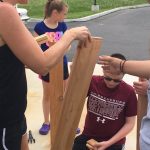
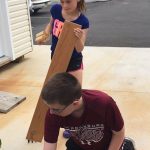
I never want to take for granted the good-will of our young people. Many are teenagers and it wouldn’t surprise me, nor appall me, if once in awhile, I saw a discrediting look, or a rolling-of-the eyes, or a resistance to roll up their sleeves and do some hard physical work. Yet what I see instead takes my breath away. Rather I see willingness to do whatever is asked, or I see their capacity to stretch to meet the new requirements of the situation, which may have seemed out of their comfort zone before, or I see their ability to tell jokes and laugh together in a way I had not sensed before, or I see a sensitivity to include others, like a young resident of the WIN shelter today in our activities, which seem “normal” to us, but are anything by normal to her.
Our young people are truly amazing, which makes the work of the church in some ways easier and in some ways more challenging. We’re starting with young people who have been taught to care for others, so that makes our “work” of engaging them in mission events easier, for their hearts are already headed that way. It makes our “work” of engaging them in mission events more challenging, for it means we need to invite them into hard situations, so they realize caring for others comes at a cost. Sometimes that cost is discomfort that the world isn’t as we wished it would be for all people.
Today our young people and accompanying adults went to the new Women-In-Need shelter, which is designed to provide safe refuge for victims of domestic violence and sexual abuse. I have been on the board of WIN and then active as a volunteer and active as a PA Advocate for victims of domestic violence and sexual abuse. It has been a time of intense learning and sorrow at the way others have been forced to live. I have learned a lot about life through this experience.
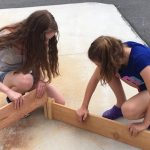
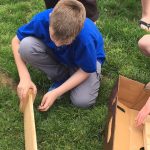
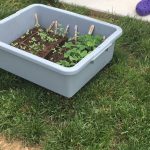
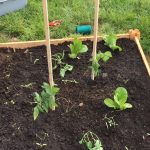
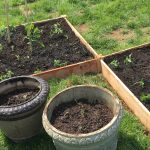
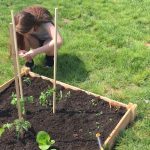
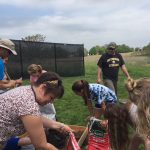
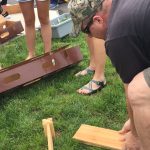
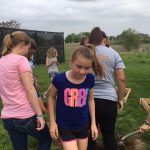
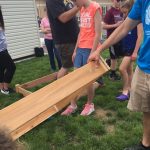
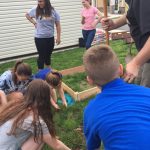
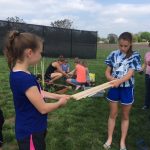
Our physical work today involved clearing sod from the garden area, assembling the raised beds, filling them with topsoil, and planting vegetables and herbs, either grown from our seedlings planted months ago and nurtured by the Hawkins family or provided by WIN. Our spiritual work may have involved asking the question why some people’s lives unfold this way and where God is in it all.
There were two stunning moments today for me. One was when one young resident (9 years old) came and joined us in the planting and fun. She laughed, planted plants and giggled over the jokes about the “creek” created by the overflow of the hose. She had a chance to have “normal” fun, a real treat to her, I suspect.
The other joy was one of the women in the shelter who came to help us plant. We asked her advice on where to plant the cucumbers, and she clearly knew her stuff. She offered good advice on where and how to put the plants together. I don’t know if we realized the value of asking her opinion, but I bet it meant the world to her. Most women who come to the shelter have no idea of who they are or of any value they have, so she clearly is making great progress. That’s to be celebrated.
Today was a great day of service. My heart is filled with gratitude that we are a church who makes this a priority and see it as a way to be formed in our faith.
Please see the photos below or view the photo gallery on our website: www.standrewsshippensbur.og.
Many blessings,
Mother Barbara

Resurrection. Restoration. Reorientation.
After 24 hours of traveling from Jerusalem to Shippensburg, I arrived safely home. In the tiredness I feel this morning, and in light of the comments yesterday by others in our group that “I need a vacation from my vacation!”, I realize there’s a significant distinction between restoration, which we often get from a relaxing and restful vacation, and a pilgrimage which has led us to our place of resurrection.
In my pondering, I believe restoration or renewal returns us, with new energy, to who were before. This often happens to me when I sit on our sailboat: I feel physically rested, my mind is clearer, my heart more open, and I feel more alive and more “like myself”. We all need this rhythm of restoration in our lives and our contemplative practices often are what guide our path toward this time of feeling ready to face the world before us with renewed energy, focus, and strength.
But resurrection changes us. It creates something anew in our hearts, it awakens desires and passions around change in our lives or our world, and it often alters our mental perspective toward the events around us. And it’s hard work and it costs energy. So after a pilgrimage, I think it’s only naturally to feel a bit drained. As one of our pilgrims said yesterday, we have to allow our lives to grow and to “fit into our new shape”. This is the reorientation part: reflecting upon and allowing our experiences to change our lives and to be reoriented to the new self God has created in us on our pilgrimage.
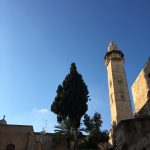
It is true that for me today will be a day of restoration, not only of unpacking and settling into my wonderful life with my family and my home in the woods and the energy and ministry of our parish, but also to gain the energy to allow my life to fit into the new shape God has offered me during my pilgrimage, that shape of deeper surrender to the will of God.
May God bless us all as we travel the pilgrim’s way of resurrection and reorientation and grant us the grace to be restored in the Spirit for this hard and challenging work.
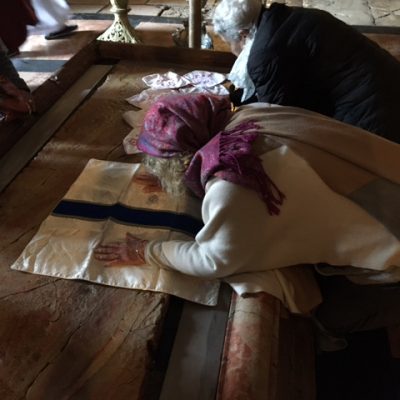
Ready to come home.
This morning I took with me the altar veil (the cloth which covers the chalice and paten) which was made out of Gretchen’s wedding dress. I chose this item to bring from St. Andrew’s, since it represented to me a true understanding of community and communion, the giving of oneself to the greater good and the glory of God. It represented to me so much of what I found as the place of my resurrection: self-emptying, surrender, commitment, and dedication to following Jesus.
Today I laid it upon the marble slab, which somehow oozes this fragrance, perhaps of myrrh, and feels like a very holy space to me. I flattened it out, in the midst of others who were placing crosses, icons, embroidery, or their hands upon the holy altar of Jesus’ healing.
I prayed for our parish, for healing and grace to abound, for courage and strength to follow the way of the cross to pervade our every move, to turn ours hearts ever more toward the ones in our neighborhoods who desperately need to be drawn into community. I felt grace. I felt abundance. I felt Jesus blessing us, this day and always.
I return to you this week, with an open heart and a renewed sense of gratitude and joy, that we have found each other and offer ministry together out of our love of Christ.

Stay close to the cross.
We gathered in the morning light, with the lingering clouds highlighted in a rose hue above the cross which adorns St. George’s Cathedral, and we listened to the instructions of our guide, Iyad, as we headed into the city of Jerusalem to walk the stations of the cross. The various stations are strategically placed throughout the city and many pilgrims traverse the Via Dolrosa.

The instructions Iyad offered us seemed to be mere logistical considerations, yet they were much more for me.
Here’s what I heard him say: “Stay close to the cross”. This was a reminder to keep the group together, since we’d be crossing streets and needed to move as a group. I heard, “stay close to the place of our redemption, stay close to Jesus’ love, stay close to the healing grace Jesus so freely offered us on the cross”.
Next I heard Iyad say, “People may look at you funny for carrying a cross, but don’t worry about it”. I heard, “All that we do in the name of Christ and out of our love for Christ will not be understood by everyone. That’s okay. Be true to yourself and Christ.”
And then we headed out into the city. I heard “yalla — which had been Iyad’s cue to get moving, but I heard, “take the cross into the city, into the places we live, into the places that need to be healed, into the world, wherever you find God’s people.” (I have later come to realize “yalla” really means “Come follow me”, another good reminder to be followers along the way.
We moved as a group, headed toward the Old City of Jerusalem. We traversed the cobblestones, well polished from the millions of footsteps over the centuries. We were one of many who have made this journey. Life was beginning to emerge in the neighborhoods. We made our pilgrimage in the midst of the Muslim call to prayer, in the listening to the cock crow three times, in the awakening of sleepy cats in the alleys, in the presence of Israeli soldiers patrolling the gates to the city, past the Armenian hospice, walking in step with the Jews returning from prayer. And then we began our readings and prayers at each station, a kind of call and response, prayers led by each of us, and each of our hearts responding. Somehow the Spirit placed exactly the right reading or prayer in each of our hands, calling from the depths of our own spirits and souls that truth we needed to proclaim.


At one station, I believe it was VI, there was a woman sitting. After our time as a group, as we prepared to move along, our guide shared with us that the woman was asking for our prayers. It was a moment of grace. Mother Betsy and I instinctively moved forward, asked permission to lay hands upon her, and we prayed, and it felt as though all of us, and perhaps the whole world, was praying along. It was grace that we could offer the love Christ was sharing with us with this woman. In this exchange I heard, “taking the cross out into the city means being up-close-and-personal with others”. This ministry of taking up the cross means touching people, means sharing of ourselves, means a personal interchange. Another important piece of our pilgrimage.
We moved along and ended at the Church of the Holy Sepulcher, where we went to Calvary, where we touched the spot where Jesus hung on the cross. It was in that moment that the fruit of this pilgrimage came to bear. I know what it means for me to “return to the place of my resurrection”. It’s all about self-emptying. The greek word for this act, of course, is Kenosis, and it means the complete release within, so that we can be filled with the Holy Spirit which will guide our lives. It’s a scary thing to do. It takes into account all that I have wrestled with and been offered clarity around this week. It involves surrender, suffering, sacrifice, humility, vulnerability, and above all else, love of Christ. This step stops being scary only when we realize that emptying ourselves doesn’t leave us with nothing, but rather it leaves us with everything~ Christ in our hearts.
We concluded our pilgrimage this morning with a glorious celebration of Holy Eucharist at the Cathedral. And guess what? The sermon was about resurrection! It was one of the best sermons I’ve heard in a long time. One image the preacher left with us was a quote from his deceased wife’s book, that “resurrection is future joy brought near in the present moment” (not exact quote). His wife had described resurrection as watercolor (future joy and hope) and seeping out over the glossy paper (our lives).
I found it. I understand this particular pilgrimage and what God spoke to in my heart. Redemption always happens. And it begins with our love of Christ and our commitment and dedication to not put it aside, and like Peter on the shore eating fish for breakfast with Jesus after his resurrection, to claim it as our own, and take the cross of Christ out into our world.
