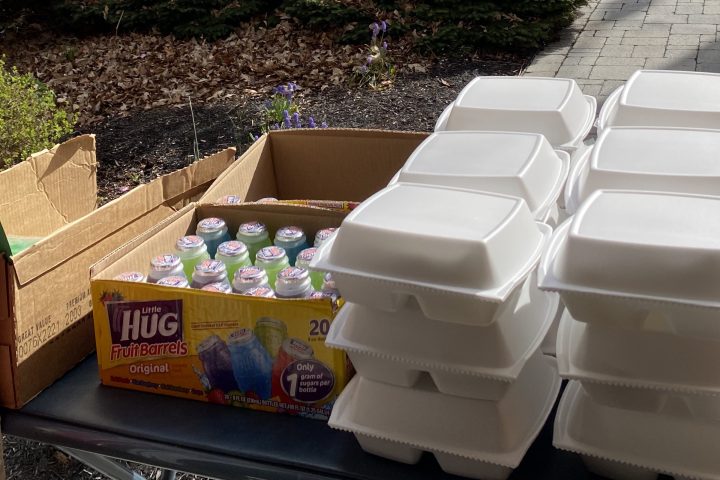
Three times a month we are able to provide meals to our neighbors. It is a gift for us to be able to open our hands and hearts and help others — and of course, love is always a two-way street — we are made richer by their involvement in our lives. We are serving “Grab and Go” meals during this time of safety precautions due to the pandemic, but the meals are healthy and prepared with love. If you would like to be involved in this ministry, please contact Mother Barbara (email on website) and she will connect you with the Coordinator.
Category: Outreach
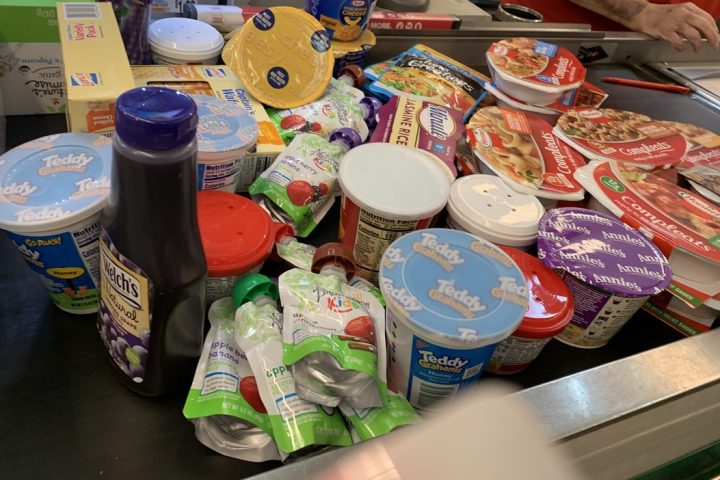
Food Pantry and SPO Collection
Thank you so much. Your generosity is so very appreciated. We asked for your support for SPO and our Food Pantry and you have responded. We are able to continue our regular monthly donation of money to purchase fresh eggs for our local food pantry — and send additional money, thanks to you!
Each month we commit to sending $75.00 to Shippensburg Produce Outreach because we believe this food pantry provides an essential service to our neighborhood.
We thank you too for your donations, in-kind, or monetary, to support our “Little Free Pantry”. We fill it up every other day, so we know your donations are going to people who are hungry. Thank you, from the bottom of our hearts.
Community Meal Served
This past week, our faithful volunteers served meals to our hungry neighbors, by offering take out packages of delicious food. We are noticing that more people are showing up in need, as we are serving many more meals that we previously did. We are grateful that we are able to continue this ministry as helping others, as Jesus did, is at the heart of our being. Thank you to all who contribute to this ministry in many ways. If you would like to make a donation to help cover the expenses of these meals, you can do so by writing a check to St. Andrew’s Episcopal Church and write “Community Meal” in the memo line.
SPO Collection
Thank you so much. Your generosity is so very appreciated. We asked for your support for SPO and our Food Pantry and you have responded. We are able to continue our regular monthly donation of money to purchase fresh eggs for our local food pantry — and send additional money, thanks to you!
Each month we commit to sending $75.00 to Shippensburg Produce Outreach because we believe this food pantry provides an essential service to our neighborhood.
We thank you too for your donations, in-kind, or monetary, to support our “Little Free Pantry”. We fill it up every other day, so we know your donations are going to people who are hungry. Thank you, from the bottom of our hearts.
Community Meal Served
There is hunger in our neighborhoods and we as a church are committed to be there with the people who are hungry, meeting them, welcoming them, and feeding them. We continue our offering of the community meal twice a month (1st and 2nd Monday of each month). Due to the health situation of COVID-10, we have needed to change the way we serve, but we’re willing and able to do that. All our ministers wear face masks, to protect the ones who come to receive the meal. And we serve only “to-go” containers. We miss sitting at the tables with everyone and catching up on life, but we are blessed that we are still able to offer a loving heart and boxes filled with good home-cooked meals.

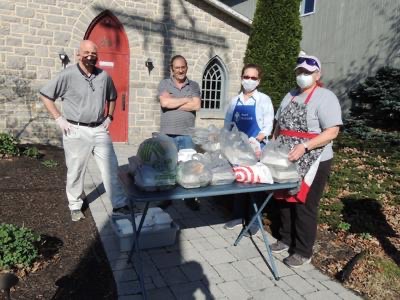
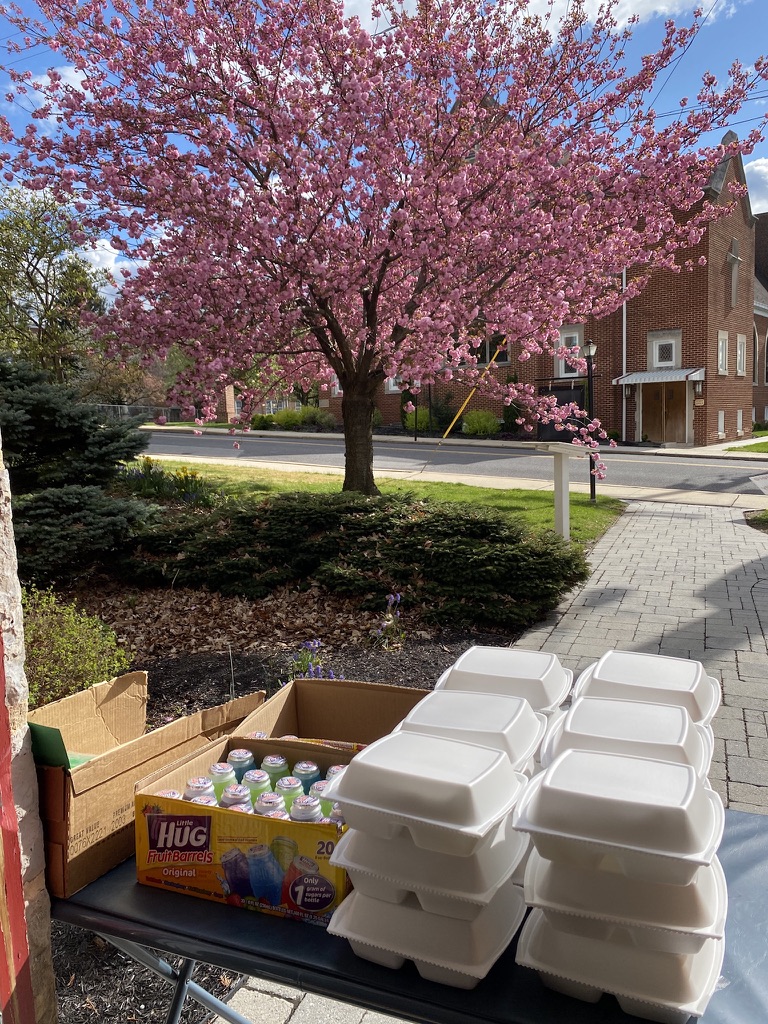
If you would like to join this ministry, please contact the church office at 717-532-8089 or email our Parish Secretary (Melanie) at office@standrewsship.org. She will get you in touch with our Community Meal Coordinator, Mike Stitt.
Recently there was a news article about our church serving this meal . My favorite quote is from Mike Stitt and goes like this: “We consider this meal part of our communion that we have every Sunday. We are not only nourishing the body, we are nourishing the soul, too.”
To read the full article, please click here.
We are blessed that we are able to be the hands and feet of Christ in the world. If you would like to make a donation to the parish to support our feeding program, which includes our Little Free Pantry, please write a check out to St. Andrew’s Episcopal Church and place in the memo line “Feeding Program” and we will use your check to ease the worry on the hearts of many families of how to have enough to eat.

The Closure of the Episcopal Home
For over 93 years. the mission of The Episcopal Home has been to provide the elderly in Central Pennsylvania a safe, loving community, and a supported living environment where they can receive the care they need.
Through its long history, The Episcopal Home has been able to maintain the personal dignity of every resident and provide quality care for all those who have chosen to make their home with us. The support of the diocese through the years – both financial support and untold hours of service – has helped us to care for the residents’ physical, emotional and spiritual needs. Thank you for joining us so faithfully in this mission of compassion and care.
It is with saddened hearts that we inform you that The Episcopal Home is no longer financially sustainable as a care facility and will be closing effective September 30, 2020. While this is an immensely sad time for us all, the Board came to this decision after lengthy, prayerful and prudent discernment. In the past five years, the Board has explored new offorts in fundraising, marketing, and financial management with results that have been good, but not robust enough to allow for sustainability. The trends today in eldercare and healthcare in our Commonwealth do not favor independent personal care homes and the difficulties that we have been experiencing in maintaining our vitality are not uncommon. In the past, the diocese has been very generous in supporting the Home and we are grateful. The margin of loss is not one that even a strident mission effort in our diocese could sustain; an endowment with a principle of ten million dollars would be necessary to ensure a sustainable draw to meet the annual deficit of recent years.
We ask not only for your prayers during this period of transition, but for assistance where able. We are committed to ensuring excellent care for the residents as we work to assist their families and responsible parties to resettle them in alternative facilities and housing, work to alleviate distress, and provide spiritual guidance during this time. Any who are able to volunteer their time and services to ensure the residents are safe and cared for are greatly appreciated. If you would like to learn more about how you can help, please contact the Administrator of the Home, Ms. Mary Grace Shearer. In the Way of Love, The Rt. Reverend Audrey C. Scanlan, Bishop of the Episcopal Diocese of Central Pennsylvania.

Head Start Very Merry Christmas
Each year, our parish collects presents for a family who participates in the Head Start Program. It is such a joyful time to sign up for what we can offer and jump into the Christmas spirit and purchase all sorts goodies for the family. This year we were able to purchase gifts for a mom and her 8 month old son. What fun it was to shop in the baby department!
We are grateful that members of our church live out their faith by helping those in need.
Egg money collection
We have an ongoing ministry of providing $75.00 to SPO (Shippensburg Produce Outreach) each month so they can purchase fresh eggs for their clients. This is a long-standing tradition at our parish to reach out and provide fresh food for our neighbors.
This past month we collected $124.00 which will be sent off to SPO, exceeding our monthly commitment! It is such a blessing to be able to respond to the generosity of God by, in turn, being a generous and caring parish which finds ways to make a difference in the lives of others. Thank you!

Take, eat, this is my body, given for you. Christ the King sermon
St. Andrew’s Episcopal Church
The Rev. Barbara Hutchinson
Christ the King Sunday
November 26, 2017
Take, eat, this is my body, given for you. In these simple yet remarkable words, Jesus gives us everything. In our outstretched hands, we receive whatever it is we are lacking in our heart, mind, body, or soul, be it hope, healing, joy, comfort, inspiration, challenge, insight, creativity, strength, or a taste of what is yet to come in our lives. It is a moment which we would talk about as sacramental, meaning that it is an outward expression of inward grace or, in simpler language, it means Jesus is there, in that bread, in that grace of acceptance we feel in our hearts, and in that pull toward our own wholeness, in God’s righting what has gone wrong in our lives, Jesus is there.
In our gospel lesson today, Jesus asks us to make every moment sacramental, and tells us how to do this. First is to see Jesus in every moment by looking at the need that is before us. Who is hungry, either for food or for respect and dignity? Who is feeling exposed or naked? Who is being imprisoned by jail cell doors or by poverty or addiction or race? Who is heart-sick and needs the touch of a human hand upon theirs? Take, eat, this is my body which is given for you. See my body around you. See me in the need of others.
Jesus then asks us to be Jesus in each of those moments, by having the heart of Jesus. That’s the point behind receiving communion – that our hearts might be shaped and formed, so only love, whose origin is divine, will flow from us, so we will see the need in others and we will care. As hard as it is to be present to someone in need, whether it be grief or hardship or shame or rejection, we will stand with them as their companion and champion. Take eat, this is my body, which is given for you. Be my body, my heart for others.
Finally, Jesus asks us to do for or do to Jesus in each of those moments, by moving from caring to action, by imaging Jesus is each of those people before you, and asking you for help. These instructions aren’t merely metaphors, just as Jesus is not a metaphor. Jesus intends for us to actually put the plate of homemade food before the hungry person. Jesus intends for us to make that phone call to the person we know is lonely, or bring that casserole to the family in need, or talk to the person with kindness, even if we can’t understand them well due to their foreign accent. Jesus calls us into “Kingdom living,” which means seeing and responding to each moment sacramentally, as though Jesus were in the conversation, the interaction, the need. Take, eat, this is my body given for you. Do this for me, for my face is in each of the faces you see.
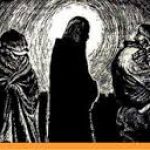
In Matthew’s gospel, today’s story is Jesus’ last teaching opportunity before he is crucified, so we have to imagine Jesus has saved the most important for last. Jesus is saying to us that our actions matter. We are to be accountable to what Jesus has asked us to do. This really is non-negotiable. You may notice that Jesus’ last teaching has nothing to do with orthodoxy, right belief, or how the church is to be structured, but rather, it’s all about orthopraxy – walking the walk, being authentic, making a difference in the world, being accountable for our choices or the choices others make on our behalf. We are living an authentic Christian life when we receive the bread on Sunday and on Sunday afternoon, as we plan our week ahead, we orient our lives to feeding the hungry, clothing the naked, visiting the sick and imprisoned, and welcoming the stranger. Jesus did all of these things, which is why, when we do them, these moments are sacramental. Take, eat, this is my body, which is given for you. In receiving the broken bread, we become Christ’s body, so that we can see, be, and do for Jesus, so we can be sent out into the world to move it toward justice, where wrongs will be set right, and only God’s love will pour from all hearts.
When I was working with the results from the Friday evening exercise at our Diocesan Convention, one person responded to the question, “What is your burning desire?” by saying he wanted to stop doing all the church activities and get out there and feed the hungry, clothe the naked, etc. I was relieved to see this person wasn’t a member here at St. Andrew’s, because it said to me that that parish had lost its sense of Jesus’ imperative to make a difference in the world by looking around us and meeting the needs of others. Many times, churches can get self-absorbed or focused on activities of the people who come to church all the time, but forget those who are still outside the walls of the church. Jesus’ message today is a good reminder that we as individuals and as a parish should always use this as our criterion for making decisions about what to do or how to be or how to spend our money – do our actions meet a physical or spiritual hunger? Do they provide protection for those who feel naked, exposed, or vulnerable? Do they open our hearts so we love as Jesus did, unconditionally and with the desire to heal in every moment? Do they welcome those who may not have felt at home in church before? This is gospel work. Jesus makes that very clear today. This is why two of the promises we make in our baptismal vows are centered on how we make the love of God real to others in concrete ways. We promise to seek and serve Christ in all persons, loving our neighbors as ourselves, and to strive for justice and peace among all people, respecting the dignity of every human being. These promises cover it all. If we live into these two vows, through our choices and actions, we will indeed make each moment sacramental. We will indeed feed the hungry, clothe the naked, welcome the stranger, and visit the sick and those in prison. Take, eat, this is my body, given for you.
Our actions matter, for through them, we enter into a knowledge and experience of Jesus, and that is our salvation. You may notice that when you hand someone a plate of food that you have lovingly prepared at the community meal, or listen to their story, or offer to help them get to their doctor’s appointment the next day, or when you make someone feel really welcome when they sit next to you in the pew, or when, as our young people did, you meet people of different backgrounds, like we did at the ESL class, or when we created a garden for people imprisoned by domestic violence, that you feel a particular closeness to God. That’s Jesus being there. That’s what sacramental living, or Kingdom living is all about.
Today is Christ the King Sunday. It is a day when we celebrate a number of attributes of Jesus, but in particular these two: first, Jesus is the Lord of lords, the King of kings, which means Jesus’ power is over all of the world. This means that if all is not well, it is not the end. This is particularly comforting in our world today, when each week it seems there’s some new thing to be alarmed by, either here in our country or elsewhere around the world – some natural or human evil released into the world. It’s good to know that this is not the end. Jesus will have the last word. Our story from Ezekiel reminds us that, when the Israelites strayed from YH, YH allowed them to stray, permitted them to be oppressed, so they could choose to return. They were never separated from the love of God, who is presented as the metaphor of the Good Shepherd in that story, but they were allowed to wander, living in the wilderness for some time before ultimately being brought back into the fold. This story gives us hope that this will happen to our world also. That, as Desmond Tutu predicted, if we each drop our kindness into a bucket, eventually that bucket will overflow, and goodness will reign. That’s God’s dream and intention for us. Each time we feed the hungry, clothe the naked, welcome the stranger, visit the sick and imprisoned, we are adding to the kindness in the bucket and helping God’s reign come near. Each time we make these choices, we are acknowledging that Christ is Lord of lords, King of kings, and God’s goodness will prevail. Take, eat, this is my body, which is given for you – so you can become Jesus in the world.
The second attribute of Jesus we raise up today is that there is judgment involved. That’s what kings do, they judge their subjects. If we had believed the stories from our last two Sundays were of the real Kingdom of God, not the fake Kingdom of God others presented, this statement might cause us some consternation. That “king” would have slammed the door on all those unprepared, all those without the appropriate resources, all those who lived in a place of fear or punishment. And if we were honest, we’d acknowledge that we’ve been in those places ourselves, and we’d be looking at the outside of a closed door. But here’s something interesting: those described, those unprepared, those without resources, those who live in fear, sound a lot like the people Jesus is instructing us to care for – those who are hungry, vulnerable, imprisoned by fear or paralyzed by oppression. This is when we realize Jesus is a really different kind of king. Jesus, as the King of kings, cares about justice, cares about everyone, cares about righting the wrong ways of the world. Here’s a way this could play out. Jesus as the King of kings, the one who cares about justice, can be good news for the bullies and those bullied. Jesus as the King of kings says that the power of Jesus will work with those who feel the need to prove themselves to be better or stronger than others, by giving voice to his or her victims, which of course has been the whole “#me too” movement, raising voices together to say this isn’t the way of the Kingdom, or by being the force behind laws or school rules that make this behavior unacceptable, and by drawing the bullies into a place of healing the deep hurts or rejection that is at the root of this behavior. This is also good news for those bullied, for God will be their companion and champion. Jesus will be with them. And if Jesus is there, then we will be also. Jesus knows what it is like to be bullied and was able to create new life from this violence and aggression. Jesus, through our actions, will do that for those who find themselves in this situation. Take, eat, this is my body, given for you, so you can do this for and to Jesus himself.
We will break bread together shortly and in receiving it, we will be given everything, all that we need to be whole, all that we need to make the world a better place, all that we need to see Jesus in every moment, to be Jesus in every moment, and to do for or to Jesus in every moment. Our life experiences are our daily bread, as are our times of joy and sorrow, courage and fear, strength and weakness, abundance and scarcity. As we allow Jesus’ body to be broken so we may become it, may we also allow Jesus to break open our daily bread, our lives, so that Jesus may come within. Let us allow Jesus to be our Lord of lords, King of kings, acknowledging that his way is our way and the way toward justice in our world. Amen.

Youth Mini-Mission Event: Watershed Clean-up
A number of us gathered this past Saturday, as the warm air surrounded us and the bright sun shone down upon our shoulders, warming us to the chilliness of Middle Spring Creek, which we found ourselves wading in as we participating in a stream clean-up as one of our Youth Mini-Mission Events.
We began by learning about what a watershed is and why it matters. The map shown to us by our excellent guide visually showed our connections with each other, from those living in New York State, all the way down into Maryland. The blue intricate lines all over the map set the framework for our work as mission: loving our neighbors as ourselves means caring for the water and ground in our area well, so it doesn’t damage those further down in the watershed, and with cleaning up the stream, means actually enhancing the water quality for those in Maryland.
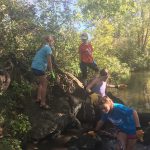
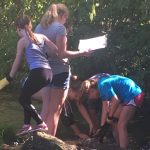
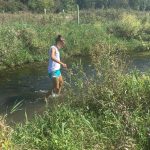
Our work, which was also fun and involved laughter and play, meant we were to wade in the creek and pick up trash.
Some of us were recording the amount of trash collected. Others took water samples for testing.
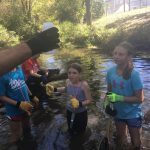
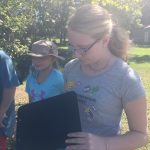
Some delighted in identifying the insects, fish and ducks which we came across during our walk.
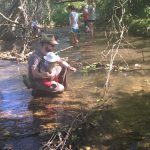
All of us had fun.
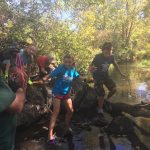
All of us came away believing we had done good work.
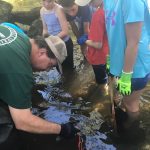
All of us came together to “love our neighbor as ourselves” in a real and concrete way. All of us helped restore our earth to the way it should be.
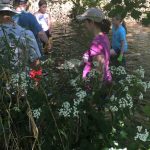
This was good and faithful work, my friends!
To view more photos from our fun day together, please go to our website and look at the latest photo gallery: http://www.
Our next mini-mission event is scheduled for October 21st when we will go gleaning and visit a farm which produces food while not damaging the environment. For more information, please see Mother Barbara or Tim or Irene Hawkins.

Youth Mini-Mission Event: Growing hearts by getting our hands dirty
I never want to take for granted the good-will of our young people. Many are teenagers and it wouldn’t surprise me, nor appall me, if once in awhile, I saw a discrediting look, or a rolling-of-the eyes, or a resistance to roll up their sleeves and do some hard physical work. Yet what I see instead takes my breath away. Rather I see willingness to do whatever is asked, or I see their capacity to stretch to meet the new requirements of the situation, which may have seemed out of their comfort zone before, or I see their ability to tell jokes and laugh together in a way I had not sensed before, or I see a sensitivity to include others, like a young resident of the WIN shelter today in our activities, which seem “normal” to us, but are anything by normal to her.
Our young people are truly amazing, which makes the work of the church in some ways easier and in some ways more challenging. We’re starting with young people who have been taught to care for others, so that makes our “work” of engaging them in mission events easier, for their hearts are already headed that way. It makes our “work” of engaging them in mission events more challenging, for it means we need to invite them into hard situations, so they realize caring for others comes at a cost. Sometimes that cost is discomfort that the world isn’t as we wished it would be for all people.
Today our young people and accompanying adults went to the new Women-In-Need shelter, which is designed to provide safe refuge for victims of domestic violence and sexual abuse. I have been on the board of WIN and then active as a volunteer and active as a PA Advocate for victims of domestic violence and sexual abuse. It has been a time of intense learning and sorrow at the way others have been forced to live. I have learned a lot about life through this experience.
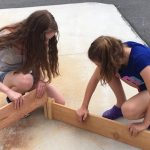
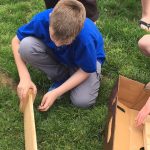
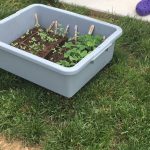
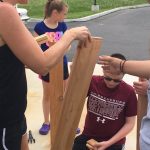
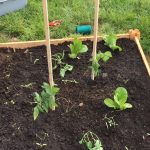
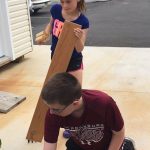
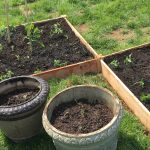
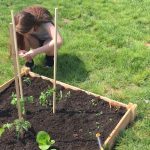
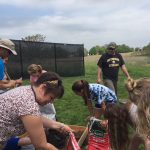
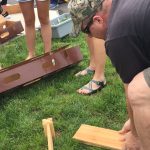
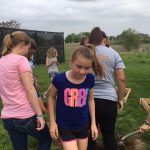
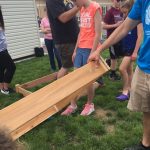
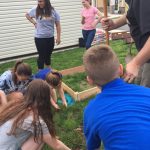
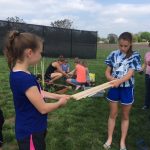
Our physical work today involved clearing sod from the garden area, assembling the raised beds, filling them with topsoil, and planting vegetables and herbs, either grown from our seedlings planted months ago and nurtured by the Hawkins family or provided by WIN. Our spiritual work may have involved asking the question why some people’s lives unfold this way and where God is in it all.
There were two stunning moments today for me. One was when one young resident (9 years old) came and joined us in the planting and fun. She laughed, planted plants and giggled over the jokes about the “creek” created by the overflow of the hose. She had a chance to have “normal” fun, a real treat to her, I suspect.
The other joy was one of the women in the shelter who came to help us plant. We asked her advice on where to plant the cucumbers, and she clearly knew her stuff. She offered good advice on where and how to put the plants together. I don’t know if we realized the value of asking her opinion, but I bet it meant the world to her. Most women who come to the shelter have no idea of who they are or of any value they have, so she clearly is making great progress. That’s to be celebrated.
Today was a great day of service. My heart is filled with gratitude that we are a church who makes this a priority and see it as a way to be formed in our faith.
Please see the photos below or view the photo gallery on our website: www.standrewsshippensbur.og.
Many blessings,
Mother Barbara

Youth Mini-Mission Event – Serving residents at Bethesda Mission
Our youth began Holy Week by serving others. As adults who plan these events, our focus is on our young people experiencing what it means to follow Christ. We don’t use that language necessarily, and although we debrief afterwards and are willing and ready to talk about what the church does and thinks about the work we’ve just done, the emphasis has always been on developing the hearts of our young people to care about others. If we can do that well for our young people, th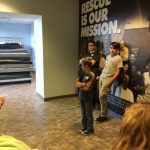 ere will be a place for faith in their lives, for they will discover, almost unexpectedly, that their hearts will be turned toward bringing goodness and healing into the world, and there aren’t too many better definitions of what faith is all about than that!
We gathered at Bethesda Mission, a homeless shelter for men in Harrisburg. There were 25 of us from St. Andrew’s, there to tour the facility and the serve the guests (those who come through the Soup Line, who are not residents of the home) and the residents (those who live at the shelter and are actively engaged in steps toward creating a better life for themselves).

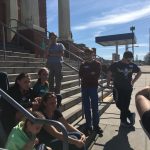
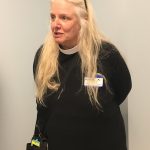
Deacon Wanda met us there as she had made the contact with the mission. She did a great job of engaging us with the residents, encouraging us to pray for those who had asked for our prayers, and to hold the mission in our thoughts.


 We were delighted that the facility was so well run and kept. There was a brand-new medical and dental clinic available to the residents. The hallways were freshly painted. Everything was spic and span! They also provide lockers for the residents to have a safe place to keep their belongings, which is so important.Also, they recognize that when people come off the street, they come “as they are”. They offer them a package of clean towels and sheets and toiletries, and treat each person with dignity and respect.
They have a well-filled pantry, stocked with donations from companies and individuals. Anytime you would like 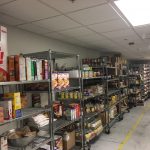 to donate food, there is an outside donation center where you can drop off clothing or food. We brought lots of new men’s crew socks, since that’s something that often is needed.

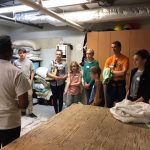
They do have an over-abundance of men who stay there than beds, and pull out these mattresses at evening so all have a place to sleep.

We had a great time serving the meal to the guests and residents. Some offered salad, others desserts (very popular) while others served the main course of fish, rice and beans and vegetables. All the residents were so grateful for our presence. I loved it that our young people felt so at ease with everyone, always wishing them “a good evening”. It’s the little things that really matter and our young people naturally thought of just the right things to do and say.
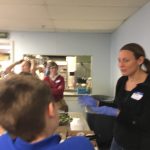
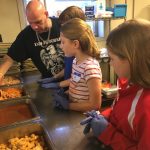
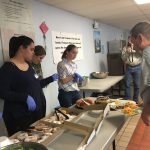

After we had fed them all, we went out to eat our dinner and to enjoy each other’s company.
It was a great day and wonderful way to enter into the holiness of Holy Week, by doing what Jesus did, feed the hungry.