The Mystic in You

We understand that we are hard-wired to be in relationship with God and our theology tells us that God is active in our lives. Have you ever wondered how that happens? How God shows up? How we can be attentive to God’s presence? What helps us open ourselves to God?

These are all great questions and some which we explore in our book study on the book, The Mystic in You: Discovering a God-filled World. The author, Bruce Epperly defines a mystic as people who see holiness in everyday life. Wouldn’t you want to be one? Maybe you already are one?

Our conversation takes us into the world of people throughout the ages who have lived their lives this way and who can offer us insight and guidance. We looked at St. Francis of Assisi at our first session.

Here are the 4 practices offered for us to try, with St. Francis in mind —

Practice One: Finding God in the Nonhuman World

Recover reverence for life by meditating on Psalm 148, along with Francis’ Canticle to the Sun.

Breathe deeply the holiness of life. Let the air you breathe fill you with insight and energy and restore your sense of connection with all things. Take a beauty walk, opening your senses to God’s presence. Rejoice in the gifts of creation. Ask for God’s guidance in terms of how you might best respond to the crises of global climate change, species destruction, and economic and political upheaval.

Practice Two: A Gift to be Simple

Our faith calls us to simplify our lives so that others may simply live. Consider how to simplify your life. What do you need to pare away? In what ways can you live more simply? Where can you devote your resources to promote the well-being of the earth’s impoverished peoples? Consider the words from the Sermon on the Mount, along with Shaker hymn on a daily basis.

Practice Three: Welcoming People of Other Faiths

Observe your own and others’ prejudice toward persons of others faiths or no faith. In what ways do you show hospitality to the religious diversity in your community? What insights can you receive from persons of other faith traditions? Where can you contribute to reconciliation and healing among peoples of the earth? Take time to pray for people of other faith traditions, asking that they be blessed and you would discover your kinship with them.

Practice Four: Finding God in Unexpected Places

Make a commitment to reflect deeply on those who repel you. Ask God to help you see more deeply into their lives. Feast your eyes on humanity in all its variety. Look beyond appearances to see holiness in others. Listen to God speaking through their voices as you attune to god’s image within yourself and others. Pray the prayer attributed to St. Francis.

Please come to these sessions as we continue to explore and deepen our spirituality. The sessions are every other Wednesday at 5:30 p.m. at Mother Barbara’s home. The evening includes dinner (6 p.m.) then discussion (7-8 p.m.).

Youth Mini-Mission Event: Hiking Trail Clean up

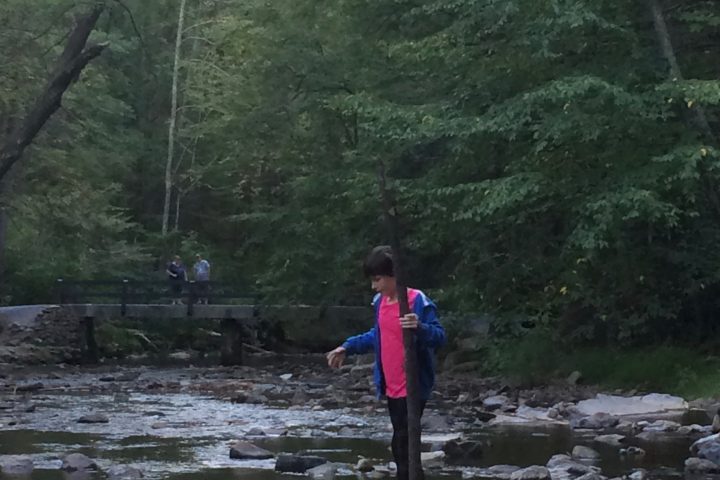
Recently our young people gathered with friends and hiked on the AT (Appalachian Trail), enjoying a glorious day, entering into the beauty of God’s creation, exploring and playing in the nearby stream, climbing on a natural jungle-gym, and reflecting upon how God speaks to us through nature. It was a time of joy and embrace of the goodness we find in one another and in nature. We picked up trash as we went along, always trying to leave the place better than we found it. It’s amazing how we can fall into deeper friendships and closer relationships just by walking a trail together — but we did! Our Youth Mini-Mission Event program is designed to offer our young people (9-18) the opportunity to serve the world around them while reflecting on what our activities tell us about God and each other.

To view more photos of the event, please see the photo gallery on this website.

Where did Jesus walk? Why does it matter to us?

This past Wednesday we gathered together, enjoyed a meal together, and then engaged in a presentation that wove together Mother Barbara’s experiences and photographs of her Holy Land trip with scriptural references to the locations where Jesus traveled and all set within the cultural and political context of Jesus’ time. There was an opportunity to hear Mother Barbara’s spiritual insights from each of the locations as well as quiet time to reflect upon our own insights gleaned from the images and text.

We looked at the significance from a biblical and contextual perspective for the following locations where Jesus was cited to have been or traveled to, according to the gospels: Bethlehem, Egypt, Nazareth, the Jordan River, Capernaum, and the Sea of Galilee.

If you were unable to attend this evening’s spiritual formation event and would like to hear more about these sites or view Mother Barbara’s photographs, please see her to make arrangements to learn more.

We will offer Part II to this presentation which will focus on Jerusalem and the areas around the city (Garden of Gethsemane, Bethany and Bethpage, Pool of Bethsaida).

Celtic Spirituality

Each week, about 15 of us gather together, share a meal, listen to the reading of a book regarding Old Growth Forests, and then engage in a lively conversation around the content in John Phillip Newell’s book, Christ of the Celts, the Healing of Creation. This eloquent and poetic book shares with us the ideals and truths of Celtic Spirituality, such as we are all made in the image of God, we are God’s beloved, and we are intrinsically connected to all of creation and God’s creatures. The strongest words of this past evening’s reading was that it is only love, not judgment, but love which transforms us.

Our conversations are deep, insightful, and sacred. You are always welcome to join this special and holy gathering.

Youth Pre-Confirmation Class

Every month our young people gather to ask remarkable questions and to learn about our Eucharistic service. We work our way through the Eucharistic service, this past Sunday learning about and creating our own Opening Acclamation and Collect (collecting prayer). Here’s an example of our young people’s great work:

Opening Acclamation —

Celebrant: Bow down and open your arms to the Lord; Let your soul be open to God; and thank the Holy Spirit for the forgiveness of sins.

People: We open our souls and feel happy. The forgiveness of sins is glorious!

The most important part of the class is when they are encouraged to ask any questions on their hearts. Their hands shoot into the air, with their minds racing, and their hearts wanting to know more about God than ever. They ask questions such as “Who created God?” or “Did those miracles really happen?”

This is an alive and energized group of young people who want to know God and know about God. How blessed we are!

Vestry Retreat 2018

Last Saturday our parish leadership, rector and vestry members gathered with The Rev. Canon Dan Morrow, the Diocesan staff person responsible for Congregational Development and Missional Life to hold our parish in prayer, celebrate the Eucharist together, and to focus on the parish’s primary tasks of Gather, Transform, and Send. We learned the specific aspects of each of these tasks, discussing our current ministry in each of those areas and being attentive to where our energy to strengthen these areas may lie.

We then studied Anglican identity and temperament and shared our responses to what aspect suited us most. Our top choices were mystical in our Anglican identity and open-minded in our temperament.

We left with energy and enthusiasm to bring this process of discernment of identity and purpose to our parish. More to come!

Sharing of the Sacred

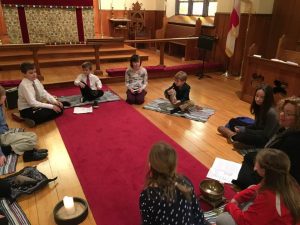
Our young people are amazing and have the ability to see the holy around, among, and within them. We wanted them to have an opportunity to share all this with their bishop, Audrey Scanlan, during her visit with us on Sunday.

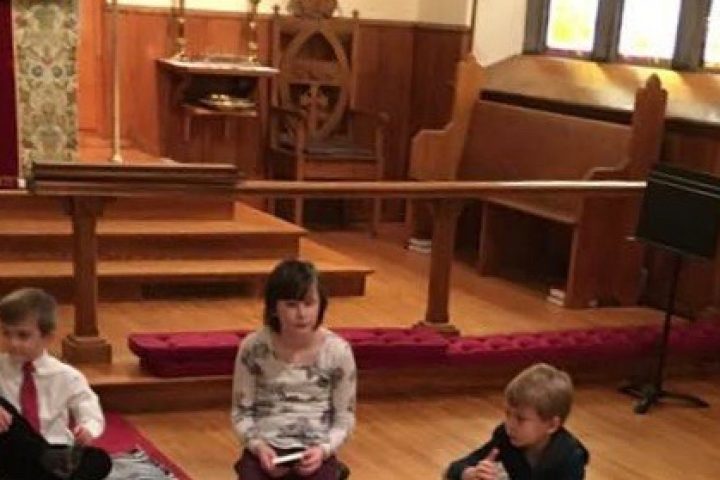
Using a format that involved sharing, silence, meditative chanting, and the ringing of a singing bowl, children and adults gathered together to share the sacred in their lives and in their church experience. Themes of finding God in comfort, love, peace, wholeness, and in nature came from our hearts. It was clear that the children find God often and in many places, including in our church, through their offering of their musical talents, through the people near them, through the support others have given them, through the safety of the community, through the proximity to the altar, through their service as acolytes, and through the hearts of others. One young person said that when she sings in front of the congregation, it is clear to her that God is looking back at her through all the people gathered.

How blessed we are that we have young people who are being formed well in their faith, with eyes opened to the presence of God within, around, and among them. Thank you to all who support our young people in their faith formation. I believe it’s making a big difference to them — and to us!


Bishop Scanlan’s Visit

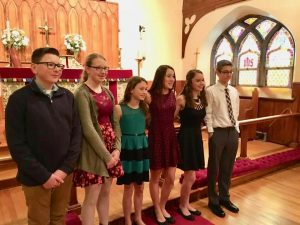
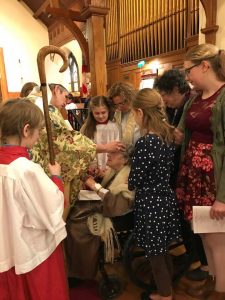
It seemed appropriate that the gospel text for the day of the Bishop’s visit was on Jesus’ mountaintop experience which transfigured him and transformed the disciples in their understanding of Jesus’ identity and their shared mission. That’s what happened yesterday when Bishop Audrey Scanlan led us in worship, confirmed those ready to commit anew to their faith, blessed a parish member and resident of The Episcopal Home who wanted to reaffirm her faith, engaged in the sharing of stories and experiences of the sacred, and met with our vestry. It was a mountaintop experience for us all! We left, coming down from the mountain, changed and clearer of who we have become as a parish and what God has placed on our hearts to do. We all offered the depth and breath and best of ourselves to God and each other — and the Holy Spirit gathered us all together to bring God’s glory into our world.

We are so grateful for our bishop’s pastoral guidance and leadership and her ability to enter fully into our life as a parish and to enhance it.

We offer our congratulations and blessings upon the people who were confirmed or who reaffirmed their faith yesterday:

  • Emma Eshleman
  • Cameron Gilbert
  • Bramley Hawkins
  • Della Hawkins
  • Shannon O’ Donnell
  • Zachary Rhodes
  • Laurel White
  • Dolly Koehler

One of the very meaningful parts of our bishop’s visit was the time she spent with our younger members. We gathered in a circle and shared an object that is special to us and why and then shared where we each find God at St. Andrew’s. After each person’s sharing, we entered into a time of silence, then chanting, which seemed to draw us ever closer to each other and with God. What was remarkable and stunning to me was that all of our young people seemed to speak so naturally about finding God at St. Andrew’s. It was as though this is the most natural thing in the world. For many of us, it is. But for some, those two things, spirituality and the institutional church, don’t always come together. I feel blessed that we at St. Andrew’s are forming our young people to expect to discover God in what they do here at church and in the people gathered. One of the most touching responses for me was when one of our young people mentioned that when they stand up in front of the congregation to sing, they are aware of God looking back at them through the people in the pews.

The bishop spent time getting to know the vestry members and exploring what the term missional means. This word takes the more familiar concept of outreach and expands and extends it to speak of experiences where all those involved are changed and transformed. There is a mutuality of growth that happens when we move from doing something FOR someone to doing something WITH someone in such a way we are all changed and our lives are enhanced.

I know the bishop’s visit is one day which is etched in my heart, now and through all eternity. This is what church is all about. Many blessings, Mother Barbara


Pre-Confirmation Class Session #1

Today we began our Pre-Confirmation Class– and boy, were we delighted and amazed (once again) at our young people — what they’re interested in, the questions they have, and their already deep understanding of worship.

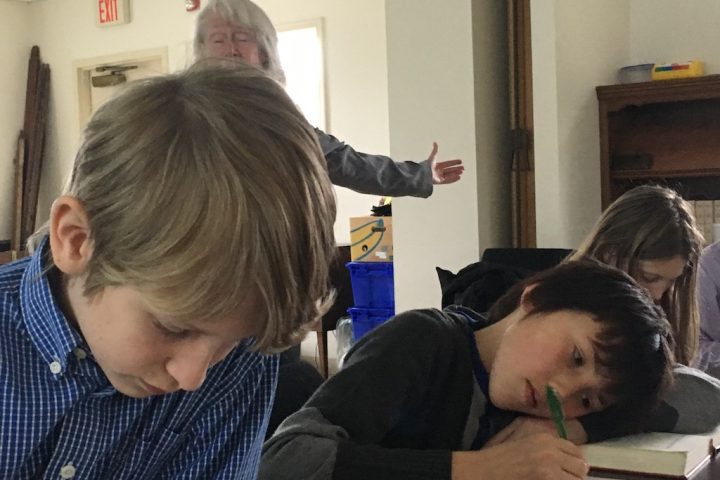
We were blessed that Dean Robyn Szoke was with us to help facilitate the conversation about the beginning part of our Holy Eucharist Service, touching on the topics of: how we come into worship, how (and by whom) are we welcomed, and the Collect for Purity (who says it and why).

Dean Robyn Szoke teaching

Each young person contributed to the conversation and they busily wrote their amazing questions and thoughts in their special journals provided for them.

Great ideas, amazing questions

What was best of all though were their questions! It was so great to offer them the safe space to ask all the burning questions on their hearts. That makes me so happy that we have young people who are thinking and wondering and coming to us to ask our thoughts.

I also introduced them to the exercise they will do with the Bishop when she is here in two weeks. I have asked each one to bring with them something from home that is sacred. We talked about what that word “sacred” means and they came up with the definition of something that’s special or important. With this item to share, they are then going to offer why it is sacred to them. After everyone has shared (including me and the bishop), we will give the young people an opportunity to tell the bishop what it is about church that is sacred (special or important) to them, whether it’s taking communion to the residents of The Episcopal Home, or playing their musical instrument, or being an acolyte, or washing feet on Maundy Thursday. I am so happy our bishop will get to know these amazing young people.

Our next Pre-Confirmation Class will be on February 25th at 11:15 a.m. in the upstairs PLC. Parents and grandparents are always welcome to come to the class too!

It’s a family event!


Celtic Spirituality Series 2 Session #1

What is your deepest desire or yearning? This was the question answered by those gathered Wednesday evening as we continued our exploration of Celtic Spirituality. Some of the answers were: all people could be safe, a connection to something bigger than myself, acceptance, reunion, harmony, love that transcends boundaries, contentment, a sense of well-being, a more even playing field for all, unity. Not surprisingly, we realized that our deepest desires are also what we imagine God’s deepest desires to be. This notion of the connectedness of our deepest desires with God’s is consistent with the understanding in Celtic (and some Western) Spirituality that we are made in the image of God, therefore, our deepest desires are of God, therefore we are made from a place of goodness, not sinfulness, and therefore our work as humans is to return to (be remembered with) the place of union with God.

In John Philip Newell’s book, Christ among the Celts: The Healing of Creation, Newell makes the statement: “Christ is the memory of what we’ve forgotten”. This is consistent with the writings of Joan Chittister (a Roman Catholic nun) who speaks that “Prayer is the memory of the Beloved, the filter, the scrim, through which we begin to see all reality, all life, all decisions, all purposes and all goals.” We had an insightful conversation around the role of the Eucharist, of the gospel and of grace in drawing us back into the remembrance of what we’ve forgotten, of Christ.

We left the evening pondering how the Church, how Christ, and how our spiritual practices support our return to Christ and to the deepest desires within us, which are of God.

We closed with this prayer from John Philip Newell’s book, Sounds of the Eternal: A Celtic Psalter:

We seek your presence, O God, not because we have managed to see clearly or been true in all things this day, not because we have succeeded in loving or in reverencing those around us, but because we want to see with clarity, because we long to be true, because we desire to love as we have been loved. Renew our inner sight, make fresh our longings to be true and grant us the grace of loving this night that we may end this day as we had hoped to live it, that we may end this day restored to our deepest yearnings, that we may end this day as we intend to live tomorrow, as we intend to live tomorrow.   Amen.

Our next session is on Wednesday, February 7th beginning at 5:30 p.m. at Mother Barbara’s home. All are welcome.


Affirming our Young People

At our Annual Meeting on Sunday, we approved the slate of vestry members, recognized the outgoing vestry members, celebrated our ministries in 2017, had a frank conversation about our financial deficit, and approved our budget for 2018. All of those things were fabulous and spoke volumes of the strength of our parish.

For me, however, the highlight was in presenting my Rector’s Award to two of our young people. Typically, only adults receive this award and it’s usually because of some new ministry developed, some extra giving of energy and enthusiasm to an existing ministry, or some show of extra devotion to our parish. I decided this year to give this award to two young people — and have pledged to each year raise up our young people in their ministry at St. Andrew’s with my award.

I chose Alexander Smeltz and James Williams as recipients of my award. These young people (ages 11 and 12) have shown to me and our parish what it means to be a Christian: being willing to take a risk in answering God’s call for the benefit of the community. Alexander has delighted us with his playing of his trombone, a relatively new instrument for him, and has on many occasions offered himself for the glory of God in this way. Alexander also comes to church all the time, attends the mini-mission events, helps at the community meals, and “lives and breaths” church — and we are all the better for his dedication.

James Williams approached me and asked me how old someone had to be to preach. I was quite impressed. James and I preached a sermon last fall and James shared his own personal reflections that opened up the text for us all. James also offers his musical talent in playing the trumpet in church often, comes to church all the time, attends the min-mission events, and is always the eager acolyte. He is passionate about being involved in the church in all possible ways. Both these boys have already moved from a casual faith to a committed one.

I presented them with a graphic New Testament (a Bible presented in comic book style) and a necklace which I hope will always remind them of God’s love and the love of many in our parish. The necklace says “Always remember you are braver than you believe, stronger than you seem, and smarter than you think, loved more than you know.”

My sense is that these two boys, as well as other children in our parish, have already figured out how to be spiritual AND religious, in that we have given them the opportunity and encouragement to find and express their spirituality within our church setting. They give me much hope for the church, here and now in the example they are setting for us all, and for the future of the church as I believe they will continue to be leaders. Thank you Alexander and James for your leadership and your love of God and of our parish!

In Christ’s love, Mother Barbara

Being Led into and Out of Exile- sermon for Seasons of Creation #2: Land

St. Andrew’s Episcopal Church

The Rev. Barbara Hutchinson

Seasons of Creation #2: Land

October 15, 2017

If we as an American nation were to create a written, non-partisan snapshot of the life of our country today and hand it to someone who, let’s imagine, doesn’t know our history, or if we were to place this honest account of who we are today into a time capsule, to be opened hundreds of years in the future, and ask that reader to create our backstory, the influences, the choices, the consequences that brought us to where we are today – that would be similar to the process of how the story of the Garden of Eden was written. The stories of the creation and the expulsion of Adam and Eve from the Garden of Eden, which we have labelled in recent history as “the fall”, can be seen as an ancient warning tale. This story was produced by Israelite sages, working with and editing older ancient and Near Eastern sources, most likely during the exilic period, which means the time the Israelites were held in captivity by the Assyrians in the city of Babylon. In the aftermath of their failed monarchy, they were attempting to understand their historic experiences of royal exploitation, civil war, erosion of the wilderness traditions, and their eventual conquest and dispossession. They had entered into a stage of fruitful self-reflection on the origin of human oppression and violence that had brought their people – and all other tribal people—nearly to extinction. Something had gone fundamentally wrong with the human journey, of which Israel’s national trauma was but a symptom.

The Israelites, no longer a united nation, found themselves separated from their homeland, exiled from what they perceived to have been their perfect state, a living situation within and around the temple of Jerusalem, so they needed to talk about why that exile had happened. They sensed a separation from God, since they experienced the fullness of God’s presence in the temple, which was now 900 miles from them, and they needed to reflect upon what went wrong with their relationship with God. Was God angry at them? Was it something they did to bring God’s wrath upon them? Or was this exile somehow due to their forgetting their tribal ways, of failing to continue to live in concert and partnership with the land, by building a civilization which brought people away from the land, which upset the natural balance between humankind and the creation? They wanted to create a backstory that would explain their sense of disconnection from their homeland and from God, that would explain the systems of domination rampant in their world, and to explain the killing on both sides.

Jonah, who is referred to in our gospel, faces a similar situation in Ninevah, which is also a city of the Assyrians, which was to Jonah a symbol of overwhelming and ruthless imperial power, a people who took pride in their power and their reputation of their capital city being known as a “city of blood.”

The story of the Garden of Eden is the attempt by the Israelites to explain what influences, decisions, and consequences brought them to the current state of exile, with the intention of understanding what change was required of them to live again in right relationship with each other, with God, and with all of creation.

Eve picked the apple from the tree of knowledge of good and evil. We have often been taught to interpret this act as disobedience to God, for God had forbidden Adam to eat this fruit, and although, according to the story line, Eve was not yet created when this edict was given, we assume Eve somehow knew this intuitively or that Adam had shared this with her. The fact remains that Eve chose to have knowledge, to have her eyes opened to an increased sense of awareness of the world around her. She chose to move out of the safe and idyllic container made for her by God, where there was no work, but also no challenge, no real engagement, no real purpose, where life would have been fine, pleasant, but perhaps a little boring. Instead she decided to “go for the ring on the carousel”, to live into the gusto of what life could be, to encounter the good and the bad, the joy and the pain, the place of birth and death, the place of right and wrong decisions, all whose consequences carry forward.

This life she chose sounds a lot like the life Jesus challenges us to live. Can you hear his voice saying to you, “Stay awake! Be alert! Be ready for the Kingdom of God, which is near, around and within you. Fully engage the world and bring my kingdom about. It is not going to be easy, but it will be good.” Although Jesus reminds us of the need for solitude, Jesus rarely implies we should be passive about life, but rather implores us to fully engage in it.  We know from our own experiences that when we do, when our eyes are opened, this new awareness brings us into a new state of vulnerability, (that’s the hard part that comes with opening our eyes to the knowledge of good and evil) which Adam and Eve understood in our creation story, and brings us also the opportunity to accept responsibilities for our mistakes along the way and change.

Richard Rohr, a contemporary theologian, speaks of this “alive” place that Eve found herself in upon eating of the tree of the knowledge of good and evil, and which we too can find ourselves in, as being alive in the movement of the Spirit. He says, “When the Spirit is alive in people, they wake up from their mechanical thinking and enter the realm of co-creative power. As in Ezekiel’s vision, the water flows from ankles to knees to waist to neck as the New Earth is hydrated. Like Pinocchio, we move from wooden to real.”

Because of the choice that Eve made, and the choices that Israel made, life had perhaps become fuller, but also definitely harder. For the knowledge to see good and evil meant constantly struggling with people who would have different points of view regarding what constituted each polarity. There would be division amongst the people, which would lead to some wanting to influence or control others to their point of view. One can imagine Israel, with their codification of God’s laws into the 10 Commandments, as a way to set in stone this delineation of what is good, so their children’s children will learn, and ultimately their world can be restored to the place of original contentment and containment by God or of God.

Jonah too attempted to codify or put into a container the people worthy of God’s mercy, love, and compassion, deciding for himself that the Ninevites would not be in that box. He didn’t want God to save these most unlikely people, for they were evil, by all accounts of the world’s standards. Jonah, like so many of us, didn’t have the self-reflective stance of the Israelites when writing their backstory, to include the possibility that he too may have erred, he too may be in need of God’s love, mercy, and compassion, and if it’s there for him, it’s there for everyone.

Exile features heavily in our stories today, whether it is within Jonah, the interior exile he lived in without acknowledging his own need for God’s mercy, love, and compassion, or with the people of the nation of Israel who wrote the story of the Garden of Eden. We have Adam and Eve exiled from the Garden, Jonah exiled into a foreign land, Jesus predicting his exile into the darkness of the tomb, separated from human life. These places can feel dark and lonely and we can be aware of our separation from that which gives us life.

Today we celebrate our second Season of Creation, the Land. Although we can think of the abundance of the land, we can also be reminded of our exile from the right relationship with the Land, which can be traced to the time when we began to take more from the land than we needed or was right to take.

Wendell Barry is quoted as saying, “we all live by robbing nature, but our standing of living demands that the robbery shall continue”. Our excessiveness of need has shifted that relationship God set up for us from caretaker of Creation to owner or exploiter, when we began to ask our earth to over-produce crops which would be shipped to the other side of the world for a self-generated appetite for food not locally produced, when we strip the animals of their natural habitat when we deplete the rainforests, when we extract and deplete the fossil fuels, when factory farming releases vast and dangerous quantities of carbon dioxide and methane into our atmosphere, when our intensive agriculture produces fragmented and inhospitable environments for wild animal and plant species, we realize something has gone terribly wrong.

Just like the Israelites, we realize we are in a place of exile from what is right. When we enter into the awareness of this alienation, when we speak with facts around the change in our climate, we can be propelled into the next season of creation, our next season of spirituality: wilderness. Although that sounds like something to avoid, it’s actually a time when we acknowledge our yearning to restore our world to wholeness, when we engage in gathering facts and resources to know how to make a better and more equitable balance between the needs of humankind and the needs of the created world. When trying to move a global community into a place of knowledge of the good and evil we have done, or may continue to do, into a global community which yearns for the good, we can understand why people are so divided about the reality and the need for change. Change happens at different rates for each of us. It’s a big job to get us all into exile and beyond. However, Adam and Eve were two people who each ate the apple, each gained the knowledge of good and evil. Maybe there’s hope embedded in that story that tells us that there will be a time when all people will be on the same page about righting our relationship with God’s creation.

This place of exile can be uncomfortable, which could be why Al Gore named his report on global warming as “An Inconvenient Truth”. We often want to avoid going into this place, yet I believe it is God’s mercy, love, and compassion that opens our eyes, that propels us into exile, into this place of noticing, and sitting in the darkness of self-reflective behavior for a bit, not just blaming others, as Jonah did, but like the Israelites, of feeling the alienation between what we are doing and the job God gave us to do, care for the earth and for all the living creatures set under our care.

As we find ourselves in exile, as a people of God, or in our individual souls, we are invited to look at what container we have placed ourselves in and ask ourselves the questions: “Do we stay there because although it’s a bit dark, and we see only dimly, that it feels safe or comfortable or without challenge?” For often in our containers, the light is low, and we may not be able to see the false parts we have become, the inaccurate assumptions of others we carry forward, the wrongs to others and to our land we have done, and we chose to settle for this life, not fully lived. It’s not a bad way to live; it’s easier, in fact; but when I’ve lived in that place, I’ve always known there’s something richer within it or beyond it, that will take work to get to.

Because Jesus stayed in the tomb, contained with the earth, with the massive round stone rolled across its entrance, Jesus sanctified, made holy, saturated with the presence of God, the darkened container he was put in, and therefore sanctified all the darkened containers we put ourselves into. But the point of the story of Jesus is that he didn’t stay there. And his resurrection invites and implores us not to stay there either.

God’s mercy, love, and compassion draw us into these places of alienation and disconnect. We resist going there often, sometimes by saying, “We’ve always done it that way” as a reason not to move into that place of uncertainty, where the old begins to fade away before we can see the new. Or sometimes we resist the draw into exile because it’s easier to fortify the sides of our containers with bolstered arguments or fiery threats.

But the pattern of faithful living, that paschal mystery we often speak of, moves us into a place of exile, of self-reflection, of noticing the places of disconnect between what God has asked of us and what we are doing, to the land, or in our lives, or in our relationship with God, for they are all connected, of acknowledging what we have done or left undone that has caused harm. But then the Spirit turns us again toward God, when God’s mercy, love, and compassion can strip from us all that we have falsely created, to return us to what God has created within and around us.

If we listen closely enough, in these times of exile, which our own lives may be in now, or our country may be in right now, we can hear God’s voice saying, “Come and see, I am bringing you to a new way of experiencing me. Come and see.”

Amen.