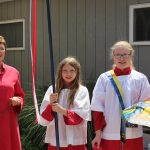
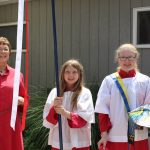
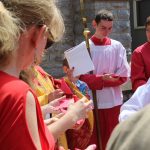
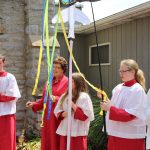
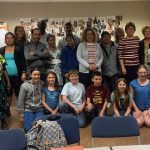
Affirming our Young People

At our Annual Meeting on Sunday, we approved the slate of vestry members, recognized the outgoing vestry members, celebrated our ministries in 2017, had a frank conversation about our financial deficit, and approved our budget for 2018. All of those things were fabulous and spoke volumes of the strength of our parish.

For me, however, the highlight was in presenting my Rector’s Award to two of our young people. Typically, only adults receive this award and it’s usually because of some new ministry developed, some extra giving of energy and enthusiasm to an existing ministry, or some show of extra devotion to our parish. I decided this year to give this award to two young people — and have pledged to each year raise up our young people in their ministry at St. Andrew’s with my award.

I chose Alexander Smeltz and James Williams as recipients of my award. These young people (ages 11 and 12) have shown to me and our parish what it means to be a Christian: being willing to take a risk in answering God’s call for the benefit of the community. Alexander has delighted us with his playing of his trombone, a relatively new instrument for him, and has on many occasions offered himself for the glory of God in this way. Alexander also comes to church all the time, attends the mini-mission events, helps at the community meals, and “lives and breaths” church — and we are all the better for his dedication.

James Williams approached me and asked me how old someone had to be to preach. I was quite impressed. James and I preached a sermon last fall and James shared his own personal reflections that opened up the text for us all. James also offers his musical talent in playing the trumpet in church often, comes to church all the time, attends the min-mission events, and is always the eager acolyte. He is passionate about being involved in the church in all possible ways. Both these boys have already moved from a casual faith to a committed one.

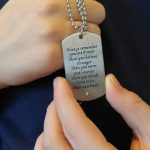
I presented them with a graphic New Testament (a Bible presented in comic book style) and a necklace which I hope will always remind them of God’s love and the love of many in our parish. The necklace says “Always remember you are braver than you believe, stronger than you seem, and smarter than you think, loved more than you know.”

My sense is that these two boys, as well as other children in our parish, have already figured out how to be spiritual AND religious, in that we have given them the opportunity and encouragement to find and express their spirituality within our church setting. They give me much hope for the church, here and now in the example they are setting for us all, and for the future of the church as I believe they will continue to be leaders. Thank you Alexander and James for your leadership and your love of God and of our parish!

In Christ’s love, Mother Barbara

Take, eat, this is my body, given for you. Christ the King sermon

St. Andrew’s Episcopal Church

The Rev. Barbara Hutchinson

Christ the King Sunday

November 26, 2017

Take, eat, this is my body, given for you. In these simple yet remarkable words, Jesus gives us everything. In our outstretched hands, we receive whatever it is we are lacking in our heart, mind, body, or soul, be it hope, healing, joy, comfort, inspiration, challenge, insight, creativity, strength, or a taste of what is yet to come in our lives. It is a moment which we would talk about as sacramental, meaning that it is an outward expression of inward grace or, in simpler language, it means Jesus is there, in that bread, in that grace of acceptance we feel in our hearts, and in that pull toward our own wholeness, in God’s righting what has gone wrong in our lives, Jesus is there.

In our gospel lesson today, Jesus asks us to make every moment sacramental, and tells us how to do this. First is to see Jesus in every moment by looking at the need that is before us. Who is hungry, either for food or for respect and dignity? Who is feeling exposed or naked? Who is being imprisoned by jail cell doors or by poverty or addiction or race?  Who is heart-sick and needs the touch of a human hand upon theirs? Take, eat, this is my body which is given for you. See my body around you. See me in the need of others.

Jesus then asks us to be Jesus in each of those moments, by having the heart of Jesus. That’s the point behind receiving communion – that our hearts might be shaped and formed, so only love, whose origin is divine, will flow from us, so we will see the need in others and we will care. As hard as it is to be present to someone in need, whether it be grief or hardship or shame or rejection, we will stand with them as their companion and champion. Take eat, this is my body, which is given for you. Be my body, my heart for others.

Finally, Jesus asks us to do for or do to Jesus in each of those moments, by moving from caring to action, by imaging Jesus is each of those people before you, and asking you for help. These instructions aren’t merely metaphors, just as Jesus is not a metaphor. Jesus intends for us to actually put the plate of homemade food before the hungry person. Jesus intends for us to make that phone call to the person we know is lonely, or bring that casserole to the family in need, or talk to the person with kindness, even if we can’t understand them well due to their foreign accent. Jesus calls us into “Kingdom living,” which means seeing and responding to each moment sacramentally, as though Jesus were in the conversation, the interaction, the need. Take, eat, this is my body given for you. Do this for me, for my face is in each of the faces you see.

In Matthew’s gospel, today’s story is Jesus’ last teaching opportunity before he is crucified, so we have to imagine Jesus has saved the most important for last. Jesus is saying to us that our actions matter. We are to be accountable to what Jesus has asked us to do. This really is non-negotiable. You may notice that Jesus’ last teaching has nothing to do with orthodoxy, right belief, or how the church is to be structured, but rather, it’s all about orthopraxy – walking the walk, being authentic, making a difference in the world, being accountable for our choices or the choices others make on our behalf. We are living an authentic Christian life when we receive the bread on Sunday and on Sunday afternoon, as we plan our week ahead, we orient our lives to feeding the hungry, clothing the naked, visiting the sick and imprisoned, and welcoming the stranger. Jesus did all of these things, which is why, when we do them, these moments are sacramental. Take, eat, this is my body, which is given for you. In receiving the broken bread, we become Christ’s body, so that we can see, be, and do for Jesus, so we can be sent out into the world to move it toward justice, where wrongs will be set right, and only God’s love will pour from all hearts.

When I was working with the results from the Friday evening exercise at our Diocesan Convention, one person responded to the question, “What is your burning desire?” by saying he wanted to stop doing all the church activities and get out there and feed the hungry, clothe the naked, etc. I was relieved to see this person wasn’t a member here at St. Andrew’s, because it said to me that that parish had lost its sense of Jesus’ imperative to make a difference in the world by looking around us and meeting the needs of others. Many times, churches can get self-absorbed or focused on activities of the people who come to church all the time, but forget those who are still outside the walls of the church. Jesus’ message today is a good reminder that we as individuals and as a parish should always use this as our criterion for making decisions about what to do or how to be or how to spend our money –  do our actions meet a physical or spiritual hunger? Do they provide protection for those who feel naked, exposed, or vulnerable? Do they open our hearts so we love as Jesus did, unconditionally and with the desire to heal in every moment? Do they welcome those who may not have felt at home in church before? This is gospel work. Jesus makes that very clear today. This is why two of the promises we make in our baptismal vows are centered on how we make the love of God real to others in concrete ways. We promise to seek and serve Christ in all persons, loving our neighbors as ourselves, and to strive for justice and peace among all people, respecting the dignity of every human being. These promises cover it all. If we live into these two vows, through our choices and actions, we will indeed make each moment sacramental. We will indeed feed the hungry, clothe the naked, welcome the stranger, and visit the sick and those in prison.  Take, eat, this is my body, given for you.

Our actions matter, for through them, we enter into a knowledge and experience of Jesus, and that is our salvation. You may notice that when you hand someone a plate of food that you have lovingly prepared at the community meal, or listen to their story, or offer to help them get to their doctor’s appointment the next day, or when you make someone feel really welcome when they sit next to you in the pew, or when, as our young people did, you meet people of different backgrounds, like we did at the ESL class, or when we created a garden for people imprisoned by domestic violence, that you feel a particular closeness to God. That’s Jesus being there. That’s what sacramental living, or Kingdom living is all about.

Today is Christ the King Sunday. It is a day when we celebrate a number of attributes of Jesus, but in particular these two: first, Jesus is the Lord of lords, the King of kings, which means Jesus’ power is over all of the world. This means that if all is not well, it is not the end. This is particularly comforting in our world today, when each week it seems there’s some new thing to be alarmed by, either here in our country or elsewhere around the world – some natural or human evil released into the world. It’s good to know that this is not the end. Jesus will have the last word. Our story from Ezekiel reminds us that, when the Israelites strayed from YH, YH allowed them to stray, permitted them to be oppressed, so they could choose to return. They were never separated from the love of God, who is presented as the metaphor of the Good Shepherd in that story, but they were allowed to wander, living in the wilderness for some time before ultimately being brought back into the fold. This story gives us hope that this will happen to our world also. That, as Desmond Tutu predicted, if we each drop our kindness into a bucket, eventually that bucket will overflow, and goodness will reign. That’s God’s dream and intention for us. Each time we feed the hungry, clothe the naked, welcome the stranger, visit the sick and imprisoned, we are adding to the kindness in the bucket and helping God’s reign come near. Each time we make these choices, we are acknowledging that Christ is Lord of lords, King of kings, and God’s goodness will prevail. Take, eat, this is my body, which is given for you – so you can become Jesus in the world.

The second attribute of Jesus we raise up today is that there is judgment involved. That’s what kings do, they judge their subjects. If we had believed the stories from our last two Sundays were of the real Kingdom of God, not the fake Kingdom of God others presented, this statement might cause us some consternation. That “king” would have slammed the door on all those unprepared, all those without the appropriate resources, all those who lived in a place of fear or punishment. And if we were honest, we’d acknowledge that we’ve been in those places ourselves, and we’d be looking at the outside of a closed door. But here’s something interesting: those described, those unprepared, those without resources, those who live in fear, sound a lot like the people Jesus is instructing us to care for – those who are hungry, vulnerable, imprisoned by fear or paralyzed by oppression. This is when we realize Jesus is a really different kind of king.  Jesus, as the King of kings, cares about justice, cares about everyone, cares about righting the wrong ways of the world. Here’s a way this could play out. Jesus as the King of kings, the one who cares about justice, can be good news for the bullies and those bullied. Jesus as the King of kings says that the power of Jesus will work with those who feel the need to prove themselves to be better or stronger than others, by giving voice to his or her victims, which of course has been the whole “#me too” movement, raising voices together to say this isn’t the way of the Kingdom, or by being the force behind laws or school rules that make this behavior unacceptable, and by drawing the bullies into a place of healing the deep hurts or rejection that is at the root of this behavior. This is also good news for those bullied, for God will be their companion and champion. Jesus will be with them. And if Jesus is there, then we will be also. Jesus knows what it is like to be bullied and was able to create new life from this violence and aggression. Jesus, through our actions, will do that for those who find themselves in this situation. Take, eat, this is my body, given for you, so you can do this for and to Jesus himself.

We will break bread together shortly and in receiving it, we will be given everything, all that we need to be whole, all that we need to make the world a better place, all that we need to see Jesus in every moment, to be Jesus in every moment, and to do for or to Jesus in every moment. Our life experiences are our daily bread, as are our times of joy and sorrow, courage and fear, strength and weakness, abundance and scarcity. As we allow Jesus’ body to be broken so we may become it, may we also allow Jesus to break open our daily bread, our lives, so that Jesus may come within. Let us allow Jesus to be our Lord of lords, King of kings, acknowledging that his way is our way and the way toward justice in our world. Amen.

Shall we call her Mary?

St. Andrew’s Episcopal Church

The Rev. Barbara Hutchinson

Proper 27 Year A

November 12, 2017
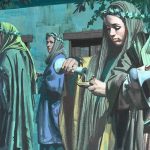
Shall we call her Mary? That woman in the photograph I used in my weekly e-newsletter, that I said I wanted to preach on today – did you notice her? How did you read her facial expression as she was watching the other bridesmaids fill their lamps with oil, while turning their backs toward her? Sometimes when I settled my eyes on her, I saw shame or regret in her furtive looks toward the others. Sometimes, I noticed envy. Other times I saw a hint of disgust. For she will be left behind. She will not have enough oil in her lamp to join in the procession to the wedding feast. And no one will share with her.

I think we should call her Mary, maybe because she has the same blue-colored robe that Mary, the mother of Jesus is often depicted in. But I like to call her Mary because there are so many Marys in our gospel stories and a Mary always seem to be present at the most important moments of Jesus’ life, and this story seems to have that same level of importance. If a Mary is always around at these important or liminal times, maybe that means we too can be around at Jesus’ important or liminal moments too, not being transported back in time, but being present to the moments Jesus shows up in our lives, here and now. Oh, the many Marys — Mother Mary, who birthed God into this world, Mary, Martha’s sister, who sat at Jesus’ feet, soaking up his teachings, Mary who lavishly poured the contents of her alabaster jar upon the feet of Jesus, offering him comfort and adoration, while foreshadowing the anointing of his body soon to be crucified, and Mary, the Magdalene, who was the first one to see the resurrected Jesus, the first apostle, who ran to tell others the good news of the risen Christ. The name Mary may have been used so frequently in the gospels because it was a common name of the time, or maybe because its frequent use allows us to see it as a generic name, and therefore one we can take upon ourselves, allowing us to see ourselves in each of those situations. Our story today seems to be one of those important moments in Jesus’ life, when he’s working hard to reveal a truth to his disciples that he really wants to leave with them.

The setting of this parable is incredibly important to understanding the message. For if we don’t know that this story is told to Jesus’ disciples alone, on the Mount of Olives, in the tension of Holy Week, when Jesus traces his steps back and forth across the Kedron Valley, setting the rhythm of threatening the status quo in Jerusalem and retreating at night into the safety and warmth of his friends’ home, and if we don’t understand that Jesus knows he will die soon, that in fact he’s orchestrating his death, we won’t comprehend the urgency of the situation, of Jesus’ giving an answer to his disciples who are struggling with the idea of his death, let alone not grasping in any shape or form what this second coming is all about, when it will be here, and what the signs will be when it comes, we can easily think this parable is about rewarding the smug, the self-focused, the selfish, the uncaring, the ones who intentionally divide communities between those who have and those who have not, for these bridesmaids who brought extra oil, but looked out for only themselves, seem to be the ones rewarded. They’re the ones who go to the wedding feast. They’re the ones on the inside of the closed door.

If we take this parable out of context, it would appear that Jesus is rewriting the beatitudes, the imperatives for faithful living which he started his ministry with, on that hill, overlooking the Sea of Galilee. The rewrite may look something like this:

Instead of blessed are those who are poor in spirit, Jesus would say, “blessed are the overly confident”, instead of blessed are those who mourn, Jesus appears to be saying, “blessed are those who cause the tears to run down the cheeks of those scorned by others”, instead of blessed are those who are meek, Jesus would be saying, “blessed are those who are haughty”, instead of blessed are those who hunger for righteousness, “blessed are those who are comfortable with their privilege”, instead of blessed are the peacemakers, Jesus would be saying, “blessed are those who rip families apart”. Nothing about this parable seems right – and it isn’t.

Matthew, who uniquely tells this particular parable, is addressing the issue of what a false reality of the Kingdom of Heaven looks like. The gospel writer knows the people in the community, several generations after the death of Jesus, are wondering when this is all going to happen, and they’re hungry to latch onto any reality of the Kingdom, even if it is false. They’re tired of hoping without seeing any sustained movement toward the Kingdom proclaimed by Jesus, because they’re exhausted from combating the forces that tell them power and might rule, and they’re afraid none of the story of Jesus is true. The stories told to them of the miracles of Jesus or the love that seemed to pour from him all the time, gathering people from the fringe and drawing them near seem distant and merely a faded memory. They are weary. They are afraid. They are losing hope, and Matthew’s Jesus needs to make it clear to his disciples what the false prophets would raise up as the Kingdom of Heaven, and he wants to make the example so distinct from what he had been talking about that the disciples would readily know it wasn’t this. It was not, nor never would be, a closed door for those who didn’t come on time, or those who weren’t prepared, or those who didn’t know yet they were invited to come on in.

There are times when I listen to the news, and all I hear about are mass shootings each week, the last one in a church of all places, and I can’t help but wonder if that could happen here at St. Andrew’s someday, and I don’t know what to do with that fear. Or I hear about devastating hurricanes and raging forest fires and I wonder what has happened to our earth, if we’ve done irreparable damage. Or I hear the news plastered with stories of the immoral behavior of our elected officials, or there’s a push toward war when all other options have not yet been explored, or division among families due to their political points of view, and I’m afraid, and I’m not sure what to do with that fear. I am tempted to lose hope and I begin to wonder if anything I am doing really has any impact in bringing in the Kingdom of Heaven. Maybe you feel that way too.  I sometimes get weary of waiting, of endlessly waiting for some sustained movement toward the Kingdom of Heaven and I get frustrated with all the obstacles that seem always strewn in its path. I wonder “Why can’t we all just get along?” A simple yet profound question. Why is this so hard? And I can understand why some church-goers feel foolish for believing it will ever happen, that the Kingdom will ever be near enough to touch, to taste, to revel in, and they drift away from church, from community, from hope.

We began our recent Diocesan convention by asking participants to name their hearts’ desires or share the deepest dilemma they are dealing with – One response was: “What does ‘make all things new’ mean? How long will it take?” It’s the same question the hearers of Matthew’s gospel were wrestling with. It was stunning to me the number of people responding to that opening question at the convention spoke about fear, concern over divisions due to differences of race, economic status, or opinions, a sense of hopelessness, and concern about survival from a natural disaster as what is most on their hearts – probably 1/3 of the people gathered that evening. If we contrast with these generalized fears, some real-life fears many of us or our neighbors have – how will they afford health care, what happens if I lose my job, will I have the strength to endure the darkness of the night, or the dark place of my soul which I meet each day – we understand how sometimes it can be easier to grasp onto a false reality than to wait for and to live into the true one of Jesus.

So, the question raised by our parable is: “how do we live in hope of the light Christ brings, when the rest of the world seems so dark?”

Part of that answer is found in our parable when we look at the characters and find there is no bride mentioned. There is no bride at the wedding feast. The custom was for the bridegroom to go to the bride’s home on their wedding day, settle with the bride’s father on the dowry, and then she and the bridegroom would process with the bridesmaids to the wedding feast, where the celebration would begin. Although the door to the wedding banquet was closed and the tables were laden with a feast, there was no union between the bridegroom and the bride, for she was not there. There was no celebration, there was no joy.  The uncaring, smug, self-centered bridesmaids, who were unwilling to share their oil with those in need, afraid that if they did, they wouldn’t have enough for themselves, found themselves in a place that felt empty, and stilted, and without joy.

If we use the common allegory of Jesus as the bridegroom and the church as the bride, our story tells us that the bride, or the church, did not show up, because we know the church does not exist where there is not love; the church does not exist where there is not sharing of resources; the church does not exist where there is division. Oh, there might be church buildings filled with people who do not love, but the living and moving and breathing Body of Christ does not show up where there is not generosity, where there is not trust, where there is not love.

There was another party going on in town that night. One where the rejected, the tired, the weary, the lonely, the ones who mourn, the poor in spirit, the meek, the peacemakers were gathered, where the healing love of Jesus flowed through and around them, where they anointed each other, maybe not with expensive oil, but with tears of joy, for Jesus was with them.

The church shows up, our church shows up when we readily offer ourselves and our resources to each other, when we ask the question, “What do you need?” or “How can I support you in the cold dark night, where fear and trembling settle in upon your soul and weigh you down like a heavy down comforter, almost making it difficult to breath?” The church shows up, our church shows up, when we acknowledge our vulnerability before God and each other, or when we acknowledge that we can’t be prepared for everything, and instead chose to trust that it is Jesus who opens the door, invites us in, and prepares the feast.

The false prophets may say to us, “You just need to work harder!” or “Claim what you’ve earned as your own!” or “Figure out for yourself what you can give away, don’t let God lead you, for you will end up with not enough!”

Mary, our woman in blue, scorned, rejected, dismissed, whose eyes, perhaps filled with contempt, or flooded with tears, but also turned to see the truth of Jesus. We can too. We can figure out how to wade through the dark times we often find ourselves in. We can trust Jesus is present with us as we make tiny steps toward the fulfillment of the Kingdom, and trust that they count. We can find strength knowing that there are people here who will be with us and love us and share with us and care about us. We can come to the feast, the banquet, the table laden with more than we could ever ask for or imagine, the altar. In the darkest of times, light will shine, and the Kingdom of Heaven will be born anew in our hearts, when our eyes are turned to see the truth of Jesus. Amen.




Learning about how to be right with God.

Our focus this year is on how to be in right relationship with God by being in right relationship with our earth, God’s creation and primary revelation. Our young people are leading us in this effort, of course! Yesterday, we held a Youth Mini-Mission Event which helped us understand how crops and livestock can be grown in a way that works with the earth.

We visited Oyler’s Organic Farm, where they harvest apples, raise cows, pigs, chickens, and turkeys, and have a wonderful farm stand which sells only certified organic products, that either they produce or other business do. The woman, who was a 7th generation Oyler, told us about their commitment to growing produce organically, both in terms of the future direction of farming, but also because she remembered her father coming in after applying the pesticides with dilated pupils and pesticide poisoning and deciding that’s not a good future for his children and grandchildren.

Apples at this wonderful organic market – Oyler’s

We tasted amazingly delicious cider after seeing the processing room and examining the equipment which cleaned all the apples produced in their orchards. One thing that really stood out to me was the mindset behind organic farming — building up the strengths (nutrient rich soil supplements), bringing in and supporting the natural pollinators (bees), and training the apple trees in such a way that helps them naturally resist infection. It sounds a lot like a spiritual rule of life — support those practices which build up our strength in God, bring in resources that help our spiritual lives come to fruition, and adopting disciplines that keep us supported and growing in the right direction. There was a lot of wisdom in what she shared with us.

Preparing the garlic for cleaning

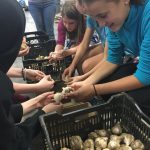
After experiencing what it would be like to be a migrant worker who would paid to prepare the crops for sale, such as cleaning the garlic cloves, we left there happy and refreshed in the idea that people are purposefully choosing to make a difference in how they move from “users” to “caretakers” of our land.

We then went to Boyer’s Orchards, where we had the opportunity to glean for apples, in cooperation with the Gleaning Project of South Central PA. We had a great time picking and sorting Crispin apples. We picked over 1000 pounds of apples, all of which will be distributed to food banks in our area. It was a perfect day of having fun, while making a difference in our world, to those who are hungry, and to the earth which we are called to care for.

Our next Youth Mini-Mission Event is 11/5, when we will go into the Michaux State Forest to learn about how to manage forests well and to clean up a trail. All are welcome to join us!


When it’s time to move beyond “Jesus loves me”. Sermon Proper 21 Year A

St. Andrew’s Episcopal Church

The Rev. Barbara Hutchinson

Proper 21 Year A

October 1, 2017

For all of my childhood and a good part of my adulthood, I thought being a Christian was pretty easy.

Our family went to church when it suited our schedule, so that was easy. Occasionally we baked a few brownies to be sold at a bake sale to earn money for a good cause, once again, easy and fun, with the added benefit of feeling good afterward for making a difference. It was easy to bring my little white UNICEF box along with my trick or treat bucket which I gladly handed it in at Sunday School, after delighting in shaking the box to hear all the coins I had collected. For confirmation preparation, we had to take notes on a few sermons and memorize the basic Christian statements, like the Apostles’ Creed, the 10 Commandments, and the Lord’s Prayer, but no one asked us what they meant to us, or what questions we might have, such as what happens to people when they die and how does that fit into what we’ve just memorized, so we evaded any complex thinking or wondering how to fit God into life or our life into God. I didn’t even know that was what we were supposed to do. I grew up in a time when it was the norm not to discuss politics or religion, so I can honestly say, sadly, I have no idea what my parents believed or didn’t believe about God, or what struggles they had, or hadn’t, with our church’s doctrines or how God fit into our family life. We prayed the same prayer before our dinner meal each night and that was about the extent of our prayer life. Although there would have been ample opportunity to connect the dots between our scripture and the social justice issues of the day, such as the Women’s Liberation or the Civil Rights movement, or participation in the Vietnam War, I never heard a word about these topics from the pulpit. I remember as a teenager being passionate against capital punishment, but the church never taught me how to think about it using our three-legged stool of scripture, tradition, and reason to evaluate a position, so all my thoughts or arguments about this and other current issues were in a vacuum from the teachings of Jesus, so it was pretty easy to compartmentalize my life: going to church on Sunday, and the rest.

I also grew up with the familiar song, “Jesus loves me, this I know, for the Bible tells me so” running through my mind and being imprinted on my heart, and so I thought being a Christian was really all about me, or more precisely, about Jesus loving me. When I was old enough to realize that there were some people that others thought Jesus didn’t love, due to race or ethnicity or social status, I wasn’t practiced in seeing the disconnect between what I said I believed and how others were treated in the world, so I never felt that call of action from Jesus to change the world. I just cared that Jesus loved me. That seemed to be the grand sum of my Christian formation. It’s not a bad place to start my Christian faith. But it’s not a great place to stay.

Then something happened. I woke up. I felt the tug of the Holy Spirit on my heart and recognized it as such. I became more involved at church. I had the great epiphany that Kristin, the woman with whom I taught Sunday School and with whom we had great fun at church, could actually become my friend “outside of church”. One of the priests introduced spiritual practices, such as contemplative prayer, spiritual direction, and retreats at Holy Cross Monastery, and something shifted inside. I began to know God, not just learn about God or about the church’s teaching about God, but I began a relationship, a give and take with that God. I sat with others as this priest taught us how to look at social justice issues, such as what constitutes a “just war” from a Christian point of view – not to tell us the answers or tell us how to vote, but how to think faithfully, how to take the teachings of Jesus and fit them around the issues, so I could wrestle with what God was calling me to do or care about. I so remember thinking, “Oh, now that I know God, and actually had fallen in love with God, my life would be easier.” Maybe it was a flashback to the Sunday School song running through my mind: Jesus loves me, and if I now love Jesus too, and if I now fit Jesus into my life (or my life into Jesus), then Jesus will love me even more, and if Jesus loves me even more, he’ll want me to be happy and have an easy life.

But the opposite happened. My life got more complex and complicated. Easy answers weren’t enough anymore. I couldn’t skip church, like I conveniently did before, for I missed seeing my friends, I missed being in worship, I missed absorbing the truth heard from the pulpit. My priorities shifted. I wanted to give more of my money away. My heart broke when I saw the long line of people lined up to receive a free breakfast each morning and I wondered what else we could be doing. If I hurt someone’s feeling, I couldn’t just brush it under the rug and forget about it, I felt compelled to apologize. This was not easy. This was more complicated and more difficult. I found it harder to go to the Country Club and listen to people fussing about getting their nails done or how difficult it was to find a “good cleaning woman”. Life had changed. It was hard and exhausting—and it was filled with the movement of the Holy Spirit, and I felt compelled to listen to her voice.

What happened to me was that I had learned how to repent. The more modern interpretation of this word is contrition for sin, but the original meaning of this word, and that to which I am referring, is to embark upon a way that goes beyond the mind that you have. The Greek word for this is metanoia and means a continual process of stretching your mind to look at your life and your world from a new perspective, not just a perspective of Christ, but one in which Christ is continually calling you to stretch and grow in your relationships with others and with God, and continually inviting you to look for and evaluate new expressions of the truth of God, rather that attesting to a static set of doctrines of creedal statements. This means constant change and this is hard and exhausting work. It is not a surprise that many Christians avoid getting to this place in their spiritual journey. It’s much easier to stay in the Sunday School faith where a few memorized statements are sufficient to guide your life and you rest in the knowledge that Jesus loves you, rather than in the truth that Jesus challenges you.

Jesus challenged the chief priests in our gospel today with this exact issue: stretching their minds beyond their known set of beliefs to see the newly revealed truth of God standing before them. Our story today is set within what we call Holy Week. Jesus arrived two days before, on the back of a donkey, with people shouting his praise. Jesus went directly to the Temple and turned over the money-changing tables, then cursed a fig tree on his way out, symbolizing the destruction of the Temple. He rides back into Jerusalem this morning, with the crowd on his side, and strides directly to the chief priests and scribes, who ask him with what authority he shakes things up in the temple. His response is a deliberate attempt to discredit the chief priests, not only because they were in collaboration with the Roman officials, but because they were blind to the new thing God was doing. Their response of “we don’t know” was awkward at best. Jesus raises up the tax collectors and said they will go into the Kingdom of God first because they were able to change their mind. Before Jesus, they didn’t believe God was for them; through Jesus, they knew God was for them, in a new and life-changing way. Their perspective changed because of their encounter with Jesus. The chief priests, who were to be the ones teaching and knowing about God, were blind to the new revelation, because Jesus didn’t fit into the box they had created around God, and chose not to see a new way. They didn’t repent, didn’t stretch their minds to the truth before them which had taken a new form. It made Jesus so angry that they refused to look beyond their own structure of orthodoxy or right belief to accommodate a new vision of God.

The basic premise Jesus is offering to us in this gospel is that the eternal truth of God continues to be revealed in ways which may seem surprising or confusing or difficult to make sense of, but that’s the challenging work we’re called into. It is so much easy to hold onto the single and simple belief that Jesus loves me and stop there, or throw in a few good works to feel good about, rather than to wrestle with the Spirit, the gift Jesus left with us, to continue Jesus’ work of transformation of the world, until all are brought into God’s realm of love.

While it is true that the love of God does not change, the face of God does. As you think of a prism, with light radiating from different facets as the sunlight moves or the ever so gentle breeze causes the prism to sway, so does the light of Christ, illuminating different truths from time to time. Our work is discerning the truth continuing to be revealed from the false ideas which may also come our way. I believe what Jesus is saying is that gospels should be instructive to us and the criteria for what is false cannot merely be whether or not it fits into our previously held beliefs. That’s what tripped the chief priests up and Jesus doesn’t want that to happen to his followers.

Sometimes it seems very easy to discern new truths revealed and we can easily stretch our minds around something new or different. These are situations in which we are invited into deeper love, compassion, honesty, and care for our neighbor. These are pretty easy to spot. Those invitations are always of God. Other times, in some of the messy social justice issues we face today as a nation, we can really struggle to know what is true and of God, when the answers or even the questions aren’t so clear-cut.

One suggestion I have for a way to look at difficult decisions and places of discernment would be to recognize that each time we are offered a choice, each time we are invited to see something in a new light or from a new perspective, each time we are willing to entertain an opposing point of view, each time we are able to imagine something brand new as being of God, we can ask ourselves if that something new is turning some deep and inner part of ourselves into something that is in harmony with God and God’s purposes in the world, or is it contrary to them. Each one of us at each moment is progressing one way or the other. Our work as Christians is always to move into a place that moves us and our world toward the purposes of God: love, mercy, peace, and reconciliation.

The final line in our gospel speaks of the tax collectors going first into the Kingdom of God, which means the chief priests can follow. They can follow the ones who changed their beliefs, by being open to change; they can follow the ones who felt the mercy of God upon their hearts through Jesus’ acceptance of them, by accepting others; they can follow the ones who looked for the new thing God was doing, by opening their spiritual eyes to the movement of the Holy Spirit.

There are times when I get exhausted from the constant pull of the Holy Spirit to shape and remake my heart and soul, so that I can be more aligned with the will of God. I imagine you do too. There are times when I wish I could escape for just a moment back into my Sunday school faith and believe it is as simple as believing Jesus loves me. I imagine you do too. There are times when I want my life to be simpler, when I wish I could compartmentalize my life into church on Sunday and the rest. I imagine you do too. But I know that’s not my life as a Christian. Rather it is to be deeply fed by times of silence before God and spiritual retreats, by receiving the prayers of our healing ministers, by finding a group of spiritual friends with whom I can wrestle with the issues of today set within our three-legged stool of scripture, tradition, and reason, so I can continue the hard work of discernment of God’s new revelation among us and faithful living in response to the movement of the Spirit.

We never do this work alone. We always do it with God and with others. That’s where God’s grace shows up. Thanks be to God! Amen.


Youth Mini-Mission Event: Watershed Clean-up

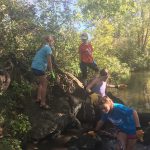
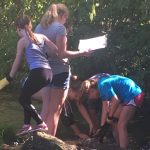
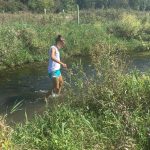
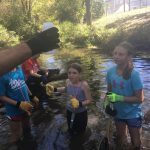
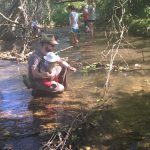
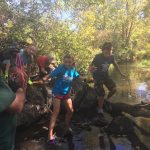
A number of us gathered this past Saturday, as the warm air surrounded us and the bright sun shone down upon our shoulders, warming us to the chilliness of Middle Spring Creek, which we found ourselves wading in as we participating in a stream clean-up as one of our Youth Mini-Mission Events.

We began by learning about what a watershed is and why it matters. The map shown to us by our excellent guide visually showed our connections with each other, from those living in New York State, all the way down into Maryland. The blue intricate lines all over the map set the framework for our work as mission: loving our neighbors as ourselves means caring for the water and ground in our area well, so it doesn’t damage those further down in the watershed, and with cleaning up the stream, means actually enhancing the water quality for those in Maryland.

Our work, which was also fun and involved laughter and play, meant we were to wade in the creek and pick up trash.

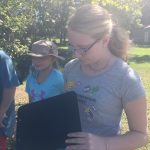
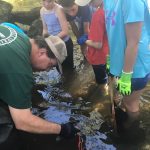
Some of us were recording the amount of trash collected. Others took water samples for testing.

Some delighted in identifying the insects, fish and ducks which we came across during our walk.

All of us had fun.

All of us came away believing we had done good work.

All of us came together to “love our neighbor as ourselves” in a real and concrete way. All of us helped restore our earth to the way it should be.

This was good and faithful work, my friends!


To view more photos from our fun day together, please go to our website and look at the latest photo gallery: http://www.standrewsshippensburg.org/youth-mini-mission-event-watershed-project/
 
Our next mini-mission event is scheduled for October 21st when we will go gleaning and visit a farm which produces food while not damaging the environment. For more information, please see Mother Barbara or Tim or Irene Hawkins. 

Putting on our own Christ-garment

September 10, 2017
14th Sunday after Pentecost Exodus 12:1-14 / Romans 13:8-14 / Matt. 18:15-20
The Rev. Carenda Baker preached at St. Andrew’s, Shippensburg

Last week I was on my way home from Chambersburg and I stopped at the Sunoco station on Walnut Bottom Road, just where the entrance/exit ramps to Rt. 81, exit 29 are located. When I went inside to pay for gas, the friendly cashier greeted me, and then said, “Are you a chef?” I had no clue where that question came from, but I laughed and said, “No, in no one’s wildest imagination would I ever be a chef!” Then she said, “Are you a baker?” Still clueless about her line of questioning, I said “No, but my last name is Baker”. Then I said, “I am an Episcopal priest”. I was wearing a black clergy shirt. As I sometimes do on the way home, I had slipped out of “uniform” by removing the detachable white collar. Without the collar, it was just a black shirt, so I finally understood why she was asking about my occupation. After apologizing to me, the cashier launched us into an incredible theological conversation. “Since you’re a pastor, let me ask you a question”, she said. “What do you think about Muslims who believe Jesus is the Son of God?” Talk about a curve ball! I told her I knew that some Muslims believe Jesus was a prophet of God. Tentatively I asked, “Is it important to you that Jesus is the Son of God?”, to which she replied emphatically and with a hint of impatience, “Yes, he is God’s Son.” She continued, “I am a Muslim and I believe Jesus is God’s Son. A lot of people tell me this can’t be. That I can’t be a Muslim and believe Jesus is God’s Son”. I responded, “I believe it is the same God we worship but in different ways. I don’t see a problem with your believing Jesus is the Son of God”. She thanked me profusely and said that I was the only Christian besides her sister she had ever met who thought we worshiped the same God, adding “and my sister is really into her Jesus as Lord and Savior”. She went on to say that her father was Muslim and her mother was Christian. Her father had told his children that he didn’t care what faith they practiced, as long as they practiced one. Just before I left, she said – gesturing toward her co-worker – “Pray for us.” I asked her name, and told her I certainly would pray for them. The exchange left me scratching my head – and smiling.

Do you know the cliche, “Clothes make the man / clothes make the woman?” When we put on a uniform of any kind, it makes a statement. Whether it’s a cap and gown, a sports, band, or military service uniform, nurses’ scrubs, a doctor’s “white coat” or a priest’s collar, how we dress says something about who we are and what we value in life.

Each of today’s Scripture readings offers us a wake-up call to become “fashion conscious”. The good news today is found in the thread that runs through the biblical story of God and humanity, and what it looks like when a God of love acts. “God is love” are words we’ve heard and read in Scripture. But this can be awfully confusing because the culture we live in believes we can love just about anything: ice cream, the Phillies or Pirates, the flowers in our garden, a certain piece of music, making money. Most often when the word “love” is used outside a community of faith, it’s referring to sentimental or romantic feelings. But love in its Christian understanding is an “action word”. It is not the same as simply liking someone or something, or having pleasant feelings. Love for Christians is made visible through actions.

We pick up the Exodus story today where the Israelites have been enslaved in Egypt for many years, and God has called Moses to lead them out of slavery. Moses tells the people something big is about to happen. At first, the passage sounds like it’s all about rules they must follow in a carefully choreographed religious ritual – sacrifice of a lamb, blood on the doorposts and lintel, eating a meal together with specific foods. And those directions are there, but the directions are all for the sake of being prepared to act. God is about to act powerfully on their behalf and they have a part to play in what will happen. They need only the essentials, because they are about to become extremely active people riding the freedom train out of Egypt. Time cannot be wasted. They dare not be weighed down with multiple layers of clothing, or have a bunch of bling jangling at their wrists and swaying round their necks. We’re talking simplicity here, minimalism. Fully dressed and ready for action. Sandals fastened and a staff in hand to help them move swiftly over a lot of rugged terrain in a short amount of time. The God of love and justice is going to liberate them. They need to be dressed for liberation.

Thousands of years later, Paul writes to the Christians in Rome, reminding them that they follow one who was willing to be completely undressed, if you will, figuratively and literally. Jesus let himself become totally vulnerable as a human being to show that the God of love acts to reveal – reveal everything that is sick, sinful, evil, divisive, and self- serving in the world – in order to save and heal the world. The Christians in Rome know the story of Jesus’ life – about his preaching, teaching and healing. They know, too, about his death and resurrection. They have chosen to follow Jesus’ as the Way, so they have “put on” Christ in their baptism.

Paul reminds the Christians in Rome what he had taught them, and what their baptism meant. Their old way of life has been stripped away, and they are newly clothed in the Spirit of Christ. God’s people do not wear spiritual “hand me downs”. Always there is a fresh and promising expression of Christ’s life in the person who is baptized.

This radical and life transforming cleansing bath, this sacrament of baptism has gone through many changes in the 2,000 year history of Christianity. In the early medieval age, between the years 300 and 400 C.E. baptism involved a two to three- year period of instruction called the catechumenate. During this period candidates to be baptized participated only in the first part of worship, the service of the Word. They were dismissed from the assembly before Holy Eucharist. Following that intense two to three year period of instruction, and after thorough examination – including an exorcism pronounced over them to insure that Satan truly had been put to flight – when the day finally came for the candidates to be baptized, usually on the night of the Easter Vigil , the men and women were separated into two different areas, because they entered the baptismal waters completely naked to be immersed. Plunged under the water – just as vulnerable and naked as the day they were born – they symbolically went with Christ to the grave in his death, and came up out of the water, raised to new life with him in his resurrection. As they emerged from the water after being baptized, each newly baptized Christian was dressed in a clean white garment, symbolic of the love, light, and life of Christ they had just put on. They now belonged to a community, Christ’s living body, the Church, and were welcomed to their first experience of receiving Holy Eucharist.

We need reminding sometimes, too, just like the Christians in Rome did. The apostle Paul tells them to “put on Christ “. What that means for us is that we readily admit we cannot conjure up Christ-likeness all by ourselves. “Putting on Christ” requires humility and vulnerability. It is not a do-it-yourself self-improvement project. It means seeking to live more and more with an undefended heart that is open to the Holy Spirit’s influence. Putting on Christ is a process and a way of life. It requires intentionality and being formed through the disciplines of prayer, Scripture reading, worship and participation in the Sacraments, and commitment to sharing ourselves and our gifts in the life of the faith community. “Putting on Christ” is what enables us to love our neighbors as ourselves, to act towards others the way we want to be treated.

In another of the epistles, the letter to the Colossians, the writer describes even more clearly what being clothed in Christ looks like. Listen to Eugene Peterson’s paraphrase of Colossians 3:12-14 in his book The Message:

“So, chosen by God for this new life of love, dress in the wardrobe God picked out for you: compassion, kindness, humility, quiet strength, discipline. Be even tempered, content with second place, quick to forgive an offense. Forgive as quickly and completely as the Master forgave you. And regardless of what else you put on, wear love. It’s your basic, all-purpose garment. Never be without it.”

The God who is love has clothed us in a gracious and spacious garment of reconciliation, restoration and right relationship. It is a garment woven with the fabric of God‘s own love. It needs no sequins, no flashy “bling”, no matching accessories to make it stand out and be noticed.

The God of love and hope acts, drawing us into the future where all things will be reconciled and made whole. And this work of reconciliation is what Jesus describes in the gospel reading from Matthew. Jesus assumes that where there are people, there will be conflict and disagreement, even among the faithful. He offers practical and wise direction about how we can, in love, care for relationships with our brothers and sisters in the faith community, how we can practice loving our neighbor as our self. The way to deal with conflict is not through separation, exclusion, punishment, or “ex- communication”. It is not about three strikes and you’re out. It is not about forgiving only a prescribed number of times, and then dusting off our hands and saying, “Oh well, we tried”. The love in action Jesus describes here means doing the hard work of tending relationships by speaking the truth in love when we disagree, while keeping our open hand extended toward the other.

We all know there are times when we just don’t like some people very much. It’s true in our families, it’s true in the culture around us, and it’s true in the life of congregations. Love does not mean we will always have feelings of pleasantness, ease, and comfort in our interactions with each other. Continuing to love in times of disagreement and conflict is neither easy nor comfortable, but it’s necessary. The fact that Jesus says when two or three are gathered in his name, he is there among them means that God is present witnessing the interactions, the efforts, the negotiations we offer to care for the community. God cares and wants to help us. Building, restoring, and maintaining relationships of truth, love, and forgiveness are that important.

The God who is Love acts – to liberate and save, forgive and heal, acts to empower us to join God in creating that future where everything finally will be reconciled and made whole. So let’s take a look at the condition of our own Christ garment. Where is it frayed, wearing thin, or maybe even starting to tear? Perhaps you are in need of liberation from something that’s dragging you down, holding you back from mirroring Christ’s love. Maybe you have difficulty accepting the fact that God believes you are worth saving. Or maybe there is a situation, a sin, a habit with which we repeatedly wrestle. Perhaps we need assurance of forgiveness and the courage and faith with God’s help, to begin again. Maybe there are tender wounded places in us that need healing, which we keep well hidden. Most of us will have at least one situation where we need the Spirit’s help to put love into action, to let Christ’s light shine through us.

We have been clothed with the Spirit of Christ, dressed like royalty in new and abundant life. The risen Christ is God’s designer label. Christ is God’s handmade wardrobe for us. Our Christ-likeness is practical, absolutely appropriate year-round wear, ready for any weather. This clothing will never go out of fashion. If anything, this garment of Christ-likeness will become even more valuable and precious the longer we wear it and grow into it.

So what do you think? Do clothes make the woman or man? Let’s take our holy fashion sense out into the world this week and see! It just might be that Christ’s light will shine so brightly in us that others will recognize Gods’ love in our actions, and they, along with us – will give glory to God in heaven. Amen.

Youth Mini-Mission Event: Exploring the beauty of God’s creation

Today, in the glory of the sunshine and the beauty of God’s creation, 23 of us gathered together to spend the day enjoying each other’s company, learning something about God, and taking time to relax, breathe, put away our cell phones, and connect to something deeper within each one of us, and among us — a sense of family. We were expertly led by three guides: Joe, Jeremy, Kristin who not only instructed us on how to canoe, but also helped make the trip memorable, inviting our young people to refresh in the cool crisp water of the Conococheague, alerting us to the blue heron who seemed intent upon guiding us down the Creek, delighting with us at the large carp swimming among us, and bringing us to the perfect place to nourish our bodies and souls, when we needed a lunch break. It was a day of peace, calm, fun, and care for each other and God’s creation.

Group photo of people spending a day enjoying God’s creation.
Oh, the joy of having fun together in the water!

We ended the day reflecting upon the “best” of the day for each one of us. Answers varied from the wildlife we saw (such as a bald eagle, which was incredible!), to the varied nature of God’s creation, to the community easily formed, to the weather, to our safety, to our guides, to our sense of calm we found was finally ours to settle into.

Several of the comments offered made my heart smile– the sentiment offered was that even if they can’t get to church each Sunday, they are still welcomed, embraced, and engaged with as a part of our parish family on events like this. This is exactly the church I want us to be and live into. We say, in our mission statement, that we are an inclusive and welcoming community. This is one way we live it out: that we are not a closed club. We are not a group of people who demand a certain level of involvement or commitment to be “counted among us”. We always swing wide the door, always inviting people further into the mysterious place with God and within our parish family — and we also acknowledge and love people wherever they find themselves. Today we lived into this space. Thanks be to God!

These Youth Mini-Mission Events are designed to help us understand our relationship with our earth, and therefore, with God, the creator of the earth, and there were those among us who worked tirelessly today to help repair that relationship. One of our young people, Tom, was relentless in retrieving tires that others had foolishly and irreverently thrown into the creek. He quietly and purposefully went about his business of doing what was right, ridding the creek of pollution, finding a way to bring the tires out and then to dispose of them appropriately. It was very inspiring to see someone take this initiative to make a difference.

With care,

Mother Barbara

Civil Disobedience which changed the world – Sermon 8/27

August 27, 2017
12th Sunday after Pentecost, Year A Exodus 1:8-2:10
The Rev. Carenda Baker

What would you think if I were to say to you: “WHAT YOU DO THIS WEEK WILL CHANGE THE WORLD”? Before you make a hasty judgment about this crazy notion, I invite you to just let that statement simmer on the back burner of your minds and hearts for the next few minutes: What I do this week will change the world.

Two women once made a decision, took a risk, and changed the world. It was simultaneously a small gesture and a heroic act. They disobeyed the law of the land. And through their act of disobedience God moved to rescue a people from oppression. Their names are Shiphrah and Puah, names that are not familiar to us, but names that belong among the most well known of our foremothers in the faith.

The book of Exodus opens on a chilling note. There is a new Pharaoh in town, who is concerned about the growing population of the Hebrew people, and their potential for gaining power and joining forces with Egypt’s enemies. Pharaoh seems unaware of his own country of Egypt’s history – that for generations the Hebrew people, whom he has pegged as a looming threat, had been considered allies and honored guests. He “did not know Joseph”, the Hebrew slave, who became a trusted leader, and helped save Egypt from famine. He did not know or did not care about his country’s history.

So this new Pharaoh, driven by his ignorance, insecurity, and fear first enslaves the Hebrews, and then turns to even more sinister means to stop the population increase of Hebrews. He orders these two Hebrew women Shiphrah and Puah, who are present at and help with the birth of babies, to kill all the Hebrew boys that are delivered.
Ironically, it is the girls and women in this opening chapter of Exodus – apparently of no account to Pharaoh, of whom he should be afraid, because first these two Hebrew midwives, and then three others – Moses’ mother, his older sister Miriam, and Pharaoh’s own Egyptian daughter – prove to be his undoing. And please take note, that

Moses’ sister and Pharaoh’s daughter would likely have been young – probably teenagers.

Just think for a moment about those two midwives Shiphrah and Puah. Their daily work is to help deliver babies, to witness new life come into the world. Their daily work is to watch these tiny miracles arrive. They are the first to see and touch God’s promise and possibility, cradled gently in their hands. And now? Now they are expected to become death dealers, to participate in state-sponsored killing, to spread Pharaoh’s wave of control and terror? What are they to do? They have a decision to make. They are women of love and compassion. They deal in life and hope, in God’s dreams for the future. They decide to actively exercise their God-given wisdom and courage. They become creatively subversive. They make up a story to tell Pharaoh about why his plan to reduce the Hebrew population is not working: “We’re sorry your Majesty, but the Hebrew women are just not like Egyptian women. The Hebrew women are hardy and give birth too quickly, delivering the babies before we can get there. The Hebrew women are rough and ready, begging your pardon your Highness, so different from your genteel and delicate Egyptian women”. Shiphrah and Puah take action to de-rail the killing of Hebrew baby boys using non-violent resistance.

It is a courageous act of civil disobedience that helps change the tide of history. They are the first two links in a chain of many people who will eventually be lead out of slavery and oppression in Egypt by Moses. Liberation starts here, with two women willing to say “no” to an act of cruelty and injustice.

These two women likely never considered that their actions would change the world, but they did – by remaining faithful and doing what was in their power to do. Of Shiphrah and Puah the text says they “feared God”. They recognize the ultimate power of God over empire, and they show loyalty to God. They continue to do their life-giving work with integrity and help save a people by following the dictates of their hearts, and by heeding the call of conscience.

Maybe you’ve heard about another rescue story that happened earlier this summer on July 8th in Panama City, Florida. Roberta Ursrey, along with her two sons, 8-year old Stephen and 11-year old Noah, her mother, and other members of her family were enjoying a nice summer day at the beach. The two boys were in the water swimming when suddenly they found themselves swept away from shore by a strong riptide. The boys were suddenly unable to swim back to shore and began yelling for help. There was no lifeguard on the beach. Their mother quickly swam out to try to help, but was soon overwhelmed by the current as well, and also found herself unable to get back to shore. Her mother, the boys’ grandmother, followed them into the water in an attempt to reach them, along with other family members, and eventually others who wanted to help. Soon there were nine people unable to get back to shore, all in need of rescuing and in danger of drowning. As each minute passed, the situation became more frightening.

Someone dialed 911. Eventually a police officer arrived and called for a boat rescue, but there was grave concern that the boat would not arrive in time. It was at that moment that Jessica and Derek Simmons, both strong swimmers who had just arrived at the scene, came up with a rescue plan. They knew that even though they were strong swimmers, there was no way they could save nine people by themselves, and so they gathered the crowd on the beach into a rescue team. In a matter of minutes, first 12, then 25, then 50 and eventually 80 people worked together to form a human chain, one that reached out through the water far enough to reach the nine people at risk of drowning.

One by one the nine people were carefully passed along the human chain until all of them were brought safely to shore. The chain had been formed just in time. Roberta, the boys’ mother, had just started to black out when she was reached. She later reported that she was sure she was about to die moments before help arrived. Roberta’s sixty-seven year old mother experienced a heart attack as she was being brought to shore, and was rushed to the hospital. She is now recovering well. Surely without the quick thinking and cooperative efforts of the people on shore, lives would have been lost.

After the rescue, Roberta Ursrey said: “I am so grateful. These people were God’s angels that were in the right place at the right time. I owe my life and my family’s lives to them. Without them, we wouldn’t be here.”
Jessica Simmons, one of the quick-thinking lead rescuers said: “I knew we had to do something. To see people of different races and genders come into action to help total strangers is absolutely amazing. People who didn’t even know each other went HAND IN HAND IN A LINE, into the water to try and reach them. Pause and just IMAGINE that.”

Strong riptides and dangerous currents come in many forms, and at any moment, any of us can find ourselves in need of a human chain of support, or can find ourselves with the opportunity to be a part of such a chain.

Might it be possible that we regularly underestimate the power of our actions, and the difference we can make in the world?
Friends, our job as people of faith is to listen closely for where God is calling us to act, individually and as part of a chain with others to help bring new life into our world.

Maybe it will be when we seek reconciliation in a relationship with a family member – a friend – or a co-worker.

Maybe it will be when we admit we are holding on to a stereotype of some person or group that is false, and we ask for God’s forgiveness and help to change our thinking.

Maybe it will be the moment we find our voice to challenge another when some person or group is being mistreated. This could include a face to face encounter in person. Or maybe you will find your voice and take a stand to support the victim of cyber-bullying.

The diocesan youth and leaders serving here this weekend among the residents and staff of the Episcopal Home have worked enthusiastically to share God’s light and love. So how will each of us join in spreading that wave of goodness, faithfulness, and joy in the coming week?

Dear people of God: we have been challenged here by God’s living Word, and will receive nourishment and strength at God’s table. Let us pray to be the vessels used by the Holy Spirit to breathe hope, healing, and reconciliation – to bring the good news of liberation – that will change us and this world – to the glory of the God of our salvation. Amen.

A Festive Sunday!

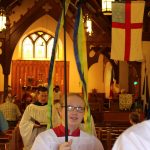
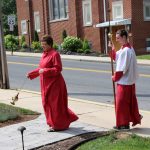
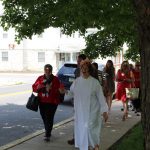
We celebrated and gave witness to the arrival of the Holy Spirit to the church as it began (Feast Day of Pentecost) and to our parish as we continue to live into the mission Jesus presented to his disciples. It was a glorious celebration! We prayed, preached, offered healing comfort and celebrated the renewing sacrament of the Holy Eucharist, only then to take the good news out into the world, as we processed to the Memorial Garden for the release of butterflies. Led by our verger, with sweet smelling incense flowing from the thurible, banners of a butterfly and dove, and envelopes containing butterflies ready to spread their wings, we gathered, prayed, and set the butterflies free. It is always with such delight that we see them take flight, knowing we have released them to live here among us, and to be a symbol of the Holy Spirit taking us out into our community and filling the world with love. I found it particularly poignant that some butterflies seems to purposefully fly directly to the church across the street — could it be the Spirit leading us all into closer connection? !! Here are some photos from our glorious celebration. Come Holy Spirit!

Youth Mini-Mission Event: Growing hearts by getting our hands dirty

I never want to take for granted the good-will of our young people. Many are teenagers and it wouldn’t surprise me, nor appall me, if once in awhile, I saw a discrediting look, or a rolling-of-the eyes, or a resistance to roll up their sleeves and do some hard physical work. Yet what I see instead takes my breath away. Rather I see willingness to do whatever is asked, or I see their capacity to stretch to meet the new requirements of the situation, which may have seemed out of their comfort zone before, or I see their ability to tell jokes and laugh together in a way I had not sensed before, or I see a sensitivity to include others, like a young resident of the WIN shelter today in our activities, which seem “normal” to us, but are anything by normal to her.
Our young people are truly amazing, which makes the work of the church in some ways easier and in some ways more challenging. We’re starting with young people who have been taught to care for others, so that makes our “work” of engaging them in mission events easier, for their hearts are already headed that way. It makes our “work” of engaging them in mission events more challenging, for it means we need to invite them into hard situations, so they realize caring for others comes at a cost. Sometimes that cost is discomfort that the world isn’t as we wished it would be for all people.

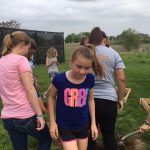
Today our young people and accompanying adults went to the new Women-In-Need shelter, which is designed to provide safe refuge for victims of domestic violence and sexual abuse. I have been on the board of WIN and then active as a volunteer and active as a PA Advocate for victims of domestic violence and sexual abuse. It has been a time of intense learning and sorrow at the way others have been forced to live. I have learned a lot about life through this experience.

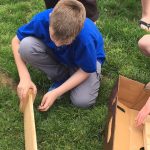
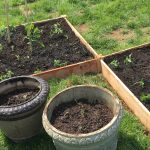
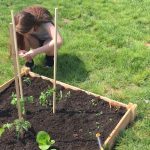
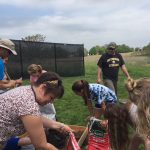
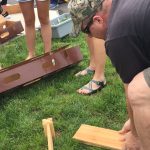
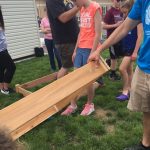
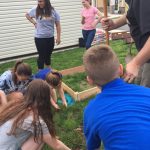
Our physical work today involved clearing sod from the garden area, assembling the raised beds, filling them with topsoil, and planting vegetables and herbs, either grown from our seedlings planted months ago and nurtured by the Hawkins family or provided by WIN. Our spiritual work may have involved asking the question why some people’s lives unfold this way and where God is in it all.

There were two stunning moments today for me. One was when one young resident (9 years old) came and joined us in the planting and fun. She laughed, planted plants and giggled over the jokes about the “creek” created by the overflow of the hose. She had a chance to have “normal” fun, a real treat to her, I suspect.

The other joy was one of the women in the shelter who came to help us plant. We asked her advice on where to plant the cucumbers, and she clearly knew her stuff. She offered good advice on where and how to put the plants together. I don’t know if we realized the value of asking her opinion, but I bet it meant the world to her. Most women who come to the shelter have no idea of who they are or of any value they have, so she clearly is making great progress. That’s to be celebrated.

Today was a great day of service. My heart is filled with gratitude that we are a church who makes this a priority and see it as a way to be formed in our faith.

Please see the photos below or view the photo gallery on our website: www.standrewsshippensbur.og.

Many blessings,

Mother Barbara

Dirty hands for a good cause
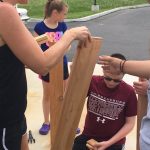
Building the raised garden bed
Thinking about how this will all fit together
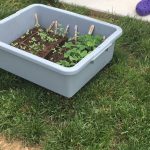
The seedlings we planted weeks ago
Figuring it all out
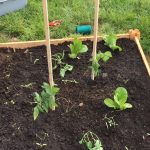
Planted beds, ready for tending
Let’s build this thing!
Creating flower pots with zinnias to cheer the heart
Our budding photographer
Adding the soil.
Even the adults help out
Working together
Sorting it all out.
Here we are!


Youth Mini-Mission Event – ESL Class with refugees

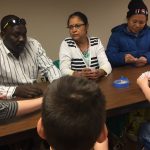
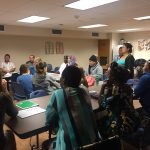
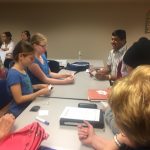
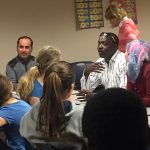
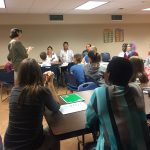
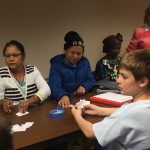
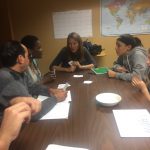
On the Monday after Easter, our young people and adults went to Catholic Charities in Harrisburg to meet and work with refugees who were in an ESL (English as a 2nd Language) Class. It was a wonderful way to take the gift of the joy of Easter (the risen Christ) out into the world, to help make a difference to those in need. Jesus instructed us to “welcome the stranger” and that’s exactly what we did.

We shared our goodie bags which we created before and brought with us a number of bilingual dictionaries to offer to the class.

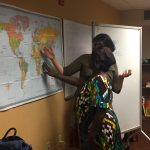
The class was amazing! We began with the teacher asking the students to show us where they come from, pointing their home country out on a large geographical map. We were fascinated so many people come from Bhutan. There are 7000 refugees in the Harrisburg area from this country. These are people from Nepal who have been pushed out of the country and forbidden to return. We also met a man from Iraq and a number of people from Central Africa.

ca. 

We discovered how easy it is to communicate with people who don’t speak the same language. Laughter and love seem to be universal languages.

We helped the students learn how to speak some beginning word sounds, since sounds such as “f” are not found in their native languages. We played “Go Fish” to help them with this exercise. We also engaged in conversation, asking them basic questions, and responding to their questions. It was fascinating and heart-warming to be a part of something that is helping people settle into our country and learn our language.
 

          I

We had a wonderful time. Our hearts were stretched and filled with a sense of compassion and love. There were many ideas of how to extend this ministry. Hopefully, there will be more to come!

All of us, together!