To access a bulletin so you can sing along to the hymns and know the verbal responses, please click below.
To listen to the homily only, please click below.
To learn about the spiritual practice of creating peace prayer flags, please click below.
To access a bulletin so you can sing along to the hymns and know the verbal responses, please click below.
To listen to the homily only, please click below.
To learn about the spiritual practice of creating peace prayer flags, please click below.
Sometimes, invitations come across our computer screen and our hearts seem immediately turned toward curiosity and engagement. That was true for me as I saw the offering by Oasis Ministries, through which I did my spiritual director training, for Contemplative Prayer Flags. I must admit, I was also intrigued enough by the thought that we could do this together sometime, so I wanted to see how they oriented this spiritual practice.
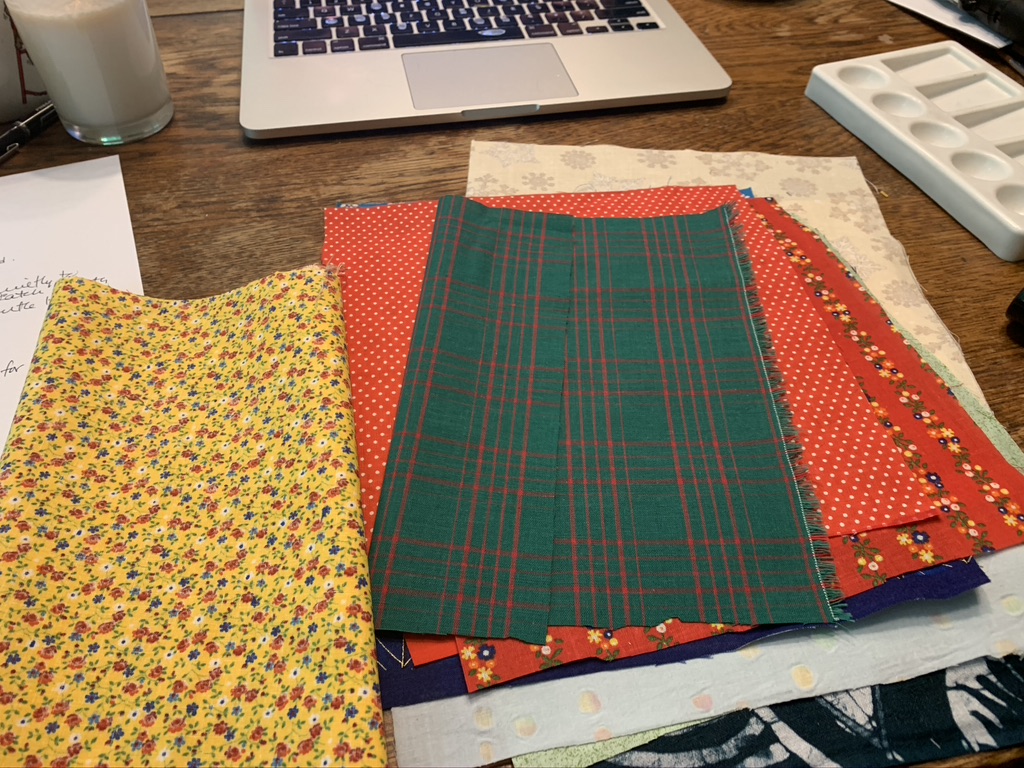
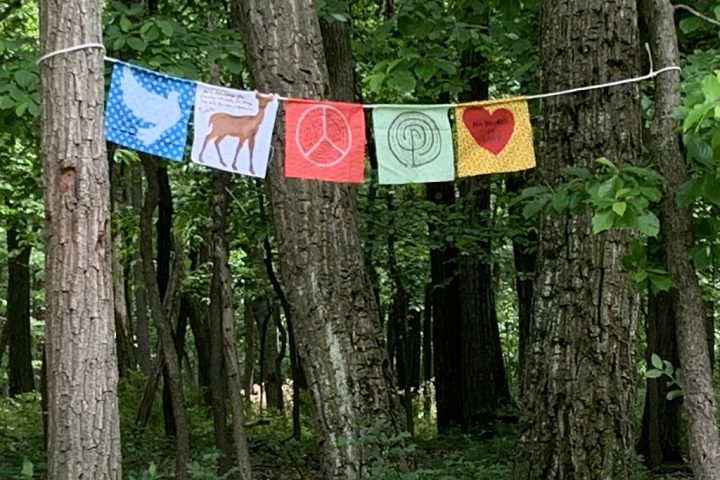
I gathered my materials: 9” squares of fabric in the designated colors (blue, white, red, green, and yellow), a set of permanent markers and acrylic paint and I was ready to go. Our webinar began in prayer as we set our intention toward this time to be one of holiness and creativity. We then learned about the symbolism and history of peace flags. Some of the images offered were stunning, of immensely long streamers of these flags, positioned high in the Tibetan mountainside, so that the breezes could spread the prayers throughout the world.
We centered ourselves in meditation, which was essential, since as we prepare to create with God, we need to open our hearts to receive the images and words we will use to create our own visual prayers. I must admit, every time before I begin an artistic endeavor, my spirit freezes and I wonder if anything worthwhile will come to my mind and heart that I could offer as a visual prayer. But after moments of settling, I found suddenly a number of images pop into my awareness. It was glorious to name the passages of scripture which were touching my heart around prayer, as well as the liturgical phrases we use so often in our service of Holy Eucharist.
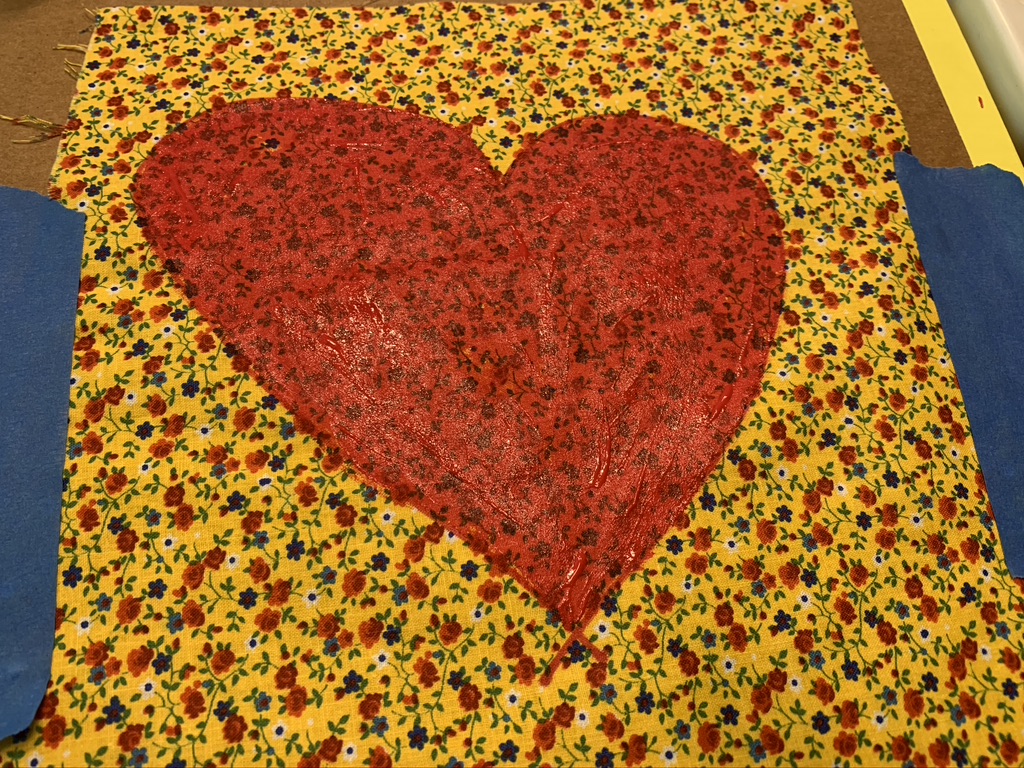
I closed my computer, put on contemplative music, took a few deep breaths, and allowed my heart to dance with the Spirit. Suddenly images appeared in my brain and I was able to make them become real on my fabric. I then added words and allowed myself to sit with them. Ultimately, I put the finishing touches on them and then attached them to the rope and hung them from some trees in the woods.

One of the points in the introduction was the emphasis on surrender. First, I believe, to surrender to the acceptance of imperfection, for my prayer flags are not perfectly created. Second, it was to surrender them to the elements of the earth, which the colors of the flags represent (sky, air, fire, water, earth). My prayer flags will become frayed. They may blow away. They may become faded and worn away. Already they have been drenched with the sudden rain storms we’ve had these past few days and I had to resist the urge to rush outside and bring them in out of the rain. But each time I feel a breeze whisper through the trees, I know my prayer for peace, expressed in so many ways in images and words, are being sent around the world, to find the heart that needs that message the most, so one soul at a time can be healed and turned toward peace.
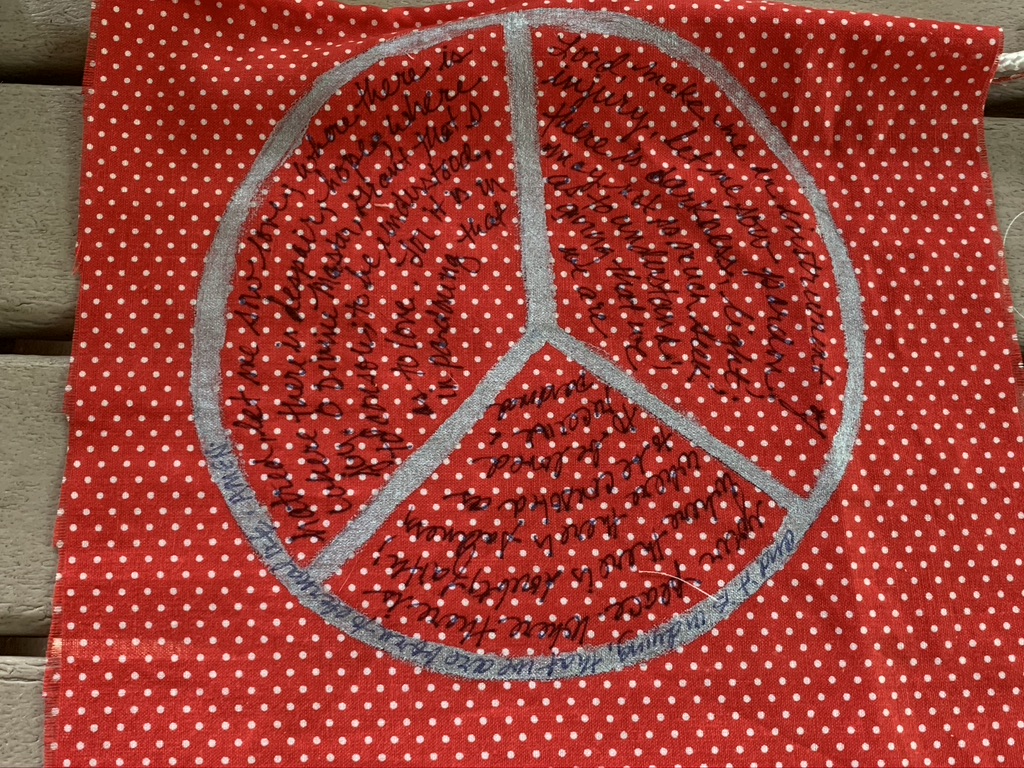
Here’s what I learned, rediscovered, and connected with through this thoughtful and Spirit-filled practice:
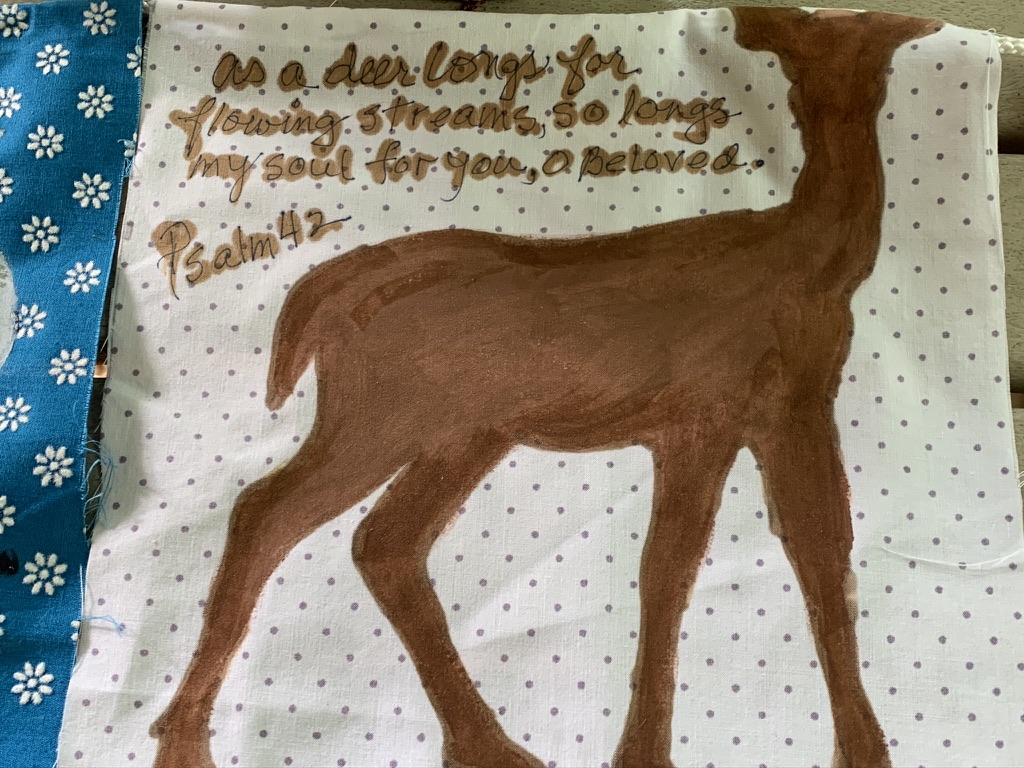
I do hope you will want to make your own set of peace flags – maybe we can do this together? Please let me know if you are interested. The flags can be any size and should be placed outside. They could be over your doorstep or on your porch, or outside your window where you will see them often so you can daily reconnect with your prayers. As I create my labyrinth in my woods this summer, I will create a set which will welcome people into that particular holy space.
May Christ’s peace be with you,
Mother Barbara
We gathered in our own homes, in our comfy and sacred spaces and entered into the presence of the Holy with intention and care. Through music, calming voices, beautiful artistry, and the soothing words of the Eucharistic Prayer, which always draws us into the presence of the Risen Christ, we found a place of peace and holiness. Although we cannot physically receive the sacrament at this time, we can engage in the prayer of spiritual communion, which is available to us at all time. I have it listed below here, for your use at any moment you are in the need of that deep union with Christ.
My Jesus, I believe that you are truly present in the Blessed Sacrament of the Altar. I desire to offer you praise and thanksgiving as I proclaim your resurrection. I love you above all things, and long for you in my soul. Since I cannot receive you in the Sacrament of your Body and Blood, come spiritually into my heart. Cleanse and strengthen me with your grace, Lord Jesus, and let me never be separated from you. May I live in you, and you in me, in this life and in the life to come. Amen.
We celebrated Maundy Thursday in a different way this year. At times it felt odd not to be together, not to share a Bible Foods Dinner, not to wash each other’s feet, not to celebrate the Eucharist together. And yet, God showed up and brought the holiness of this special night into our hearts.
We created our agape meals in our own homes, prayed, sang, and found a new way to lean into the servant heart Jesus showed us at that last supper with his disciples.
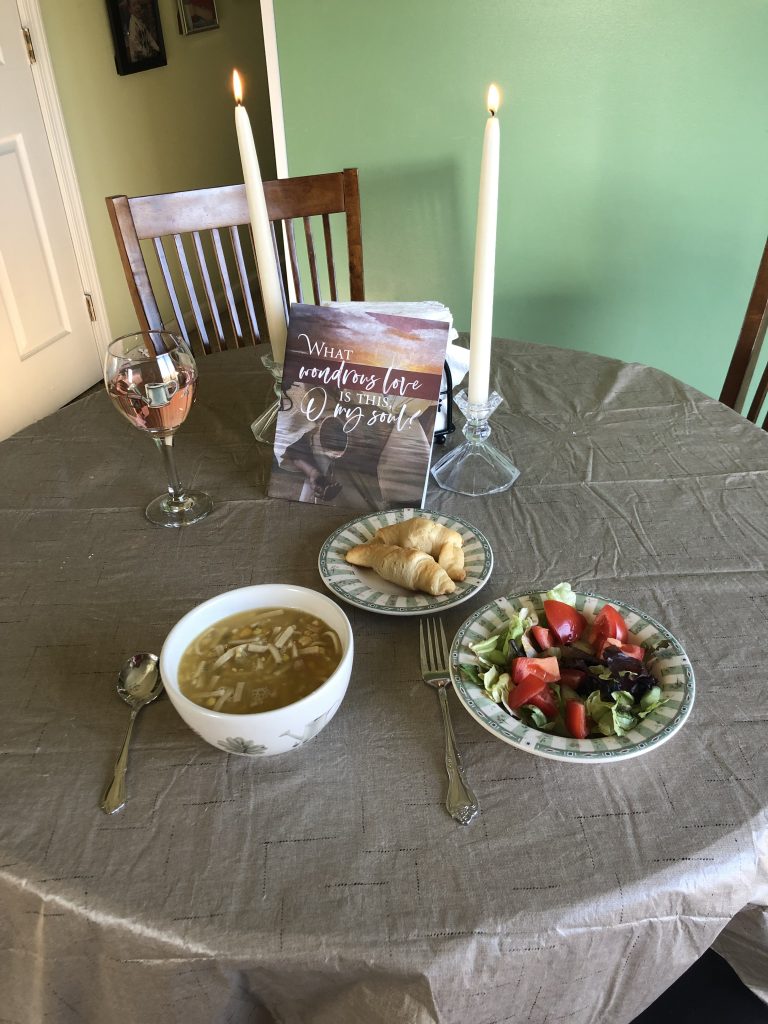
Many of us gathered in our hearts through a guided meditation on the hymn, Jesu, Jesu, fill us with your love. We were blessed with the music offered to us by Kevin Gorman as we walked into the holy space, always available to us through our loving God.
Tomorrow we walk toward the cross with Jesus. Please join us.
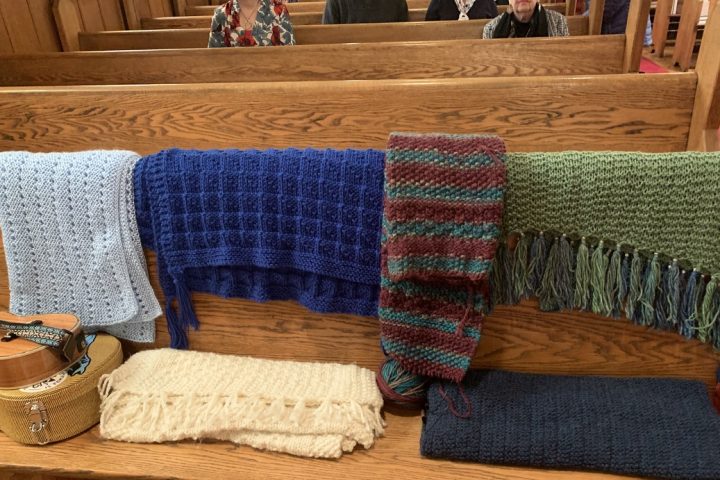
The Holy Spirit has drawn us into another extension of our desire to offer Christ’s healing to all people. We gather now as a group to knit prayer shawls, those wonderful, warm shawls that we create with prayer and yarn which become real manifestations of God’s love through our hands. We are so blessed to be able to offer someone in need, either in times of grief or health concerns, a prayer shawl. We all bless the shawls in church prior to giving them away, so they are from all of us at St. Andrew’s, and offered in and through the love of Christ.
All are welcome to join this ministry. We gather on the first Sunday of each month at 11:30 a.m. in the Parish Library for conversation, knitting advice, and prayer. If you are in need of a prayer shawl, please let Mother Barbara know so we can get knitting away for you!
We gathered in candlelight, turned our hearts toward the holiness drawn near to us by the harpist, and settled into holy and sacred space. Through chanting, prayer, quiet, intimacy, and the celebration of the Holy Eucharist, we found a new expression of the love of God made real to us in community.
We offer these Taize Contemplative Eucharists on the first Saturday of every other month as a way to draw those of us who find God through contemplative practices in community as a pathway to wholeness.
We share a light supper afterwards so that we can continue the communion shared in the Eucharist.
All are always welcome!
St. Andrew’s Episcopal Church
The Rev. Barbara Hutchinson
Proper 20 Year A: September 24, 2017
Give us this day our daily bread. These are familiar words we pray together every Sunday, right before the bread is broken in the Eucharistic prayer. Have you ever wondered why we pray these words at that particular moment? Right before Jesus’ body is broken so each and every one of us can receive and take within us the holy presence of Christ? Why does it matter to us that this particular prayer is on our hearts when the sunlight from the altar window shines upon the bread, which seems to glow with holiness as I break it apart, so we can each be fed with this sacred meal?
Give us this day our daily bread. We don’t say, “Give me this day MY daily bread” – this prayer sets us within a community. The prayer is spoken by all of us, for all of us. It draws us into a place of understanding that we are all equal – equal in God’s love, equal in our share of God’s abundance, equal in the blessing we take out into God’s world, God’s vineyard. One doesn’t get more if one has had an exceptionally faithful week of prayer, scripture study, and good deeds. Nor does one get less if one is kneeling at the rail for the first time in 20 years and had somehow forgotten about God all that time. It is this fact that makes the invitation to the Eucharist so appropriate and poignant, “So come, you who have much faith and you who have little, you who have been here often, and you who have not been for a long time or ever before, you who have tried to follow and all of us who have failed.”
Give us this day our daily bread. This prayer articulates the reality that in God’s eyes, through God’s grace, and with each other, we are equal to one another. This is the image God has of and for us: equality. What I receive and what each of you receives is the same, and it’s enough, for it contains a completeness that only God can give. Our yearnings to receive this nourishment may differ, but wherever we are, God meets us and gives us enough for that day.
The manna sent down by God to the Israelites in the wilderness was also God’s way of reminding these people that God will provide what they need, not more, not less, each day. Each person ate their fill, regardless of their position, leader or servant, regardless of the amount of work they did, whether they worked all day long or had little to do, regardless of their ability, whether they were able-bodied workers or disabled. They each received all that they needed. God was using the bread to fashion a people who were leaving a system of domination, wealth, and power to build a new way of life where all received what they needed. God used the daily bread offered to the wilderness wanderers to teach them each day. God is present to them each day, God will give them what they need, each day, God regards them as equal in their need and desires to provide for them. We can imagine that, regardless of how others perceived their worth, God wanted to teach them that since God would care for each one, that all are worth the same, all are beloved children of God, and therefore should be beloved to us.
Give us this day our daily bread. Jesus extends the use of bread to form people into a new way of being where all are cared for, when he stood on the hill overlooking the Sea of Galilee, took bread, blessed it, and broke it apart, for all of the 5000 men, women, and children gathered to eat. He didn’t serve just some, for example those who had been listening to him all day long, but he served all who came as the afternoon sun was setting – he served those who were paying attention the whole time and those who were not. Jesus used bread to show the truth that all people are valued, all people are equal in the sight of God.
It’s the “equal” part that we push up against in today’s parable of the laborers in the vineyard. It just doesn’t seem fair. We feel as though a mistake has been made. Surely, each worker should not be equal in the pay owed them, for they didn’t all work the same amount. We can feel the outrage of the workers chosen early in the morning and believe it is justified. We might momentarily imagine the joy that the last-hired felt when they realized that they too would have what they needed to feed their families that evening, and feel good about that, but then the cynical part of us often surfaces, and we play out the parable just a bit more, and imagine the other group of laborers, who, though by the time they arrived at the vineyard the work day was over, they too got paid for a full day’s work, and then we’d imagine a different song in the hearts of the last-hired workers whose joy and gratitude may quickly turn to outcries of “It’s not fair!”
Give us this day our daily bread is prayer that everyone is equal in their deservedness and worthiness, regardless of their ability, capacity, or number of hours worked for the kingdom and that everyone will be given what they need. God wishes fullness for each one of them, and for each of us. God is fashioning a new people, us, who understand this deep truth of God’s love and generosity. If this parable triggered a negative response in you, this may be an invitation to see what needs to be loosened up within your soul that allows you to value fairness more than equality for all people and God’s desire for all people to have what they need.
Give us this day our daily bread is God’s way of fashioning us as a people who have love and compassion in our hearts, especially for those who have been told by society that they are not equal, they are not of the same value as those who are younger, stronger, able-bodied, smarter, richer, of the preferred gender or sexual orientation, or any other distinction which has placed them on the wrong side. Think about the people who stood at in the market place and had been passed over, time and time again throughout the day. We probably all remember times when we weren’t chosen for something, whether it was in elementary school and we were chosen last for the volleyball team, or whether it was in our adulthood and we weren’t chosen for a job, even though we were more than qualified for it. It is likely that the experience of those hired at the eleventh hour was desperation, discouragement, or having a hard time holding on to hope. For not being chosen is terribly difficult for our souls, our sense of self-worth, our sense of well-being. When we have the energy, passion, and desire for leading productive lives and no one lets us do that, when we don’t feel equally cared for, we can begin to question God’s love for us. But our parable reminds us that, always and forever, we are equal in God’s love to everyone else, and God will give us all that we need this day.
This parable is not actually about judgment or justice. It is about goodness. Payment is made not on what is deserved, nor even on what is needed, but on what the One who is good gives. This is what the kingdom of God looks like: bringing forth the goodness of God, the One who gives only good, the One who provides for all, the One who loves all. The Kingdom of Heaven is God’s overwhelming generosity, God’s compassion for those who are beyond hope, discouraged, last in line, or at the bottom of all the advantages and opportunities. It may not be fair in human standards, but it is good and it is of God. The now present Kingdom of God Jesus inaugurated is about the equitable distribution of our resources to all the people of God.
Our prayer, “Give us this day our daily bread” is what shines the light in our hearts, and which allows us to receive the abundant grace of God through the body and blood of Christ that gives us all that we need, that sends us out into the vineyard of God’s kingdom, here and now, to do God’s work.
This prayer is what led our young people and adults to pick up trash in the Middle Spring Creek yesterday, so that, by our work, our streams will be cleaner, our watershed healthier, and this will allow someone further down the stream to live more abundantly, whether it’s the oystermen in the Chesapeake Bay who can work fruitfully all day to bring home the daily bread for their families, or by freeing the stream of debris, we can care for the natural habitats of local fish and animals, who can now thrive and our ecosystem can be more alive.
You may be aware that our Eucharistic service has two main parts: The Ministry of the Word, when we hear and break open the Word of God, and the Ministry of the Table, when we break open the saving love of Jesus, in the expectation that we will be changed and made new. And the reason for the yearning of that transformation is so we can be sent out into the world, with these words, “Go in peace to love and serve the Lord.” When we come forward to receive the Eucharist, we are being chosen by God, we are being brought into the vineyard, we are being sustained as the Israelites were in the wilderness, with something that isn’t fancy or luxurious, but merely basis sustenance, and it is also all that we need. And then our work is to go and find all the laborers not chosen, the laborers who no one will employ, the laborers who feel themselves unworthy, the laborers whose hopes are dashed, whose minds are flooded with worries about how to feed their families that evening, and to say “come, let me bring to you what is good”, and to offer them the same joy given to the laborers who arrived late in the day, in knowing that they too will have all they need, when they come into the vineyard. What we have received is a gift, and that gift is intended equally for all. Amen.
As part of our exploration of Celtic Spirituality, Mother Barbara has invited all of us to pray daily (morning and evening) with the book, Sounds of the Eternal: A Celtic Psalter by John Phillip Newell. Here’s a reflection by Jeanine Goodwin on her experience in preparation for our group conversation.
Wanting to get an idea of what this next flight of formation would bring, about two weeks ago I engaged in the prayers in John Phillip Newell’s psalter, Sounds of the Eternal. Soon I found myself sitting with the prayers for a few moments because things were shimmering up off the page, and soon was doing a lectio divina of sorts, reflecting on a phrase to let it lead.