Peace Prayer Flags

Sometimes, invitations come across our computer screen and our hearts seem immediately turned toward curiosity and engagement. That was true for me as I saw the offering by Oasis Ministries, through which I did my spiritual director training, for Contemplative Prayer Flags. I must admit, I was also intrigued enough by the thought that we could do this together sometime, so I wanted to see how they oriented this spiritual practice.
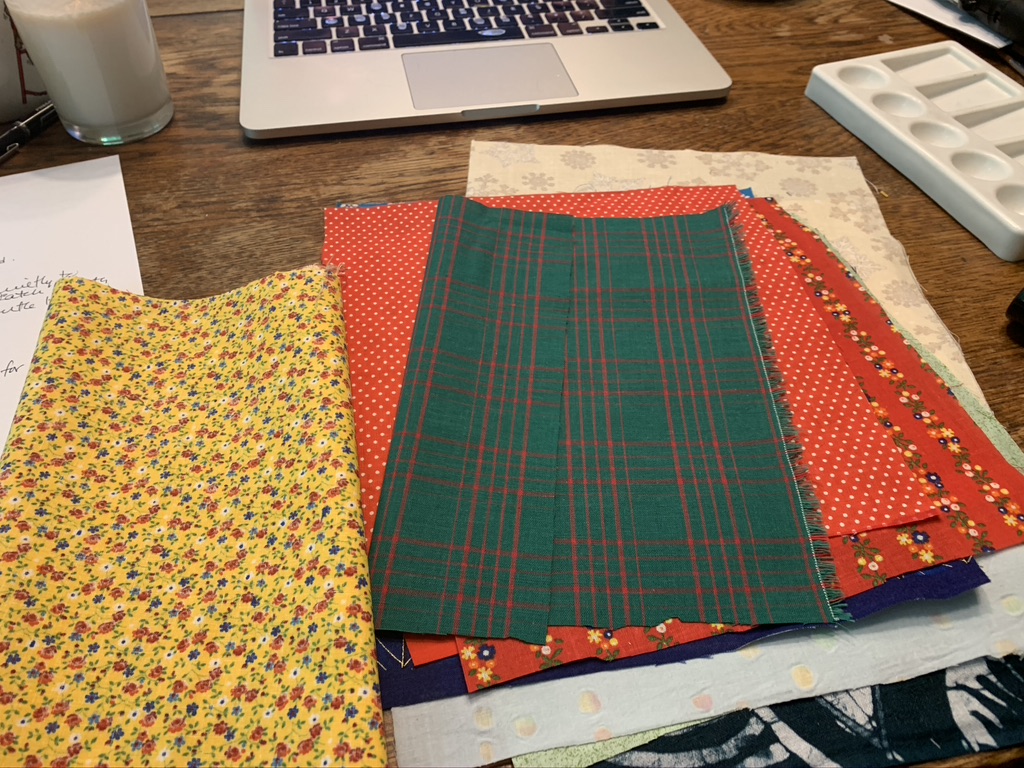
Fabric, markers, acrylic paints — and a whole lot of prayer is all that’s needed.

I gathered my materials: 9” squares of fabric in the designated colors (blue, white, red, green, and yellow), a set of permanent markers and acrylic paint and I was ready to go. Our webinar began in prayer as we set our intention toward this time to be one of holiness and creativity. We then learned about the symbolism and history of peace flags. Some of the images offered were stunning, of immensely long streamers of these flags, positioned high in the Tibetan mountainside, so that the breezes could spread the prayers throughout the world.

We centered ourselves in meditation, which was essential, since as we prepare to create with God, we need to open our hearts to receive the images and words we will use to create our own visual prayers. I must admit, every time before I begin an artistic endeavor, my spirit freezes and I wonder if anything worthwhile will come to my mind and heart that I could offer as a visual prayer. But after moments of settling, I found suddenly a number of images pop into my awareness. It was glorious to name the passages of scripture which were touching my heart around prayer, as well as the liturgical phrases we use so often in our service of Holy Eucharist.
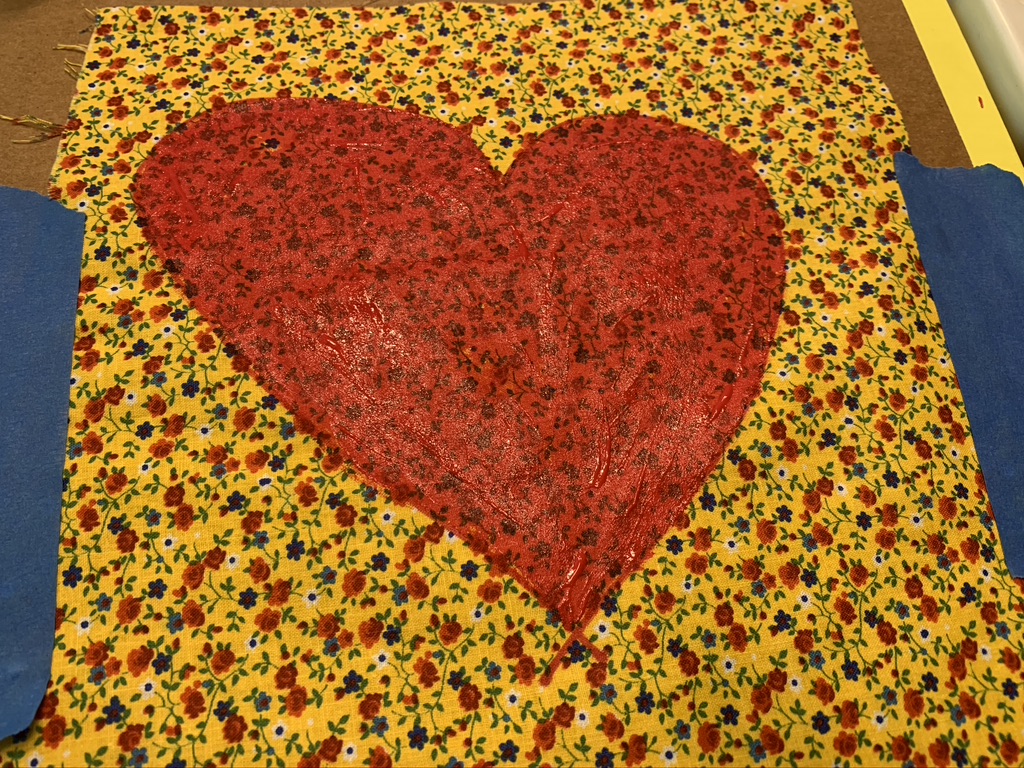
All you need is love ….

I closed my computer, put on contemplative music, took a few deep breaths, and allowed my heart to dance with the Spirit. Suddenly images appeared in my brain and I was able to make them become real on my fabric. I then added words and allowed myself to sit with them. Ultimately, I put the finishing touches on them and then attached them to the rope and hung them from some trees in the woods.

One of the points in the introduction was the emphasis on surrender. First, I believe, to surrender to the acceptance of imperfection, for my prayer flags are not perfectly created. Second, it was to surrender them to the elements of the earth, which the colors of the flags represent (sky, air, fire, water, earth). My prayer flags will become frayed. They may blow away. They may become faded and worn away. Already they have been drenched with the sudden rain storms we’ve had these past few days and I had to resist the urge to rush outside and bring them in out of the rain. But each time I feel a breeze whisper through the trees, I know my prayer for peace, expressed in so many ways in images and words, are being sent around the world, to find the heart that needs that message the most, so one soul at a time can be healed and turned toward peace.
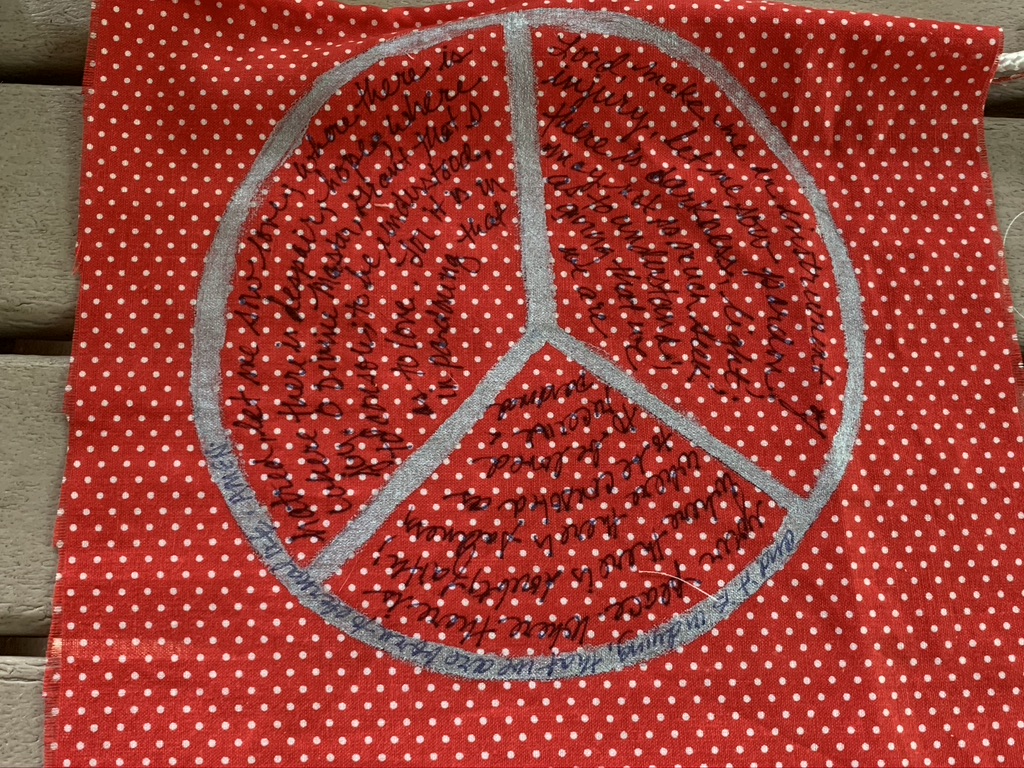
The Prayer (attributed to) St. Francis: Let me be an instrument of your peace.

Here’s what I learned, rediscovered, and connected with through this thoughtful and Spirit-filled practice:

  • It is the process of prayer, not the outcome that counts.
  • Prayer is an opening of my heart.
  • I can trust that the Spirit will show up and place upon my heart the right prayer.
  • There’s a gift in releasing our prayers into God’s world.
  • It’s fun to co-create with God.
  • I believe prayers matter.
  • It was a prayerful experience in allowing the scripture or parts of the liturgy to come upon my heart to be expressed in the flags.
  • I love the idea that the breeze will take the prayers off into the world, wherever they are most needed.
  • Prayer is an act of surrender.
  • Prayers don’t need to be beautiful. They may be smeared like the marker on the fabric, but that’s okay – it’s actually part of the gift, that we can offer our imperfection to God—and through God’s grace, all is made whole.
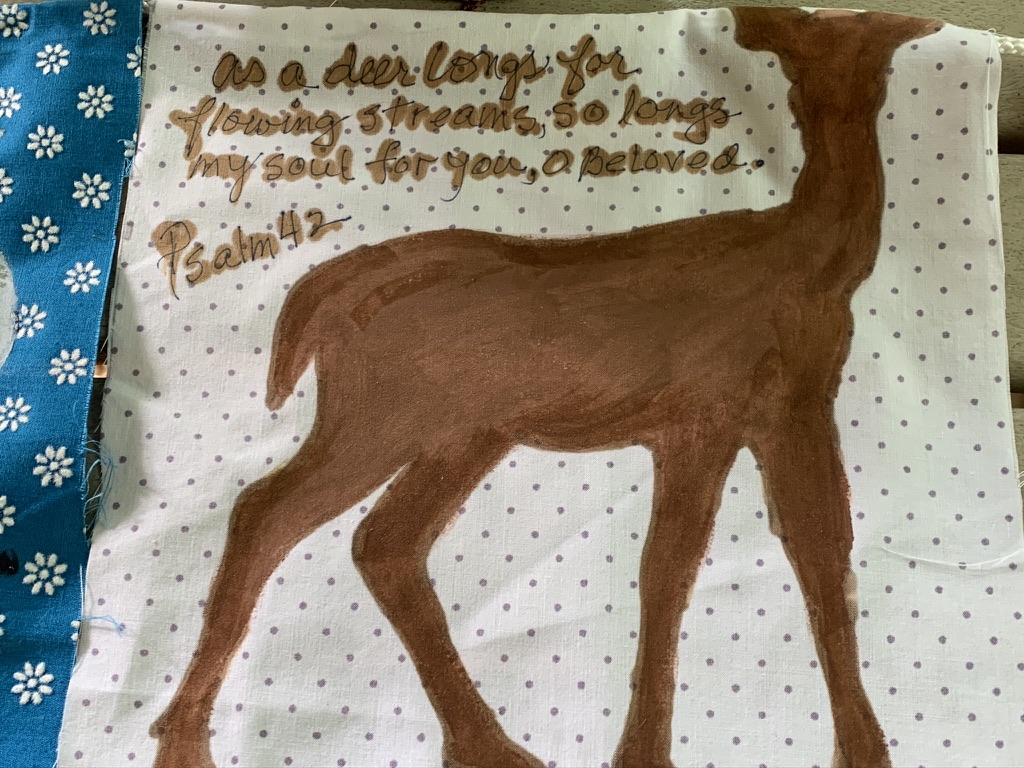
I do hope you will want to make your own set of peace flags – maybe we can do this together? Please let me know if you are interested. The flags can be any size and should be placed outside. They could be over your doorstep or on your porch, or outside your window where you will see them often so you can daily reconnect with your prayers. As I create my labyrinth in my woods this summer, I will create a set which will welcome people into that particular holy space.

May Christ’s peace be with you,

Mother Barbara
The Closure of the Episcopal Home

For over 93 years. the mission of The Episcopal Home has been to provide the elderly in Central Pennsylvania a safe, loving community, and a supported living environment where they can receive the care they need.

Through its long history, The Episcopal Home has been able to maintain the personal dignity of every resident and provide quality care for all those who have chosen to make their home with us. The support of the diocese through the years – both financial support and untold hours of service – has helped us to care for the residents’ physical, emotional and spiritual needs. Thank you for joining us so faithfully in this mission of compassion and care.

It is with saddened hearts that we inform you that The Episcopal Home is no longer financially sustainable as a care facility and will be closing effective September 30, 2020. While this is an immensely sad time for us all, the Board came to this decision after lengthy, prayerful and prudent discernment. In the past five years, the Board has explored new offorts in fundraising, marketing, and financial management with results that have been good, but not robust enough to allow for sustainability. The trends today in eldercare and healthcare in our Commonwealth do not favor independent personal care homes and the difficulties that we have been experiencing in maintaining our vitality are not uncommon. In the past, the diocese has been very generous in supporting the Home and we are grateful. The margin of loss is not one that even a strident mission effort in our diocese could sustain; an endowment with a principle of ten million dollars would be necessary to ensure a sustainable draw to meet the annual deficit of recent years.

We ask not only for your prayers during this period of transition, but for assistance where able. We are committed to ensuring excellent care for the residents as we work to assist their families and responsible parties to resettle them in alternative facilities and housing, work to alleviate distress, and provide spiritual guidance during this time. Any who are able to volunteer their time and services to ensure the residents are safe and cared for are greatly appreciated. If you would like to learn more about how you can help, please contact the Administrator of the Home, Ms. Mary Grace Shearer. In the Way of Love, The Rt. Reverend Audrey C. Scanlan, Bishop of the Episcopal Diocese of Central Pennsylvania.

Lenten formation class

We gathered to discuss the spiritual practice of “Learn”. This series designed by The Episcopal Church ties each of the 7 spiritual practices to one of the readings during the Great Vigil of Easter. The one chosen for this week was Proverbs, which speaks about the force of wisdom present from before time with God the creator.

We engaged with the idea that we are to take time each day to learn “about God” and to “learn God” — in other words, use both our mind and heart to learn about and engage with God in our daily lives. One of the riches of our evening was when we shared what we believe we have become wise in and how we have used our wisdom (grown through our love of God) in offering it to others and changing the world to become more Christ-like.

The action of belief, the rejection of fear

“Do not be afraid any longer, only believe.” Mark 5:36

This is the line Jesus gives the synagogue official Jairus to tell him to relax in the midst of horrific tragedy – the serious illness of the man’s young daughter. At the opening of the story, Jarius comes to Jesus during a large gathering by the seashore to compel him to come to see the girl. You can almost sense the anxiety and commotion around the official’s arrival. Jesus stands at the seashore with the water lapping behind him, the sun brightly shining and reflecting off of the water. Even in the heat of the day, people continue to gather and increase the size of the crowd – some standing, some sitting – all silent, trying to hear the voice of the Teacher. A man comes running and begins to press through the people, stepping over children, pushing passed men and women; his eyes fixed on the man at the shore. “Teacher! Teacher!” he cries and breathless, falls at Jesus’s feet, arms stretched along the ground. “My little daughter is at the point of death; please come and lay Your hands on her, so that she will get well and live.” Looking down, Jesus is filled with compassion for this man and his family. A decision is made to leave the lesson for another time and the bewildered crowd follows the two men into the town. The people continue to press in on Jesus, hungry for his words and wanting to know more about this mysterious man they heard about. The confusion grows as the crowd gets louder, calling to Jesus. 

Full stop. Someone touches Jesus’s clothes, a discussion ensues among the disciples, and Jesus must address the newly healed woman. The crowd still presses around, curious about the miracle that occurred. Jairus stands near Jesus, baffled and dazed by his anguish and anxiety. “Your daughter has died,” people from his house say to him, “Why trouble the Teacher anymore?” At this point, maybe Jairus drops his head, hot tears filling his eyes, and his hands stretching out to Jesus, again. Jairus’s whole body becomes limp with grief. 

I imagine the chaos that surrounds Jairus as he receives this sad news: the crowd straining and grumbling and muttering, the healed woman crying out in astonishment and joy, the disciples discussing among themselves about the change of plans for the day. Does he stand in defeat? Anger? Shock? “I trusted you!” he might say. “Why trouble the Teacher anymore?” they whisper in his year. The noticeable sarcasm plants the seed of doubt. (Is this really the man they say Jesus is? Where is the miracle here? Why did Jesus chose the woman instead of the girl? He’s too late. He did not care enough. This is not fair!) 

Then, turning to look at only Jairus, Jesus says, “Do not be afraid any longer, only believe.”

The official was clutched by fear. Fear is physical and debilitating. Jesus asks him to make a turn that is not only the opposite action from fear, but in many ways is a less “active” behavior than fear. Belief also requires a whole body effort, but is more like a pause than the aggressive experience of fear. 

In the midst of chaos, Jesus says, “Pause.” Breathe. Only believe. Only wait. Only watch. 

In the context of this story, belief is the more difficult action. It requires patience and control over the fear that can consume us, mind and body. 

What areas do I have in my life that are controlled by fear? Are there so many that I do not realize that the fear is there? Fear can turn into indifference because it opens the door to doubt. Doubt causes us to take wrong action or walk away from our Truth. Fears can arise from the benign (“Should I eat this cookie? What if I gain weight?!”) to the brutal (“How can I live without my loved one?”) Fear makes us try to take control over the situation or give up completely (also a form of control.) 

Making the decision to believe is brave, but how to do it can be puzzling. Belief in itself is a contentious idea in the postmodern world because it is often criticized for being “unintellectual,” misguided, or absurd. In Jairus’s story there is instruction for how to believe as Jesus wants us to believe. Belief rises from hope. The sick woman who touches Jesus’s cloak is also functioning through belief – example number two in this story. Reach out. Take a chance. Ask the Teacher to come with you. Reject fear. 

Reject fear.
That is belief. 

Living without fear gives room for hope. Hope guides us into a life full of love ([Love] bears all things, believes all things, hopes all things, endures all things…For now we see in a mirror dimly, but then face to face; now I know in part, but then I will know fully just as I also have been fully known. But now faith, hope, love, abide these three; but the greatest of these is love.” 1 Cor. 13: 8, 12-13) Remember the actions Jairus takes: first he comes to find Jesus, setting aside the fear of rejection; then he walks with Jesus back to his home, each step an act of belief; finally, standing in the midst of chaos and while doubters whisper statements of fear in his hear, Jairus and Jesus stand face to face. Pause. Wait. Watch. Believe. 

Then, Jesus raises the girl from the dead. 

Seeing salvation

Lord, you now have set your servant free *
to go in peace as you have promised;
For these eyes of mine have seen the Savior, *
whom you have prepared for all the world to see:
A Light to enlighten the nations, *
and the glory of your people Israel.

While I was at Holy Cross Monastery in August, I noticed this odd occurrence of my body often sighing. These emphatic exhalations and sighs were not intentional on my part, were audible to others, and I wondered about them. It wasn’t a “sigh too deep for words”(Romans 8:26). I didn’t feel sadness or loss, but rather somehow having entered into a regular process of release, of emptying space in my soul for something new, and this was happening in and through my body. I found it quite curious at the time, for I had imagined my soul at the monastery being filled up not emptied at this spiritual retreat time in preparation for my pilgrimage, but as always, when we journey with God, what we plan or consider to be our pilgrimage or path of exploration often takes a different turn.

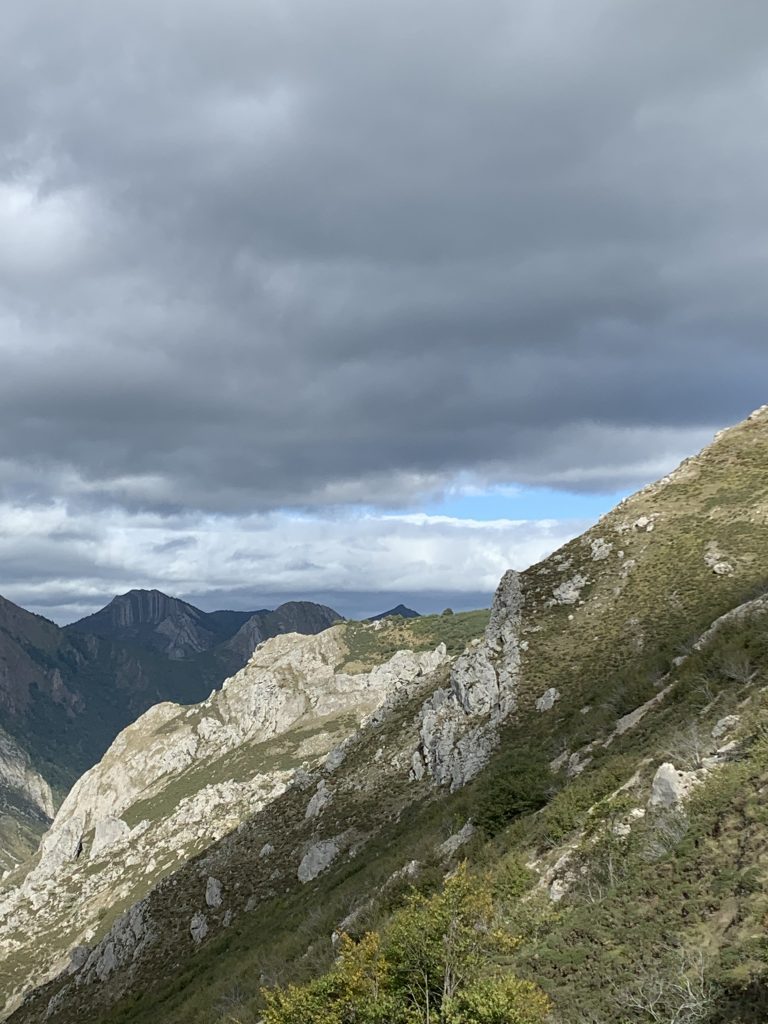
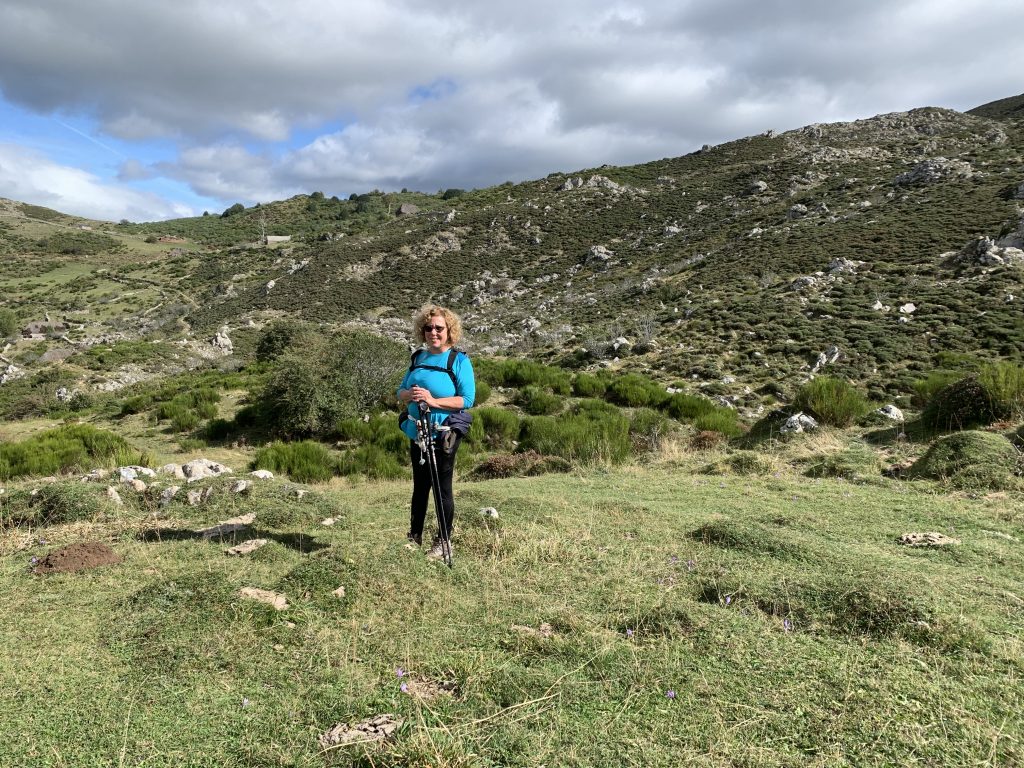
This week, when I climbed the mountains of Austouria, as our bus weaved its way on the narrow switch backs in the breathtakingly beautiful region of the Natural Park of Somiedo, I knew what this new spiritual practice of sighing and release was all about — here was the spot where I could breathe deep cleansing breaths, inhalations that drew into my body and soul the pure magnificence of God. Tears rushed to my eyes, my heart felt alive and my soul complete as I connected with the glory of God found in these mountains.

Truly, the words of the Song of Simeon came into my heart —

Lord, you now have set your servant free *
to go in peace as you have promised;
For these eyes of mine have seen the Savior, *
whom you have prepared for all the world to see.

As you remember, these words burst forth from Simeon’s mouth as he held baby Jesus when presented at the Temple by his parents. Simeon was marking the inner transformation of his soul, an awareness that he now knew a fullness of grace and joy that had forever changed him and which, in Simeon’s case, would change the whole world too.

There was an inner transformation of my soul as well on that mountain top that allowed me to breathe in the magnificence and glory of God that has forever changed me. As always, I don’t see the complete picture yet. I don’t know how this will unfold in my heart, except I know it is good. I connected with a soul-place— a geographic location which grabbed my soul and stretched it wider than I could ever have imagined, never to be the same again: holding, embracing, adoring and living God’s beauty and fullness in a new brand new way.

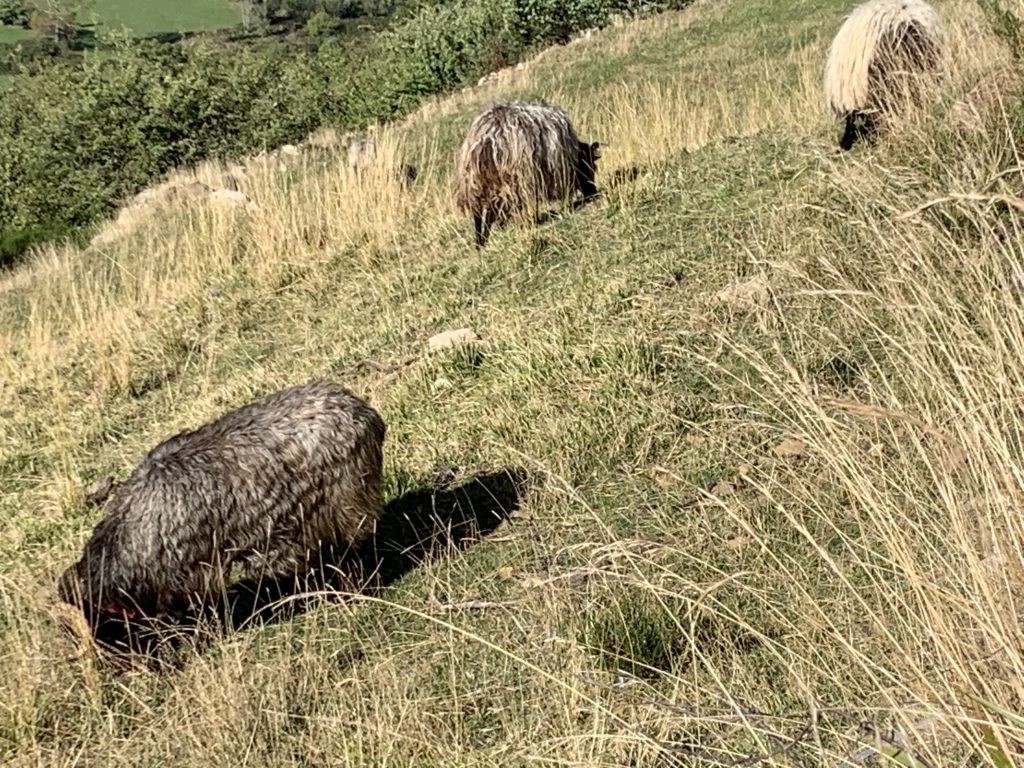
Since Simeon’s words so automatically leapt into my heart, I have spent time pondering what it means to have seen the Savior. I know I was pulled to the mountains where I could see the fullness of the glory of God— I know somehow I saw my salvation. But how does that translate into my life? Could it be God wants to draw my attention to the woolly sheep in the fields, to the shepherds who “held up the altar of the world” (which had been my focus from the Holy Land trip) so I could see the gift of a simple life lived within the natural rhythms of the seasons?

Wonderful wooly sheep grazing in the mountains
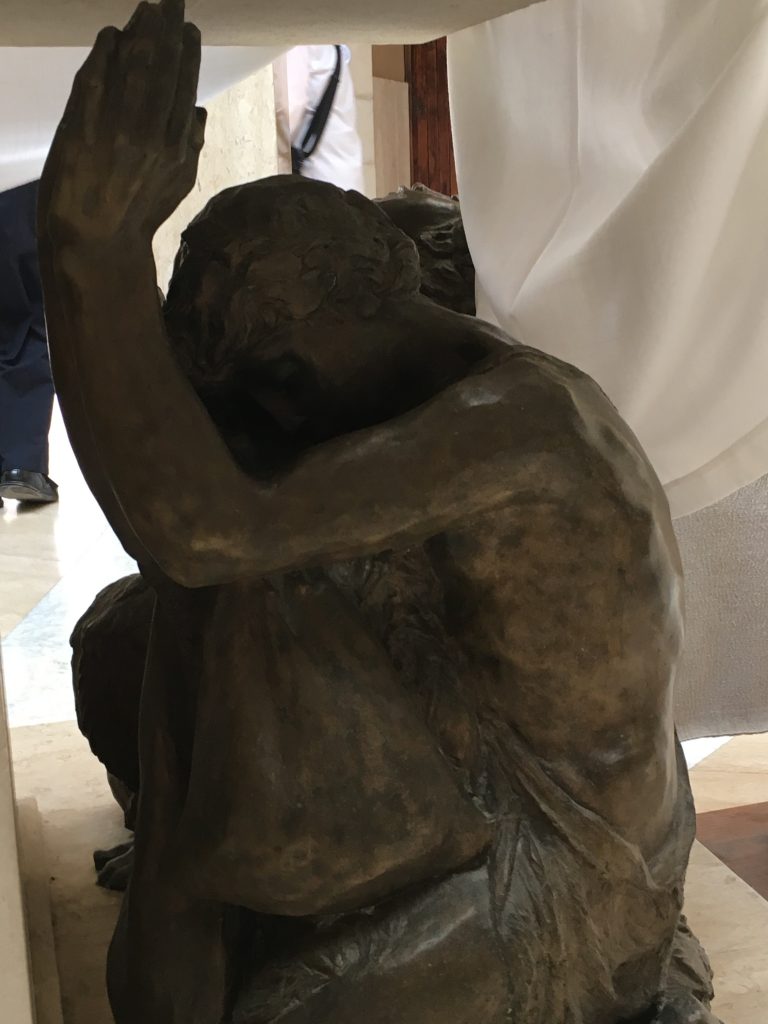
At the chapel at Shepherd’s Field in Bethlehem

Could it be that God wants me to see the expansiveness and never ending opening of possibilities in life, as each time we climbed to a different peak of the mountains, whole new vistas of beauty opened before our eyes?

Or could it be that God wants to me live with the awareness that with every step in life, our faithful and only appropriate response is “wow”, which I must have uttered hundreds of times on our hike?

It was remarkable to have the experience of my soul attaching to a particular place, to know I was in a spot I was called to and that my soul deeply resonated with, which somehow went beyond what I had felt before as a thin place.

My soul-place, where my heart was fully open to the magnificence of God.

This was not only a place where I felt the presence of God — but it was a place where God had a particular message waiting for me to discover. This experience speaks to me directly about the implications of the incarnation on our own lives — the magnificence and healing grace of the God who created it all also and always shows up to us in particular situations.

Perhaps the most important “wow” we can know in our heart is that God is always ahead of us, before us on the trail, with intentionality offering us particular messages that will unwrap and unfold our salvation, our awareness of the glory of God in our present life. Perhaps this is what seeing our Savior means — listening for, attending to, and embracing the message God has waiting for us — ahead and beyond our imaginations — in places foreign yet oddly already known to us — in the particularity of our lives set within the great expansiveness of God.

I now have a touchstone, a soul-place where God drew me toward and into to change my life, not to stay stuck there, but to return to in my heart whenever I need the assurance of the warmth, love, and grace of God. My deepest prayer is to live life with the same fullness and expansiveness I felt on that mountain. I am grateful for the opportunity to do that with each one of you.

Guide us waking O Lord and guard us sleeping;
That awake we may watch with Christ
And asleep we may rest In peace.

The Languages of God

Today as I engaged with the paintings at the Prada Museum in Madrid, Spain, I was aware of how both art and liturgy are languages, both of which express and reflect our beliefs about and in God and provide portals into the experience of the holy; with art, of course, using visual images and liturgy using words as the mode of expression.

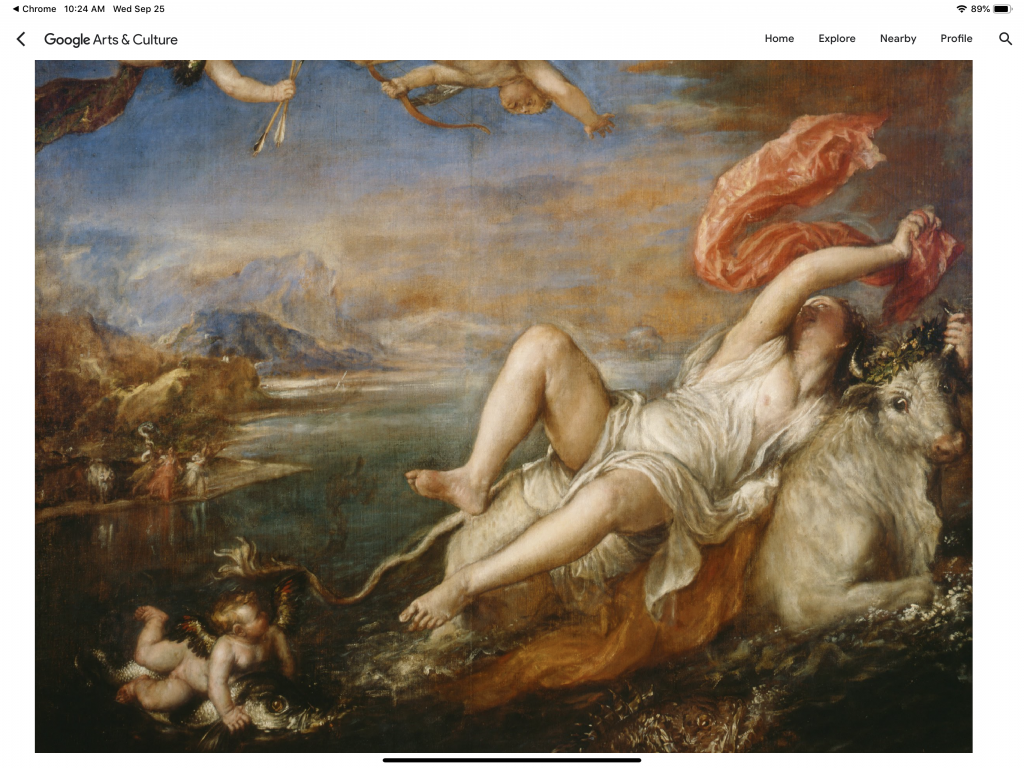
Since the church throughout history has been a major patron of the arts, today we saw a great deal of religious art, focusing on some of the master artists (Valazqeuz, Rembrandt, Vermeer). As we wandered through room after room of renowned art work, interestingly, I found the images naturally connected in my heart to the words or phrases in our worship service. This was a fascinating translation for me, for I realize how the movements and words of liturgy have become a natural language for me. For instance, each time I saw an image of a chubby cherub, I heard the words in our Eucharistic Prayer “therefore with angels and archangels and all the company of heaven”, since I guess that includes chubby little cherubs, or however we have visualized “the company of heaven” in our minds and hearts throughout the ages. I’m wondering now if each time I say these words during our worship, if I will be imagining fat little-legged cherubs, some dancing in the heavenly space proclaiming the glory of God, some hovering around Mary, attesting to her holiness as the chosen mother of the Son of God, or one particularly odd depiction of a a cherub riding on a fish, in whose expression of its eye told quite the story. If you see me suppressing a chuckle at that moment in our service, you’ll know the images which have come to mind!

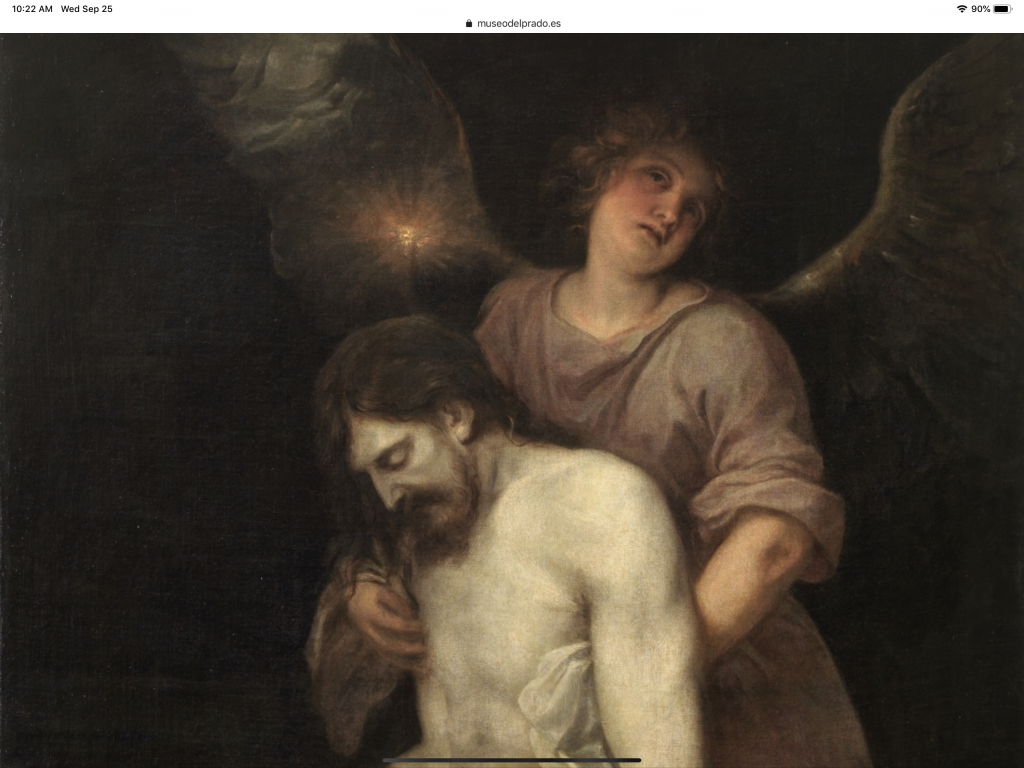
But then there was one image which did not initially translate into scripture or words of worship, and instead directly touched my heart, needing no translation. It was the Dead Christ by Alonso Cona.

Words weren’t necessary. My heart was directly touched and I was reminded of the shorthand which God and I had developed while I was in the Holy Land. Whenever I said, “huh….” (not “huh?”, but a more reflective expression) I became aware I was to pay attention to what was going on in the moment, to whatever it was I was seeing or feeling, or what was around me, or happening within me, for there was something in that moment that God wanted to use to shape my soul.

Upon being drawn deeply into this painting, I was aware that this was one of those moments. I stopped in my tracks, and allowed myself to enter fully into the painting, to notice where my attention was drawn, to linger there in the presence of God, to ask the question “What is God sharing with me now through the language of beauty?” and then of course, the harder question, “What is my response?”. For those who engage in the ancient art of Lectio Divina, you will recognize this process, and rather than engaging with sacred texts, I was engaging my heart in a sacred visual image.

I was drawn first to the light that seemed to pierce her wing, then to the whiteness of the crucified body of Jesus, then finally my heart rested on the expression of the angel, holding the crucified Christ, presumably carrying his being to join the heavenly host. I was expecting her eyes to proclaim holy disappointment in the human race, regret that God had invested so much in our healing which we refused to accept, or recrimination which birthed a steadfast desire to not waste another chance on us. But that wasn’t at all what God led me to in her gaze. I did perceive a sense of loss, of regret that what was so carefully planned with expansive possibilities was thwarted before it was able to reach its full potential, which is often an experience we each have, when our best dreams are not fully brought to fruition.

But rather I saw acceptance of our human weakness, compassion for our efforts of realizing the life-altering experience of the incarnation, and finally hopefulness, based upon the trust that the God we are in relationship with is a God of infinite chances.

In reflection, it reminded me of that great line in the Venite we say daily in Morning Prayer, “Oh that today we would harken to his voice”. It seemed to me that the angel was laying out this possibility for each of us THIS DAY. It was as if the famous line in the Christmas carol, “the hopes and fears of all the years are met in thee tonight” were indeed met in the baby Jesus, but that they can also be met in our lives today as well — that today will be the day when we will recognize and live into our salvation, when we will embrace the goodness of God within and around us, when our hearts and lives will testify to the new thing God has done to reconcile the world to the goodness intended for all of creation.

I found hopefulness in the painting, with the idea that one moment in history was not our only chance, that the God we are in relationship with is not only a God of infinite chances, but is also a God of experimentation and creativity, and that each day we are offered the chance to embrace the good news found in living Christ.

Today was a rich day of discovery, of connecting two languages in my life (artwork and liturgy) and of feeling the hopefulness inherent in the death of Jesus through the infinite “next chances” God offers us to live faithfully into the love of Christ. I haven’t yet discerned with God my response to the painting, and yet it feels like exactly the right place of heart to continue this spiritual pilgrimage, which I think began when my heart leapt into the painting: one of hopefulness that TODAY is the day I will harken (more fully) to God’s voice.

What are the “huh …” moments you have in your life? Or what shorthand is God using with you to grab your attention? What language does God use to speak to you?

Come let us bow down and bend a knee and kneel before the Lord our Maker.
For he is our God and we are the people of his pasture and the sheep of his hand.
O that today we would harken to his voice!
Psalm 95 or the Venite