Resurrection. Restoration. Reorientation.

After 24 hours of traveling from Jerusalem to Shippensburg, I arrived safely home. In the tiredness I feel this morning, and in light of the comments yesterday by others in our group that “I need a vacation from my vacation!”, I realize there’s a significant distinction between restoration, which we often get from a relaxing and restful vacation, and a pilgrimage which has led us to our place of resurrection.

In my pondering, I believe restoration or renewal returns us, with new energy, to who were before. This often happens to me when I sit on our sailboat: I feel physically rested, my mind is clearer, my heart more open, and I feel more alive and more “like myself”. We all need this rhythm of restoration in our lives and our contemplative practices often are what guide our path toward this time of feeling ready to face the world before us with renewed energy, focus, and strength.

But resurrection changes us. It creates something anew in our hearts, it awakens desires and passions around change in our lives or our world, and it often alters our mental perspective toward the events around us. And it’s hard work and it costs energy. So after a pilgrimage, I think it’s only naturally to feel a bit drained. As one of our pilgrims said yesterday, we have to allow our lives to grow and to “fit into our new shape”. This is the reorientation part: reflecting upon and allowing our experiences to change our lives and to be reoriented to the new self God has created in us on our pilgrimage.

outside-holy-sepulcher
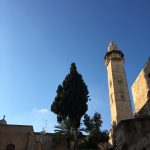
Bright blue morning sky of Jerusalem by the Church of the Holy Sepulcher, after finding the place of my resurrection.

It is true that for me today will be a day of restoration, not only of unpacking and settling into my wonderful life with my family and my home in the woods and the energy and ministry of our parish, but also to gain the energy to allow my life to fit into the new shape God has offered me during my pilgrimage, that shape of deeper surrender to the will of God.

May God bless us all as we travel the pilgrim’s way of resurrection and reorientation and grant us the grace to be restored in the Spirit for this hard and challenging work.

Ready to come home.

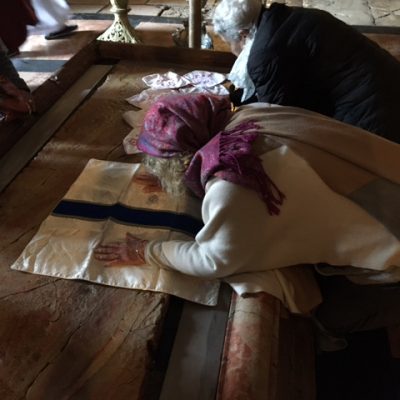
This morning I took with me the altar veil (the cloth which covers the chalice and paten) which was made out of Gretchen’s wedding dress. I chose this item to bring from St. Andrew’s, since it represented to me a true understanding of community and communion, the giving of oneself to the greater good and the glory of God. It represented to me so much of what I found as the place of my resurrection: self-emptying, surrender, commitment, and dedication to following Jesus.

Today I laid it upon the marble slab, which somehow oozes this fragrance, perhaps of myrrh, and feels like a very holy space to me. I flattened it out, in the midst of others who were placing crosses, icons, embroidery, or their hands upon the holy altar of Jesus’ healing.

img_2796-1
Mother Barbara offering a part of us to be anointed where Jesus’ body was laid.

I prayed for our parish, for healing and grace to abound, for courage and strength to follow the way of the cross to pervade our every move, to turn ours hearts ever more toward the ones in our neighborhoods who desperately need to be drawn into community. I felt grace. I felt abundance. I felt Jesus blessing us, this day and always.

I return to you this week, with an open heart and a renewed sense of gratitude and joy, that we have found each other and offer ministry together out of our love of Christ.

Stay close to the cross.

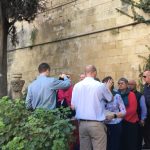
We gathered in the morning light, with the lingering clouds highlighted in a rose hue above the cross which adorns St. George’s Cathedral, and we listened to the instructions of our guide, Iyad, as we headed into the city of Jerusalem to walk the stations of the cross. The various stations are strategically placed throughout the city and many pilgrims traverse the Via Dolrosa.

2016-11-06-06-07-13

The instructions Iyad offered us seemed to be mere logistical considerations, yet they were much more for me.

Here’s what I heard him say: “Stay close to the cross”. This was a reminder to keep the group together, since we’d be crossing streets and needed to move as a group. I heard, “stay close to the place of our redemption, stay close to Jesus’ love, stay close to the healing grace Jesus so freely offered us on the cross”.

Next I heard Iyad say, “People may look at you funny for carrying a cross, but don’t worry about it”. I heard, “All that we do in the name of Christ and out of our love for Christ will not be understood by everyone. That’s okay. Be true to yourself and Christ.”

And then we headed out into the city. I heard “yalla — which had been Iyad’s cue to get moving, but I heard, “take the cross into the city, into the places we live, into the places that need to be healed, into the world, wherever you find God’s people.” (I have later come to realize “yalla” really means “Come follow me”, another good reminder to be followers along the way.

We moved as a group, headed toward the Old City of Jerusalem. We traversed the cobblestones, well polished from the millions of footsteps over the centuries. We were one of many who have made this journey. Life was beginning to emerge in the neighborhoods. We made our pilgrimage in the midst of the Muslim call to prayer, in the listening to the cock crow three times, in the awakening of sleepy cats in the alleys, in the presence of Israeli soldiers patrolling the gates to the city, past the Armenian hospice, walking in step with the Jews returning from prayer. And then we began our readings and prayers at each station, a kind of call and response, prayers led by each of us, and each of our hearts responding. Somehow the Spirit placed exactly the right reading or prayer in each of our hands, calling from the depths of our own spirits and souls that truth we needed to proclaim.


2016-11-06-06-20-24-hdr2016-11-06-06-24-222016-11-06-06-27-29

At one station, I believe it was VI, there was a woman sitting. After our time as a group, as we prepared to move along, our guide shared with us that the woman was asking for our prayers. It was a moment of grace. Mother Betsy and I instinctively moved forward, asked permission to lay hands upon her, and we prayed, and it felt as though all of us, and perhaps the whole world, was praying along. It was grace that we could offer the love Christ was sharing with us with this woman. In this exchange I heard, “taking the cross out into the city means being up-close-and-personal with others”. This ministry of taking up the cross means touching people, means sharing of ourselves, means a personal interchange. Another important piece of our pilgrimage.

We moved along and ended at the Church of the Holy Sepulcher, where we went to Calvary, where we touched the spot where Jesus hung on the cross. It was in that moment that the fruit of this pilgrimage came to bear. I know what it means for me to “return to the place of my resurrection”. It’s all about self-emptying. The greek word for this act, of course, is Kenosis, and it means the complete release within, so that we can be filled with the Holy Spirit which will guide our lives. It’s a scary thing to do. It takes into account all that I have wrestled with and been offered clarity around this week. It involves surrender, suffering, sacrifice, humility, vulnerability, and above all else, love of Christ. This step stops being scary only when we realize that emptying ourselves doesn’t leave us with nothing, but rather it leaves us with everything~ Christ in our hearts.

We concluded our pilgrimage this morning with a glorious celebration of Holy Eucharist at the Cathedral. And guess what? The sermon was about resurrection! It was one of the best sermons I’ve heard in a long time. One image the preacher left with us was a quote from his deceased wife’s book, that “resurrection is future joy brought near in the present moment” (not exact quote). His wife had described resurrection as watercolor (future joy and hope) and  seeping out over the glossy paper (our lives).

I found it. I understand this particular pilgrimage and what God spoke to in my heart. Redemption always happens. And it begins with our love of Christ and our commitment and dedication to not put it aside, and like Peter on the shore eating fish for breakfast with Jesus after his resurrection, to claim it as our own, and take the cross of Christ out into our world.

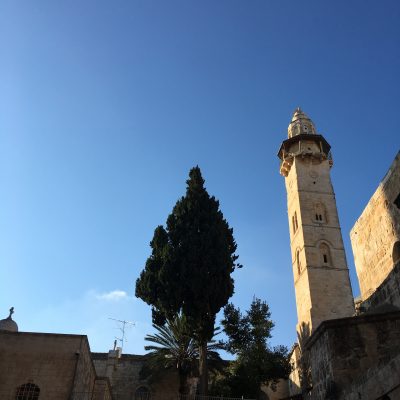
stations-leaving-ch-of-holy-sepuchler

On the move with Jesus.

We were on the move with Jesus these past few days!

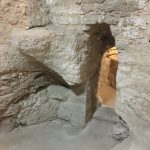
The evening before, when we saw the 1st century grotto where Jesus must have spent time, either because it was his family’s home or his relatives, something shifted inside of me. I could see it. I could see the reality of what we spoke of in seminary as “the historical Jesus”. This was the real person who played and prayed, who visited relatives, met new people, created his own network of believers, I believe early on. I could so see, by watching our guide, who I believe must know everyone in Israel and the Palestinian Territory, how Jesus’ community formed him, in thought, and action, and love. I could imagine his mother, preparing him every step of the way to claim his particular and unique role in the human salvation story.

As a good Episcopalian (Anglican) I  have found it a comfortable place to rest on the 3-legged stool (Scripture, Tradition,  Reason), which freed me to uncover the truth within the scripture, without hanging my hat on the factual accuracy of each statement or story. It is true, as I have stated in my ordination vows, that I believe our scriptures contain all that is necessary for our salvation. And because I didn’t need to believe every story to be factual to contain truth, I think the reality of Jesus hadn’t been fully opened up for me, until seeing the 1st century grotto by Mary’s home. This is why I can’t wait to come home and share with you my photos and stories. I want you to capture this same glimpse of the real person of Jesus as I have! We need both, our understanding of the transcendent Christ (our risen Savior) and the earthly fully human Jesus who walked this earth, laid hands on the sick, ate meals with his cousins, aunts, and uncles, went fishing with his friends, comforted them in their sorrows, challenged their beliefs, needed times of silence and solitude, and spoke from the grotto in the hills where he preached the challenging beatitudes to an enormous crowd. I met this Jesus over the past few days.

We gathered by the river. There were fishermen there already, which made it all exactly right. We sang, “Shall we gather by the River”, renewed our baptism vows, and offered the peace to each other. It was incredibly moving to be in this space, perhaps occupied by Jesus when the dove was sent by God and ascending upon Jesus, initiating his formal time of ministry. It wasn’t a commercial site.  There were no postcard stands, nor crowds pushing upon us. It was peaceful and serene. A time of real communion. That revealed to me another part of my return to the place of my resurrection: a sense of peace and communion with others.

jordan-river-betsy-water
Mother Betsy gathering water from the River Jordan.
jordan-river-2
The calm and peaceful river.

We then went to Capernaum, where we saw Peter’s house (where Jesus healed the paralytic) and the Jewish Synagogue (where Jesus prayed and taught). It was remarkable to see the these places so integral to the ministry of Jesus.

caperneum-view-2
Ruins of Peter’s home.

We walked down to the Mount of the Beatitudes (really a hill, not a mountain) and celebrated the Eucharist.

mount-of-beatitudes-8
Beautiful sight with Sea of Galilee in the background.


Once again, surprising grace showed up! We were praying the Eucharistic prayer when another tour group arrived at the space. They were laughing, taking photos, moving around, apparently oblivious to the sacredness of the moment those of us gathered were trying to enter into. Then of course, I got it! They were also a part of our communion. No longer a distraction, but a reminder that church is not always to be tidy and orderly and set apart from the real people of God. Both times we celebrated the Eucharist outside, others have joined our group. Particularly on this day, it made me think of that special time, when Jesus was preaching on the mount, it must have been chaotic, there must  have been other conversations going on, there must have been children playing. God sets holiness right in the midst of our everyday life, which makes our ordinary lives extraordinary. Good lesson to remember.

mount-of-beatitudes-landscape-2

“Jesus said to them, “They need not go away; you give them something to eat.” 17 They replied, “We have nothing here but five loaves and two fish.”18 And he said, “Bring them here to me.” 19 Then he ordered the crowds to sit down on the grass. Taking the five loaves and the two fish, he looked up to heaven, and blessed and broke the loaves, and gave them to the disciples, and the disciples gave them to the crowds. 20 And all ate and were filled; and they took up what was left over of the broken pieces, twelve baskets full. 21 And those who ate were about five thousand men, besides women and children.

Matthew 14:16-21.

Jesus lived in a cave.

We saw this cave this evening. We’re in Nazareth and after a rather ordinary day of travel and nothing totally remarkable happening or requiring processing, we went down below the convent where we’re staying.

2016-11-03-20-29-35
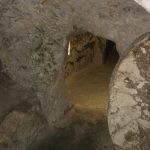
This is the cave where Jesus lived (or at least his extended family did). The lowest portion before the entranceway is the part present in the 1st century.

My soul is both too silent for words to express my reaction to this sight and also too stirred up to ever be the same. I will need to process this a bit with you as I return, to begin to make sense of what I saw and where I was this evening. But I do know that seeing the place where Jesus lived, played, prayed, slept, and visited with his extended family brought me into a real mystical sense of the living Jesus, who was formed by this location and his traditions and family, and which played out in the ministry. I know more now about the living Jesus~ the why and how that plays out in our lives is still a wondering for me.

Mother Betsy and I ended the evening with Compline, a perfect way to enclose and release the gift we received into the love of God, whose son, our Lord, lives with us now as the risen Christ. Amen. Amen.


2016-11-03-20-29-56
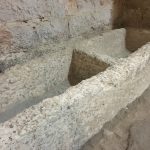
This is a manger, like the one Jesus would have been laid in. It was made of stone, not wood.
2016-11-03-20-36-47
This was not Jesus’ tomb, but shows you the round stone (right) that was rolled in front of the tombs, that the women were wondering how they would remove it when they came to anoint the body.
2016-11-03-20-36-09
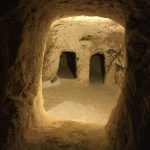
This is what the tombs looked like. Jesus’ body would be in that area outside the tombs (the dark areas) since the women had not yet prepared his body That anteroom was designed for the women to anoint the body and to mourn.


My cup runneth over.

” ….thou anointest my head with oil; my cup runneth over. Surely goodness and mercy shall follow me all the days of my life: and I will dwell in the house of the Lord for ever.” (Psalm 23)

There seems to be a common thread being woven through my pilgrimage: surrender. The word I would add today to that core reacquaintance with “the place of my resurrection” would be abundance. My cup runneth over today. Joy and light and love and hope spilled out from my soul, which had been filled to the brim and then some in the beauty and truth of God and humankind in the lost city of Petra. Words and photos cannot do justice to this magnificent expression and revelation of God.

Yesterday, I took 50 photos of dirt, today I took 50 photos of rocks!

Because with each turn inward into the city, another site was revealed that was heart-stopping and soul-lifting. What Mother Betsy and I noticed, as we were coming toward the exit of the city was that the journey in and out was actually a pilgrimage, that the path so clearly could represent one’s spiritual journey. As we traveled into the center, the landscape changed. At first we were “wowed” with the smooth, slightly shaded rocks, but only to find, as we went deeper, the landscape became more complex, more intricate, and revealed a greater beauty.


2016-11-02-08-44-132016-11-02-08-41-22 2016-11-02-10-34-50 2016-11-02-10-14-05-hdr2016-11-02-09-05-00-hdr 2016-11-02-09-36-29 2016-11-02-09-11-39  2016-11-02-11-19-47

As we went deep into the city and climbed to the top of the cavern, and had our “mountain top experience”, we knew that the sights on the way out, which presumably we had seen on the way in, would look different, more alive, brighter, and more inviting. And they did. There were times we went through the dark and narrow corridors, only to find a crevice of light beckoning us forward. So it seems to be when we are in the embrace of God. The truth is that we can stop our spiritual journey anywhere along the way: just peering in at the beauty, stopping at the first moment we experience a “wow” with God, refusing to enter the dark narrow corridor, afraid there is not light beyond, or we can embrace every turn, knowing God is beckoning us further, and trust that “surely goodness and mercy shall follow us all the days of our life; and we will dwell in the house of the Lord forever.” Today taught me to never fear to give it all to God, for what is received from the place of surrender is the light of the world.

Into the desert we went

This morning we were in the desert (Wadi Qelt) by 6 a.m. to pray and celebrate the Eucharist together. We began our time by praying Psalm 23 together, as we looked out over the desert which appeared to go on endlessly. The beauty was stunning, the view expansive, and the presence of God seemed tangible. We ended the Psalm with the words, “and I shall dwell in the house of the Lord forever”, and my heart and soul replied “AMEN”. It is true. I know that I shall dwell in the house of the Lord forever, for that is the where my heart solidly resides. It was a clear and moving moment in my spiritual pilgrimage ~ I guess that surrender part of the return to the place of our pilgrimage continues to support my journey, ever deeper into the mystery of God.

img_1142
Early morning arrival in the desert.
img_1132
Our pilgrimage to the top (Reminded me of Psalm 122: I lift up my eyes to the hills, from where will my help come? My help comes from the Lord, who made heaven and earth.”
img_1133
Expansive view.
img_1145
Amazing mountains and hills as the location of our Eucharist.
img_2460
Fr. Richard Wall celebrating Eucharist with us.

One of the most profound parts of the Eucharist, celebrated, in the beauty and silence of the world around us, was the people who joined us, freely and without question. The Bedouin family who live in the caves nearby, came and joined us, not to receive Holy Eucharist for they are Muslim, but to be a part of our group. Yes, they came to lay out their wares to be sold, beautiful bracelets and scarfs, ready for us to buy, but it seemed also to be a part of who we were. The little children carried on, as any child in church, running to and fro, yet also knowing something special was happening among us. It was a gift to walk down the hill with the little girl, noticing that our clothing matched and to ask her help on which bracelet I should buy from her. It was a gift for our communion and community to be expanded by their presence.

I’ve been thinking a lot about community today, about how the people in this area seem to have a different sense of it than we do. I have never seen anyone who knows so many people as our guide. Of course, that’s his professional network, but it’s also his way of life. Everywhere we go, we connect with his “cousins”, people he knows and trust, people he can count on, people he can find similarity with. I have some more thinking to do on this, but it explains a lot about how Jesus was always running into the right people, or asking the right people to provide things for him (donkey to ride into Jerusalem), or feeling comfortable sending his disciples out carrying nothing, for he knew the people along the way who would take care of them. It makes me wonder about how this sense of community supports the idea and practice of the missional church, when the church and relationships extend beyond the parish, out into the community. More to ponder here.

My other real learning today is that I will NEVER EVER AGAIN call the Israelites, who grumbled in the desert, “stiff-necked people”. Oh my goodness, to imagine they walked this desert, from Egypt to the Promised Land — it’s remarkable! I think I would have been cranky within 10 minutes of leaving the Red Sea! This land is hard and inhospitable. The distances are long. The trek difficult. They would have been unprepared for the journey, since they were not bedouins. The left hastily with unleavened bread, but also wouldn’t have had tents, animals, and a familiarity with the landscape. I really understand their discomfort and wondering what in the world Moses was doing leading them into this fragile existence. We did get to be at Mt. Nebo today, where Moses saw the Promised Land and it was stunning and beautiful. As Betsy and I noticed, we took a lot of pictures of dirt today, but the view was so amazing, we kept wanting to capture something within it that was calling us.

img_1162
The Promised Land.
img_1186
The Church of Moses
img_1174
Beautiful cross at the top of the mountain, designed to incorporate the bronze serpent we hear in the story of Moses and God’s people.

Tomorrow, we head to Petra to the “lost city”, and I can’t wait!

Many blessings of peace to you, Barbara+

Pilgrimage: Returning to the Place of our Resurrection Part II

So yesterday, I was reunited with a place of resurrection by completely surrendering to God, through my prayers at the Western Wall. It was a powerful opening within me that burst open my awareness of my love of God.

Today, we travelled to Bethlehem, which is only 7 miles from Jerusalem. For some reason, the physical distance between these important points in the Biblical narrative are much less than I had imagined. We had the amazing opportunity to arrive at the Church of the Nativity, which is built upon the spot where Jesus was born, where heaven and earth were joined, to open us for us our salvation, at the time to receive the invitation to celebrate the Eucharist with the Franciscan monks in the grotto of the Star of Bethlehem (the location of the manger).

2016-10-31-07-34-52
The Star of Bethlehem, the place designated as the birthplace of Jesus.


We received the bread of life in Bethlehem, the city whose name means, “House of Bread”. The mass was held in Latin, but somehow the rhythm of the Eucharist was familiar to all and our experience transcended words we did not comprehend.


2016-10-31-07-37-06
Mother Betsy and Mary Grace, preparing for the Eucharist in this holy spot.


The second part that God showed me today in my pilgrimage to the place of resurrection is our connection to the suffering of the world. Prior to the Eucharist, we met in a nearby grotto, which when excavated, revealed the bones of many babies, the Holy Innocents, the babies as our prayer named as “those who bore the price of our salvation”.  I was painfully aware that our salvation certainly came at the expense of Jesus’ life, but also others have deeply suffered as a result of the love God released into the world upon Jesus’ birth, the love which others feared and felt threatened by (and still do). When we surrender to God, we bear the suffering in our world. That’s just part of it we must be willing to embrace.
I’ve learned this past year, often through my reading of Richard Rohr, that we cannot separate the “mountain top experience” of Eucharist in the grotto where Jesus was born with the suffering which resulted from this glorious act. They are the part of the same; two sides to a coin. We must embrace both of them to be fully Christians.

We then went to the Church of the Angels, which was astonishing! It was at the shepherd’s field, where the shepherds heard the message from the angels and ran into Bethlehem (not nearly as far away as I had previously imagined). The chapel was simple and true and we sang “The Shepherds watched their flocks by night” and it was a holy time. But what struck me most was the altar. I lifted the altar cloth to reveal these amazing statues of angels holding up the altar. And isn’t it true — that it is our humility, our prayer, our watchfulness, and our turning our faces toward God which hold up the altar of God, where Jesus’ love can be broken open. Don’t you think that it is our response of love that opens and supports the release of love borne to all people through the Eucharist?

2016-10-31-11-14-53
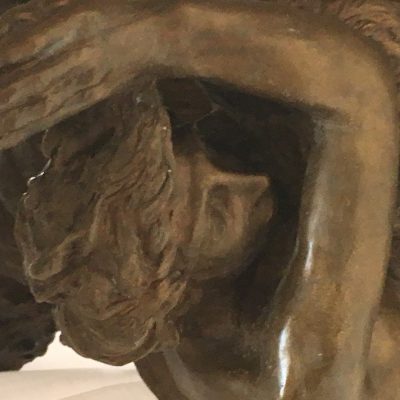
Shepherd holding up the altar
2016-10-31-11-14-34
Prayer holding up the space for God to be released.
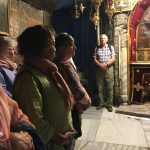
2016-10-31-11-14-23
Human humility opening the way for God’s love to be released.
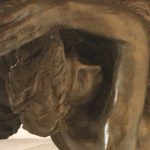


2016-10-31-11-13-45
Shepherd’s face turned toward God.

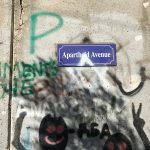
We also went by “The Wall”, the dividing wall that separates Israel from the occupied territory of Palestine. It’s ugly and oppressive. I have learned this is a very complex situation (Israeli and Palestinian relations) that I can’t yet understand, but want to know more and yearn to see the “Prince of Peace” who was born in this tiny town of Bethlehem to reign in this conflicted area.

2016-10-31-10-06-542016-10-31-10-05-38


Surrender, Suffering, Salvation. These words and movements of our hearts seem to flow together for me in a brand new way. Thanks be to God!

Tomorrow we head out into the Judean desert to celebrate the Eucharist as the sun rises, then off into Petra. This is the ultimate trip of a lifetime. I feel so blessed to be here, as I hold you all in my prayers. I can’t wait to share this all with you upon my return. Many blessings and much love to you all, Barbara+

I’ll post a gallery on facebook of more photos.


Touching a piece of my resurrection

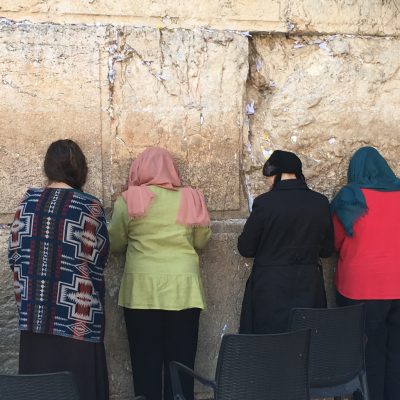
Today I found a part of what I came searching for as a pilgrim. I framed my pilgrimage in John Phillip Newell’s understanding that a pilgrimage is a return to the place of your resurrection. I learned today that the place of my resurrection involves complete surrender to God.  I experienced this release and joy at the Western Wall (previously called the Wailing Wall). This is the only remaining portion of the 2nd temple, which was destroyed by the Romans in 70 CE. Jews come here as a pilgrimage and also, it appeared today, as a regular or even daily ritual in their worship life. Often people write prayers on small slips of paper and insert them into the wall. I wrote mine, and it became a profession of my love for God ~ my complete surrender to the love which drives my life.

As Mother Betsy and I were walking toward the wall, with our head coverings on and a sense of reverence in our hearts, the image that came to my mind, heart, and soul was when Betsy and I were preparing to walk down the aisle for her ordination as a deacon, and she looked at me with wide-eyes and said, “I feel like I’m getting ready to marry Jesus!”. I replied, “Yes, Betsy, you are.”

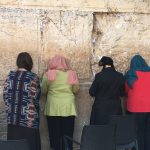
Today, as I approached the wall, in the midst of women whose hearts were turned to the same God, I touched the wall, laying my hands and head upon the hard smooth surface, and prayed from the depths of my heart. I prayed for my family, then my parish family, then allowed prayers to float to my heart, and then I ended with a complete sense of love and union with God. Tears filled my eyes, reverence and awe filled my heart, and a peace settled into my soul, that once again, I opened the veil and lived into the vow I made in baptism and ordination, that indeed, my heart was filled with the love of God. This is a part of our resurrection, our understanding that we and our lives are completely dedicated to loving God. I feel blessed and honored to have taken my place among women of God who turn their thoughts, cares, devotion, and love to the God so present in this holy site.

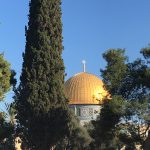
We continued our journey, next to the Dome of the Rock, the site of Abraham’s potential sacrifice of Issac and the third holiest site is Islam, where Muhammed was taken on his night journey to Jerusalem. My favorite image from this place where we were clearly guests invited to honor another’s understanding of our God, was listening to a teacher chant the Koran to another, filling the air with beautiful sounds and a sense of passing along the faith.

From these two powerful experiences of witnessing other expressions of obedience and observance to the God of the three Abrahamic faiths, we came home to the Cathedral and joined in the celebration of the Holy Eucharist. There is much to ponder from this day but my sense is that faith or God is not to be claimed, controlled, nor put boundaries around, but rather we are called to show respect for and appreciation for the multitude of ways God can be honored in people’s lives.

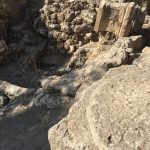
The other powerful experience for me today was going to the Church of St. Anne’s where we saw the pools of Bethsaida, where Jesus performed healing miracles. It was amazing to walk down into the lowest level excavated which contained the pools that Jesus would have seen and where he spoke to the man who had waited years to go into the pools and Jesus said, “Get up and walk”. We offered prayers and received anointing and I left with a broader awareness of the healing grace offered to us by Christ.

2016-10-30-06-30-51
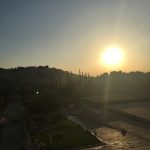
Sunrise over the city of Jerusalem
2016-10-30-06-46-13
Prayers of devotion at Western (wailing wall)
2016-10-30-06-46-39
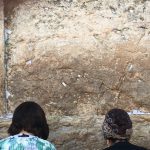
Sending our prayers to God
2016-10-30-07-59-14
Koran being taught through chant
2016-10-30-07-38-59
Dome of the Rock- holy site of Islam
2016-10-30-08-50-05
Anointing at St. Anne’s Church
2016-10-30-09-01-13
Healing pools at Bethsaida
2016-10-30-11-10-08
Holy Eucharist at St. George’s Cathedral, Jerusalem


Moving deeply into the Spirit of Christ

So, I still don’t really know what day of the week it is and knowing the time of the day here becomes even more complicated because tonight is their end of Daylight Savings time, so we set our clocks back tonight, which is a gift, since we leave touring tomorrow at 6:15 a.m. But this day was a great and deeply moving and spiritual day.

Here are all the places we visited:

  1. Garden of Gethsemane
  2. Dominus Flevit – the church commemorating the place of Jesus’ lament over Jerusalem (Luke 13:34-35)
  3. Church at Bethpage (beginning of Palm Sunday procession)
  4. Caiaphas Palace (saw the jail where Jesus stayed the night before his execution) and where Peter’s denial 3 times occurred.
  5. Judean desert (saw the place of the Moabites, Jebusites, Edomites — all those difficult names to pronounce).
  6. Ate lunch in the West Bank at a Christian family’s home
  7. Heard a talk from an Arab Palestinian Muslim

Amazing day! Again, I came away with more questions than knowledge, but of course, I always tell others I love questions, so I have to know for myself that’s a good thing too. My image of the day is of a tightly woven rope, that is beginning to unravel, one string at a time, for me to look more closely at. I trust God will put it all back together and it will be stronger, but there are questions to explore and ponder.

Here’s my list of learnings or questions for this evening:

  1. I understand Jerusalem to be a city for and of Jews, but now understand why it is also a city for and of Christians.
  2. When we drove by the Jewish section of Jerusalem, being their Sabbath, they blocked the roads off so their Sabbath could not be disturbed. I found that fascinating — just like a Rule of Life, they construct their lives to support their beliefs and relationship with God.
  3. There was a lot of physical and geographic movement of Jesus in that last day, up and down the hills, in and out of the city, into the refuge of their friends’ home, and out in public. Made me wonder how our journey mirrors this particular part of Jesus’ walk?
  4. We saw a really old olive tree in the Garden. The olive tree is hollow and before it dies, sends up sprouts. You can see where this happens. It sums up resurrection to me — before something dies, there is always the potential and expectation for new life.
  5. Via negativity– a new term for me to explore — how our suffering is connected to Jesus’. I think this is true when our suffering comes from the rejection of love and truth we attempt to bring into the world, as Jesus did, and we are faced with the same sad truth that not everyone wants to live in love, wants to receive love, and is able to share love.
  6. There’s been a lot of conflict around protecting holy sites. But didn’t Jesus tell us that it’s not what’s on the outside that’s important but what’s in our heart. This made me think a lot about the missional church, how it’s not about protecting the holy site, but by finding the holy in all places by taking love into the world, in and outside of the church. This makes sense to me and is faithfully following Jesus.
  7. I’d love to center a stewardship campaign upon Jesus’ answer to his disciples when they asked him what they should say to the person whose donkey they are taking for Jesus’ ride into Jerusalem. Jesus said, “Tell them their master needs it.”
  8. There’s a great icon in the church of Caiaphas’ palace of the post-resurrection appearance of Jesus to Peter, with the fish bake on the beach, and Jesus instructs Peter to “feed my sheep”. Makes me see how resurrection and feeding the hungry are inherently connected.
  9. I was drawn to the faces of the people waiting and watching Jesus come into Jerusalem as the triumphant King — they got it right — they were in awe and reverence, and also full of trepidation and an awareness that life will never be the same. It make me think this is the same expression we all should have when we or others are baptized.
    2016-10-29-07-35-16
    Faces watching Jesus on Palm Sunday procession from Church at Bethpage
    2016-10-29-08-40-16
    Window in chapel of Church of the Tears (Dominus Fletiv) where Jesus cried over Jerusalem
    2016-10-29-12-16-43
    The Judean desert (West Bank territory) from the edge of Jerusalem

    2016-10-29-07-59-23
    Carved images of faces anticipating the arrival of Jesus on Palm Sunday
2016-10-29-07-40-10
A very old olive tree in the Garden of Gethsemane
2016-10-29-13-08-12
Family making us a great lunch. Baking over was sealed with marble slab and then sealed with mud.
2016-10-29-09-43-04
The hole through which Jesus was lowered with a rope around his waist into the jail cell where he awaited his trial and execution


I thought I’d be sharing insights with you each day. Instead, I’m sharing questions, which you and I can explore when I return. Isn’t God just tricky! Today we entered into the hard part of the betrayal of Jesus, but I was left in a hopeful place. This makes me realize the power of the resurrection.


We keep making beads!

We want everyone who would like to be able to make Anglican Prayer Beads and learn how to pray them.

So we brought the beads to the people today. Thank you, Jeanine, for making this possible!

file_000

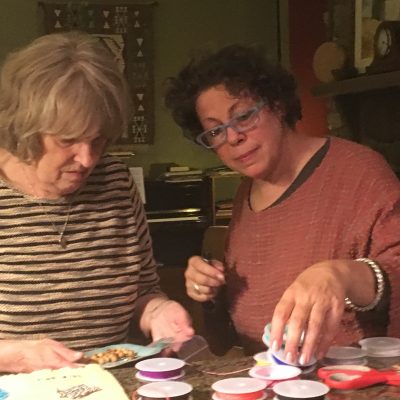
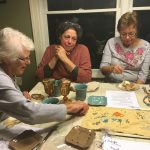
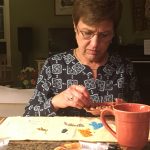
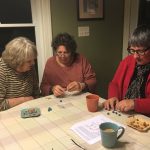
Here are some photos of people creating beads from clay, choosing the right spacer beads and laying it all out, and then stringing them.

file_001 file_003 file_0031 file_004

If you would like to make a set and haven’t had the chance to do so, just let us know. We want you to be able to engage in this way to connect more deeply with God.

Stringing beads for prayer

This evening we gathered for companionship along the way, for nourishment for our lives and souls, and we strung our beads, some of which we created last week out of clay, to create our own personalized Anglican Prayer Beads.

Oh, a little bit of fun, before we begin the hard work.

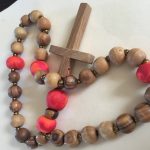
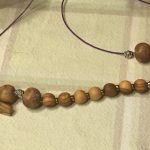
We all used olive wood beads from the Holy Land for our “Weeks beads” (the 7 between each cruciform beads). Seven is an important number in the Bible and symbolizes completion.

Lovely beads that complement the wooden beads

We also chose from a number of colors the spacer beads. It’s totally amazing how many different variations there were. No two were alike. Some used colors to represent the creation. Others picked colors which complemented their clay cruciform beads, while others chose colors which contrasted their clay cruciform beads. That’s part of the process of choosing and stringing your own beads – each string becomes your own and you see it as a way to express your identity and your particular way to interact with God.

Pondering the options
This takes a lot of concentration!
So much fun.
So much fun.

Next week we will gather to pray the beads. Too often we come home from a bead making workshop with a beautiful set of beads and have no idea how to incorporate them into our prayer practice. We want to give everyone a chance to learn how to actually invite and allow them to make a difference in our lives.

We ended this evening with blessing our beads and sharing the Office of Compline together.

A blessing of the beads
A closing Compline service

It was a wonderful and holy time together. Come and join us for our third session next Wednesday.