Bishop Scanlan’s Visit

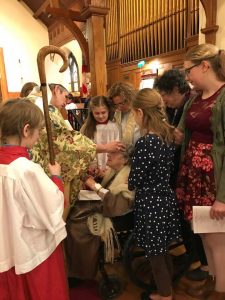
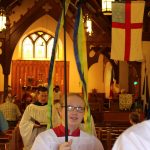
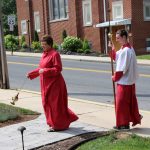
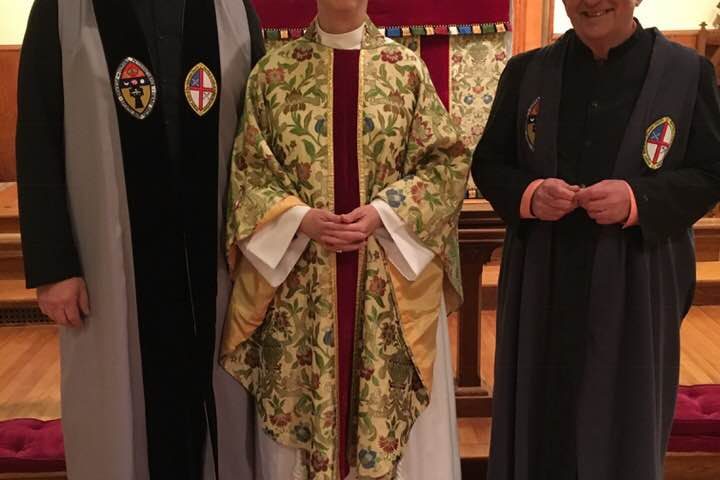
It seemed appropriate that the gospel text for the day of the Bishop’s visit was on Jesus’ mountaintop experience which transfigured him and transformed the disciples in their understanding of Jesus’ identity and their shared mission. That’s what happened yesterday when Bishop Audrey Scanlan led us in worship, confirmed those ready to commit anew to their faith, blessed a parish member and resident of The Episcopal Home who wanted to reaffirm her faith, engaged in the sharing of stories and experiences of the sacred, and met with our vestry. It was a mountaintop experience for us all! We left, coming down from the mountain, changed and clearer of who we have become as a parish and what God has placed on our hearts to do. We all offered the depth and breath and best of ourselves to God and each other — and the Holy Spirit gathered us all together to bring God’s glory into our world.

We are so grateful for our bishop’s pastoral guidance and leadership and her ability to enter fully into our life as a parish and to enhance it.

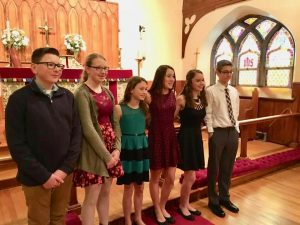
We offer our congratulations and blessings upon the people who were confirmed or who reaffirmed their faith yesterday:

  • Emma Eshleman
  • Cameron Gilbert
  • Bramley Hawkins
  • Della Hawkins
  • Shannon O’ Donnell
  • Zachary Rhodes
  • Laurel White
  • Dolly Koehler

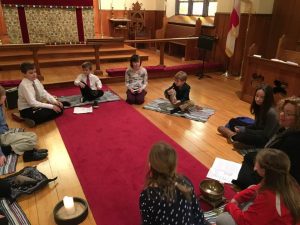
One of the very meaningful parts of our bishop’s visit was the time she spent with our younger members. We gathered in a circle and shared an object that is special to us and why and then shared where we each find God at St. Andrew’s. After each person’s sharing, we entered into a time of silence, then chanting, which seemed to draw us ever closer to each other and with God. What was remarkable and stunning to me was that all of our young people seemed to speak so naturally about finding God at St. Andrew’s. It was as though this is the most natural thing in the world. For many of us, it is. But for some, those two things, spirituality and the institutional church, don’t always come together. I feel blessed that we at St. Andrew’s are forming our young people to expect to discover God in what they do here at church and in the people gathered. One of the most touching responses for me was when one of our young people mentioned that when they stand up in front of the congregation to sing, they are aware of God looking back at them through the people in the pews.

The bishop spent time getting to know the vestry members and exploring what the term missional means. This word takes the more familiar concept of outreach and expands and extends it to speak of experiences where all those involved are changed and transformed. There is a mutuality of growth that happens when we move from doing something FOR someone to doing something WITH someone in such a way we are all changed and our lives are enhanced.

I know the bishop’s visit is one day which is etched in my heart, now and through all eternity. This is what church is all about. Many blessings, Mother Barbara


Pre-Confirmation Class Session #1

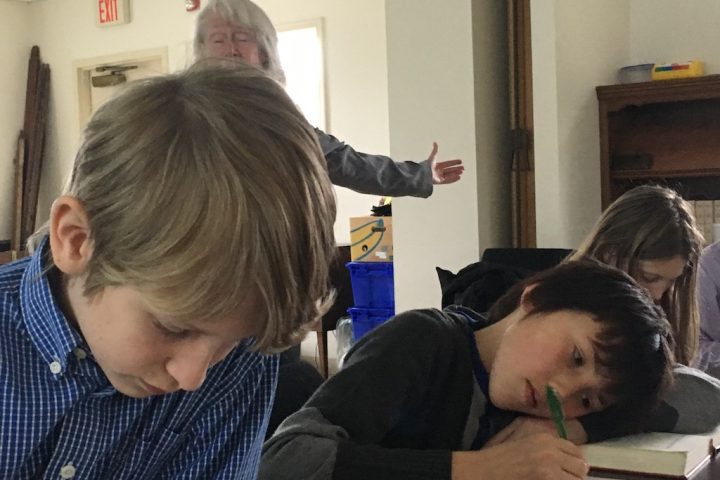
Today we began our Pre-Confirmation Class– and boy, were we delighted and amazed (once again) at our young people — what they’re interested in, the questions they have, and their already deep understanding of worship.

We were blessed that Dean Robyn Szoke was with us to help facilitate the conversation about the beginning part of our Holy Eucharist Service, touching on the topics of: how we come into worship, how (and by whom) are we welcomed, and the Collect for Purity (who says it and why).

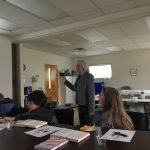
Dean Robyn Szoke teaching

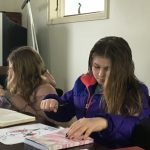
Each young person contributed to the conversation and they busily wrote their amazing questions and thoughts in their special journals provided for them.

Great ideas, amazing questions

What was best of all though were their questions! It was so great to offer them the safe space to ask all the burning questions on their hearts. That makes me so happy that we have young people who are thinking and wondering and coming to us to ask our thoughts.

I also introduced them to the exercise they will do with the Bishop when she is here in two weeks. I have asked each one to bring with them something from home that is sacred. We talked about what that word “sacred” means and they came up with the definition of something that’s special or important. With this item to share, they are then going to offer why it is sacred to them. After everyone has shared (including me and the bishop), we will give the young people an opportunity to tell the bishop what it is about church that is sacred (special or important) to them, whether it’s taking communion to the residents of The Episcopal Home, or playing their musical instrument, or being an acolyte, or washing feet on Maundy Thursday. I am so happy our bishop will get to know these amazing young people.

Our next Pre-Confirmation Class will be on February 25th at 11:15 a.m. in the upstairs PLC. Parents and grandparents are always welcome to come to the class too!

It’s a family event!


Keep those rivers flowing (Sermon for River Sunday)

Michael Nailor

St. Andrew’s Shippensburg

October 29, 2017

River Sunday

Matthew 28:1-10

After the sabbath, as the first day of the week was dawning, Mary Magdalene and the other Mary went to see the tomb. And suddenly there was a great earthquake; for an angel of the Lord, descending from heaven, came and rolled back the stone and sat on it. His appearance was like lightning, and his clothing white as snow. For fear of him the guards shook and became like dead men. But the angel said to the women, “Do not be afraid; I know that you are looking for Jesus who was crucified. He is not here; for he has been raised, as he said. Come, see the place where he[a] lay. Then go quickly and tell his disciples, ‘He has been raised from the dead,[b] and indeed he is going ahead of you to Galilee; there you will see him.’ This is my message for you.” So they left the tomb quickly with fear and great joy, and ran to tell his disciples. Suddenly Jesus met them and said, “Greetings!” And they came to him, took hold of his feet, and worshiped him. 10 Then Jesus said to them, “Do not be afraid; go and tell my brothers to go to Galilee; there they will see me.”

Keep Those Rivers Flowing

Grace, peace and forgiveness to us all from Jesus Christ, our Lord! Amen!

Thanks to Mother Barbara for inviting me to be a part of the preaching for this Seasons of Creation Worship series. My name is Michael Nailor and I am a member of St. Matthew’s in Sunbury.  I am a Candidate for Holy Orders in the Diocese of Central Pennsylvania.  This is the step before ordination into the ministry and life of a Vocational Deacon in our church.  Our diocese maintains the Stevenson School for Ministry that enables people like me to discover our gifts for ministry and to listen to what God is calling us to do.  I know that St. Andrew’s is a supporter of the school and diocese-wide efforts in continuing education – and for that I thank you all.

Since this is “River Sunday” I’d like to end my introduction with details of my recent adventures on the Nile, the Ganges or the Amazon.  Instead, I’m afraid, it’s the Yellow Breeches, the Conodoguinet, and the Susquehanna.  I am not a great river adventurer, but this week has been instructive to me as I thought back over my relationships with rivers in my life.  I realized that I have never lived farther than about 5 miles from a river in all my life with most of it spent less than 10 blocks from a river. I’ve spent more time on them than in them – from the jazz cruises on The Hiawatha, a paddlewheel riverboat in Williamsport, to an ill-fated attempt to cross the I-95 bridge at Havre De Grace on foot.

The sheer volume of our river is almost unimaginable.  Each day it delivers 25 billion gallons of water into the Chesapeake.  However, as we are all aware, the Susquehanna is severely degraded by nitrogen and phosphorus pollution and other contaminants. Excess animal manure, agricultural runoff, improperly treated sewage discharges, and urban and suburban storm water create local water quality problems and pollute the Bay. Additionally, abandoned mine drainage, failing septic systems, vehicle exhaust, and coal fired power plant emissions, and, in some parts of the River, toxins like PCBs and mercury have severely contaminated the River’s once pristine waters. We are called this River Sunday to find ways to decrease agricultural runoff through nutrient management programs.  We are called this River Sunday to upgrade current sewage treatment facilities.  We are called this River Sunday to adopt effective storm water controls.  We can agree, I hope, that a healthy Susquehanna River results in a greater quality of life for the millions who call the watershed their home.

In addition to learning about specific problems with our river, I also learned a bit about the role that rivers play in Holy Scripture.  From the four rivers of the Garden of Eden in Genesis to the river that flows through the City of God in Revelation – I’d suggest that we are never that far from a river in the stories of the Bible as well.  My favorite river description comes from Ezekiel 47:

“Then he brought me back to the entrance of the temple; there, water was flowing from below the threshold of the temple towards the east… Then he led me back along the bank of the river… I saw a great many trees on the one side and on the other.  He said to me, ‘This water flows toward the eastern region… and when it enters the sea, the sea of stagnant waters, the water will become fresh.  Wherever the river goes, every living creature that swarms will live, and there will be very many fish, once these waters reach there.  It will become fresh; and everything will live where the river goes.’”  This freshening, life-giving image of the river flowing east from the temple is attractive to me.

As we think about rivers together this morning perhaps we can draw some connections between them and our relationship with our Creator-God.  The life-giving power of rivers that Ezekiel sketches takes me back to the source and the abundance of rivers themselves.  Where exactly does all that water come from?  The actual amount may ebb and flow but as God has promised us in the reading from Genesis this morning, through a covenant, symbolized by the rainbow, that until the end of time natural cycles will continue: seedtime and harvest, cold and heat, summer and winter, daytime and nighttime.  Just as waters bubble to the surface in springs above Cooperstown, NY to furnish a never-ending supply the Susquehanna – the grace of our God is always bubbling away for us.  The volume of streams and creeks throughout the watershed add to that initial stream to form a truly great river.

This summer as I worked as a chaplain intern in Jefferson Hospital in Philadelphia I was overwhelmed by incredible abundance of God’s love that is available for everyone – to be a healing power and a comfort in times of loss.  Yet I was also saddened that so many people cut themselves off from that love – or worse yet are unaware of God’s love.  I have a hard time imagining anyone going through the lowest points in their lives without access to the love of God.  Often in the hospital I would be frustrated by the fact that there is such an abundance available for people but through guilt or shame, folks had closed themselves off from the flow of God’s love.  It’s a little like paving over the spring of the river with a parking lot.  You know how that will end.   Flowing water – given long enough – is persistent and will clear out all blockages in its way.  As we might feel called to clear a section of streambed of debris to improve our physical environment, can we do the same for our fellow human beings? Can we help to clear away some of the garbage that gets in the way of other people who need the gift of life that God’s love – fully understood, fully realized – can give?

Just as the river in Ezekiel flows from the Temple and the river in Revelation flows from the throne of God – our Gospel today points us to one of the greatest symbols of God’s love flowing into the world – the empty tomb.  Imagine a spiritual river flowing out of the empty tomb filling the whole world.  And the first folks to put their toes in that river are Mary Magdalene and the other Mary.  Thank God for the faithfulness of these women.  They went, as Matthew says, to see the tomb, to investigate. Where were the men?  Fled to Galilee.  And what did the angel tell these two faithful Apostles to do?  They were to go tell the others that Jesus was raised and “indeed he is going ahead of you to Galilee.  There you will see him.” Jesus is going ahead of them into the world – not going away from the world.  Like a mighty river rising from a very small source, Jesus’s presence and his love is still spreading from that source – the empty tomb – to fill our entire world. That is the picture that Matthew in his last chapter wants to leave us with.  There is no ascension story at the end of Matthew’s gospel.  The book ends with our great commissioning to “make disciples of all nations.”  Get busy working in the world to make others aware of the love of God!  And the final sentence of the Gospel is a final reminder as the love of God flows out to include all people: “And remember, I am with you always, to the end of the age.”  Just like the promise in Genesis that cycles would follow on cycles, just as the promise of the river that it would always flow, Jesus is promising to be with us – not remote in some far-off throne room in heaven – but to be as near to us as that river.  Surrounding us in God’s love, bringing life to everything that Jesus touches.

We humans are drawn to rivers.  Over 50% of the world’s population lives closer than 2 miles to a river, and only 10% of the population lives further than 6 miles away from one.  We have an obligation, a covenant with future generations to keep them clean, refreshing and attractive.  As God keeps the covenant with us to keep our rivers flowing, may we recognize added urgency to keep our physical and spiritual rivers flowing in our lives for others both today and in the future.


When it’s time to move beyond “Jesus loves me”. Sermon Proper 21 Year A

St. Andrew’s Episcopal Church

The Rev. Barbara Hutchinson

Proper 21 Year A

October 1, 2017

For all of my childhood and a good part of my adulthood, I thought being a Christian was pretty easy.

Our family went to church when it suited our schedule, so that was easy. Occasionally we baked a few brownies to be sold at a bake sale to earn money for a good cause, once again, easy and fun, with the added benefit of feeling good afterward for making a difference. It was easy to bring my little white UNICEF box along with my trick or treat bucket which I gladly handed it in at Sunday School, after delighting in shaking the box to hear all the coins I had collected. For confirmation preparation, we had to take notes on a few sermons and memorize the basic Christian statements, like the Apostles’ Creed, the 10 Commandments, and the Lord’s Prayer, but no one asked us what they meant to us, or what questions we might have, such as what happens to people when they die and how does that fit into what we’ve just memorized, so we evaded any complex thinking or wondering how to fit God into life or our life into God. I didn’t even know that was what we were supposed to do. I grew up in a time when it was the norm not to discuss politics or religion, so I can honestly say, sadly, I have no idea what my parents believed or didn’t believe about God, or what struggles they had, or hadn’t, with our church’s doctrines or how God fit into our family life. We prayed the same prayer before our dinner meal each night and that was about the extent of our prayer life. Although there would have been ample opportunity to connect the dots between our scripture and the social justice issues of the day, such as the Women’s Liberation or the Civil Rights movement, or participation in the Vietnam War, I never heard a word about these topics from the pulpit. I remember as a teenager being passionate against capital punishment, but the church never taught me how to think about it using our three-legged stool of scripture, tradition, and reason to evaluate a position, so all my thoughts or arguments about this and other current issues were in a vacuum from the teachings of Jesus, so it was pretty easy to compartmentalize my life: going to church on Sunday, and the rest.

I also grew up with the familiar song, “Jesus loves me, this I know, for the Bible tells me so” running through my mind and being imprinted on my heart, and so I thought being a Christian was really all about me, or more precisely, about Jesus loving me. When I was old enough to realize that there were some people that others thought Jesus didn’t love, due to race or ethnicity or social status, I wasn’t practiced in seeing the disconnect between what I said I believed and how others were treated in the world, so I never felt that call of action from Jesus to change the world. I just cared that Jesus loved me. That seemed to be the grand sum of my Christian formation. It’s not a bad place to start my Christian faith. But it’s not a great place to stay.

Then something happened. I woke up. I felt the tug of the Holy Spirit on my heart and recognized it as such. I became more involved at church. I had the great epiphany that Kristin, the woman with whom I taught Sunday School and with whom we had great fun at church, could actually become my friend “outside of church”. One of the priests introduced spiritual practices, such as contemplative prayer, spiritual direction, and retreats at Holy Cross Monastery, and something shifted inside. I began to know God, not just learn about God or about the church’s teaching about God, but I began a relationship, a give and take with that God. I sat with others as this priest taught us how to look at social justice issues, such as what constitutes a “just war” from a Christian point of view – not to tell us the answers or tell us how to vote, but how to think faithfully, how to take the teachings of Jesus and fit them around the issues, so I could wrestle with what God was calling me to do or care about. I so remember thinking, “Oh, now that I know God, and actually had fallen in love with God, my life would be easier.” Maybe it was a flashback to the Sunday School song running through my mind: Jesus loves me, and if I now love Jesus too, and if I now fit Jesus into my life (or my life into Jesus), then Jesus will love me even more, and if Jesus loves me even more, he’ll want me to be happy and have an easy life.

But the opposite happened. My life got more complex and complicated. Easy answers weren’t enough anymore. I couldn’t skip church, like I conveniently did before, for I missed seeing my friends, I missed being in worship, I missed absorbing the truth heard from the pulpit. My priorities shifted. I wanted to give more of my money away. My heart broke when I saw the long line of people lined up to receive a free breakfast each morning and I wondered what else we could be doing. If I hurt someone’s feeling, I couldn’t just brush it under the rug and forget about it, I felt compelled to apologize. This was not easy. This was more complicated and more difficult. I found it harder to go to the Country Club and listen to people fussing about getting their nails done or how difficult it was to find a “good cleaning woman”. Life had changed. It was hard and exhausting—and it was filled with the movement of the Holy Spirit, and I felt compelled to listen to her voice.

What happened to me was that I had learned how to repent. The more modern interpretation of this word is contrition for sin, but the original meaning of this word, and that to which I am referring, is to embark upon a way that goes beyond the mind that you have. The Greek word for this is metanoia and means a continual process of stretching your mind to look at your life and your world from a new perspective, not just a perspective of Christ, but one in which Christ is continually calling you to stretch and grow in your relationships with others and with God, and continually inviting you to look for and evaluate new expressions of the truth of God, rather that attesting to a static set of doctrines of creedal statements. This means constant change and this is hard and exhausting work. It is not a surprise that many Christians avoid getting to this place in their spiritual journey. It’s much easier to stay in the Sunday School faith where a few memorized statements are sufficient to guide your life and you rest in the knowledge that Jesus loves you, rather than in the truth that Jesus challenges you.

Jesus challenged the chief priests in our gospel today with this exact issue: stretching their minds beyond their known set of beliefs to see the newly revealed truth of God standing before them. Our story today is set within what we call Holy Week. Jesus arrived two days before, on the back of a donkey, with people shouting his praise. Jesus went directly to the Temple and turned over the money-changing tables, then cursed a fig tree on his way out, symbolizing the destruction of the Temple. He rides back into Jerusalem this morning, with the crowd on his side, and strides directly to the chief priests and scribes, who ask him with what authority he shakes things up in the temple. His response is a deliberate attempt to discredit the chief priests, not only because they were in collaboration with the Roman officials, but because they were blind to the new thing God was doing. Their response of “we don’t know” was awkward at best. Jesus raises up the tax collectors and said they will go into the Kingdom of God first because they were able to change their mind. Before Jesus, they didn’t believe God was for them; through Jesus, they knew God was for them, in a new and life-changing way. Their perspective changed because of their encounter with Jesus. The chief priests, who were to be the ones teaching and knowing about God, were blind to the new revelation, because Jesus didn’t fit into the box they had created around God, and chose not to see a new way. They didn’t repent, didn’t stretch their minds to the truth before them which had taken a new form. It made Jesus so angry that they refused to look beyond their own structure of orthodoxy or right belief to accommodate a new vision of God.

The basic premise Jesus is offering to us in this gospel is that the eternal truth of God continues to be revealed in ways which may seem surprising or confusing or difficult to make sense of, but that’s the challenging work we’re called into. It is so much easy to hold onto the single and simple belief that Jesus loves me and stop there, or throw in a few good works to feel good about, rather than to wrestle with the Spirit, the gift Jesus left with us, to continue Jesus’ work of transformation of the world, until all are brought into God’s realm of love.

While it is true that the love of God does not change, the face of God does. As you think of a prism, with light radiating from different facets as the sunlight moves or the ever so gentle breeze causes the prism to sway, so does the light of Christ, illuminating different truths from time to time. Our work is discerning the truth continuing to be revealed from the false ideas which may also come our way. I believe what Jesus is saying is that gospels should be instructive to us and the criteria for what is false cannot merely be whether or not it fits into our previously held beliefs. That’s what tripped the chief priests up and Jesus doesn’t want that to happen to his followers.

Sometimes it seems very easy to discern new truths revealed and we can easily stretch our minds around something new or different. These are situations in which we are invited into deeper love, compassion, honesty, and care for our neighbor. These are pretty easy to spot. Those invitations are always of God. Other times, in some of the messy social justice issues we face today as a nation, we can really struggle to know what is true and of God, when the answers or even the questions aren’t so clear-cut.

One suggestion I have for a way to look at difficult decisions and places of discernment would be to recognize that each time we are offered a choice, each time we are invited to see something in a new light or from a new perspective, each time we are willing to entertain an opposing point of view, each time we are able to imagine something brand new as being of God, we can ask ourselves if that something new is turning some deep and inner part of ourselves into something that is in harmony with God and God’s purposes in the world, or is it contrary to them. Each one of us at each moment is progressing one way or the other. Our work as Christians is always to move into a place that moves us and our world toward the purposes of God: love, mercy, peace, and reconciliation.

The final line in our gospel speaks of the tax collectors going first into the Kingdom of God, which means the chief priests can follow. They can follow the ones who changed their beliefs, by being open to change; they can follow the ones who felt the mercy of God upon their hearts through Jesus’ acceptance of them, by accepting others; they can follow the ones who looked for the new thing God was doing, by opening their spiritual eyes to the movement of the Holy Spirit.

There are times when I get exhausted from the constant pull of the Holy Spirit to shape and remake my heart and soul, so that I can be more aligned with the will of God. I imagine you do too. There are times when I wish I could escape for just a moment back into my Sunday school faith and believe it is as simple as believing Jesus loves me. I imagine you do too. There are times when I want my life to be simpler, when I wish I could compartmentalize my life into church on Sunday and the rest. I imagine you do too. But I know that’s not my life as a Christian. Rather it is to be deeply fed by times of silence before God and spiritual retreats, by receiving the prayers of our healing ministers, by finding a group of spiritual friends with whom I can wrestle with the issues of today set within our three-legged stool of scripture, tradition, and reason, so I can continue the hard work of discernment of God’s new revelation among us and faithful living in response to the movement of the Spirit.

We never do this work alone. We always do it with God and with others. That’s where God’s grace shows up. Thanks be to God! Amen.


Give us this day our daily bread.

St. Andrew’s Episcopal Church

The Rev. Barbara Hutchinson

Proper 20 Year A: September 24, 2017

Give us this day our daily bread. These are familiar words we pray together every Sunday, right before the bread is broken in the Eucharistic prayer. Have you ever wondered why we pray these words at that particular moment? Right before Jesus’ body is broken so each and every one of us can receive and take within us the holy presence of Christ? Why does it matter to us that this particular prayer is on our hearts when the sunlight from the altar window shines upon the bread, which seems to glow with holiness as I break it apart, so we can each be fed with this sacred meal?

Give us this day our daily bread. We don’t say, “Give me this day MY daily bread” –  this prayer sets us within a community. The prayer is spoken by all of us, for all of us.  It draws us into a place of understanding that we are all equal – equal in God’s love, equal in our share of God’s abundance, equal in the blessing we take out into God’s world, God’s vineyard. One doesn’t get more if one has had an exceptionally faithful week of prayer, scripture study, and good deeds. Nor does one get less if one is kneeling at the rail for the first time in 20 years and had somehow forgotten about God all that time. It is this fact that makes the invitation to the Eucharist so appropriate and poignant, “So come, you who have much faith and you who have little, you who have been here often, and you who have not been for a long time or ever before, you who have tried to follow and all of us who have failed.”

Give us this day our daily bread. This prayer articulates the reality that in God’s eyes, through God’s grace, and with each other, we are equal to one another. This is the image God has of and for us: equality. What I receive and what each of you receives is the same, and it’s enough, for it contains a completeness that only God can give.  Our yearnings to receive this nourishment may differ, but wherever we are, God meets us and gives us enough for that day.

The manna sent down by God to the Israelites in the wilderness was also God’s way of reminding these people that God will provide what they need, not more, not less, each day. Each person ate their fill, regardless of their position, leader or servant, regardless of the amount of work they did, whether they worked all day long or had little to do, regardless of their ability, whether they were able-bodied workers or disabled. They each received all that they needed. God was using the bread to fashion a people who were leaving a system of domination, wealth, and power to build a new way of life where all received what they needed. God used the daily bread offered to the wilderness wanderers to teach them each day. God is present to them each day, God will give them what they need, each day, God regards them as equal in their need and desires to provide for them. We can imagine that, regardless of how others perceived their worth, God wanted to teach them that since God would care for each one, that all are worth the same, all are beloved children of God, and therefore should be beloved to us.

Give us this day our daily bread. Jesus extends the use of bread to form people into a new way of being where all are cared for, when he stood on the hill overlooking the Sea of Galilee, took bread, blessed it, and broke it apart, for all of the 5000 men, women, and children gathered to eat. He didn’t serve just some, for example those who had been listening to him all day long, but he served all who came as the afternoon sun was setting – he served those who were paying attention the whole time and those who were not. Jesus used bread to show the truth that all people are valued, all people are equal in the sight of God.

It’s the “equal” part that we push up against in today’s parable of the laborers in the vineyard. It just doesn’t seem fair. We feel as though a mistake has been made. Surely, each worker should not be equal in the pay owed them, for they didn’t all work the same amount. We can feel the outrage of the workers chosen early in the morning and believe it is justified. We might momentarily imagine the joy that the last-hired felt when they realized that they too would have what they needed to feed their families that evening, and feel good about that, but then the cynical part of us often surfaces, and we play out the parable just a bit more, and imagine the other group of laborers, who, though by the time they arrived at the vineyard the work day was over, they too got paid for a full day’s work, and then we’d imagine a different song in the hearts of the last-hired workers whose joy and gratitude may quickly turn to outcries of “It’s not fair!”

Give us this day our daily bread is prayer that everyone is equal in their deservedness and worthiness, regardless of their ability, capacity, or number of hours worked for the kingdom and that everyone will be given what they need. God wishes fullness for each one of them, and for each of us. God is fashioning a new people, us, who understand this deep truth of God’s love and generosity. If this parable triggered a negative response in you, this may be an invitation to see what needs to be loosened up within your soul that allows you to value fairness more than equality for all people and God’s desire for all people to have what they need.

Give us this day our daily bread is God’s way of fashioning us as a people who have love and compassion in our hearts, especially for those who have been told by society that they are not equal, they are not of the same value as those who are younger, stronger, able-bodied, smarter, richer, of the preferred gender or sexual orientation, or any other distinction which has placed them on the wrong side. Think about the people who stood at in the market place and had been passed over, time and time again throughout the day. We probably all remember times when we weren’t chosen for something, whether it was in elementary school and we were chosen last for the volleyball team, or whether it was in our adulthood and we weren’t chosen for a job, even though we were more than qualified for it. It is likely that the experience of those hired at the eleventh hour was desperation, discouragement, or having a hard time holding on to hope. For not being chosen is terribly difficult for our souls, our sense of self-worth, our sense of well-being. When we have the energy, passion, and desire for leading productive lives and no one lets us do that, when we don’t feel equally cared for, we can begin to question God’s love for us. But our parable reminds us that, always and forever, we are equal in God’s love to everyone else, and God will give us all that we need this day.

This parable is not actually about judgment or justice. It is about goodness. Payment is made not on what is deserved, nor even on what is needed, but on what the One who is good gives. This is what the kingdom of God looks like: bringing forth the goodness of God, the One who gives only good, the One who provides for all, the One who loves all. The Kingdom of Heaven is God’s overwhelming generosity, God’s compassion for those who are beyond hope, discouraged, last in line, or at the bottom of all the advantages and opportunities. It may not be fair in human standards, but it is good and it is of God. The now present Kingdom of God Jesus inaugurated is about the equitable distribution of our resources to all the people of God.

Our prayer, “Give us this day our daily bread” is what shines the light in our hearts, and which allows us to receive the abundant grace of God through the body and blood of Christ that gives us all that we need, that sends us out into the vineyard of God’s kingdom, here and now, to do God’s work.

This prayer is what led our young people and adults to pick up trash in the Middle Spring Creek yesterday, so that, by our work, our streams will be cleaner, our watershed healthier, and this will allow someone further down the stream to live more abundantly, whether it’s the oystermen in the Chesapeake Bay who can work fruitfully all day to bring home the daily bread for their families, or by freeing the stream of debris, we can care for the natural habitats of local fish and animals, who can now thrive and our ecosystem can be more alive.

You may be aware that our Eucharistic service has two main parts: The Ministry of the Word, when we hear and break open the Word of God, and the Ministry of the Table, when we break open the saving love of Jesus, in the expectation that we will be changed and made new. And the reason for the yearning of that transformation is so we can be sent out into the world, with these words, “Go in peace to love and serve the Lord.” When we come forward to receive the Eucharist, we are being chosen by God, we are being brought into the vineyard, we are being sustained as the Israelites were in the wilderness, with something that isn’t fancy or luxurious, but merely basis sustenance, and it is also all that we need. And then our work is to go and find all the laborers not chosen, the laborers who no one will employ, the laborers who feel themselves unworthy, the laborers whose hopes are dashed, whose minds are flooded with worries about how to feed their families that evening, and to say “come, let me bring to you what is good”, and to offer them the same joy given to the laborers who arrived late in the day, in knowing that they too will have all they need, when they come into the vineyard. What we have received is a gift, and that gift is intended equally for all. Amen.


Wallowing in the messiness!

St. Andrew’s Episcopal Church

The Rev. Barbara Hutchinson & James Williams

Proper 19 Year A

September 17, 2017

MOTHER BARBARA

When we come across challenging texts, sometimes classified as “texts of terror”, as we have today in both our Old Testament and Gospel reading, we have to decide how to approach them faithfully. It is tempting to embrace one of two less-than spiritually healthy responses – one, to ignore the tension or negative characterization of God and choose not to see or believe it, or, two, to focus on the harsh and judgmental portrayal of God and imagine that wrath to be thrust upon our enemies or those who disagree with us and believing that this is God’s will.

Dealing with challenging texts reminds me a bit of wading through a stream, kicking up the sediment at the bottom, the dirt and the debris and the broken glass, so that, for a brief moment, the water is muddied and filled with litter, and in the first situation, rather than looking at and into the messiness, we strategically look away for a split second, while the dirt and debris settle once again, so that when we return our gaze, the water appears sparkling clean, as light from above dances on it. We choose not to see the negative or dangerous parts of the river, or of God.

If we were to take that approach with today’s passages, we would glance away from God killing the Egyptians, and when that image settles at the bottom of our minds, we only see the freedom offered to the Israelites, and we get to stay with the image of the God we like better and are more comfortable with.

Or we would divert our attention away from God’s fury toward the servant who refuses to forgive another’s debt, even though he himself was just forgiven a debt of greater magnitude, and discard the notion of God’s sending him off to be tortured for the rest of his life. This is such a scary thought that what goes around comes around, and if we chose not to forgive, we will be not be forgiven by God, that we may want to block this thought completely from our mind, burying it deep below, so it can never resurface, and focus rather only on the exuberant mercy of God showered initially on the slave in debt to his master. This glancing away from the hard truths in our passages is one approach, perhaps a survival tactic to keep our image of a wholly loving and compassion God intact, but I fear it’s not a complete and faithful response. We need to look into the messiness.

Another way to avoid the messiness is to move with gusto into the hard parts and call upon the wrath of God to crash the sea upon our enemies, and forget that mercy part. For example, we may want to believe that God will smite our enemies, will right the wrongs done to us by punishing those who inflicted pain upon us, that God will destroy the peoples who oppress us, that God will show up with power and might to eradicate the people who we imagine are on the other side of the line we have created in our stance of judgment. And truth to be told, if I had had relatives living in Florida or Texas and the hurricanes were approaching, or if I lived at the edge of the encroaching forest fire in the Northwest, I would have prayed my heart out for God to use God’s holy power and might to push that hurricane out to sea or rain down upon the fire until was extinguished. There are times when we want a powerful and mighty God to act on our behalf, eradicating those who oppose us or that which threatens our safety.  But then we have situations like Charlottesville, and although there is one side of the confrontation whose beliefs I disagree with, I don’t imagine I could call upon God to destroy these people with an opposing point of view, asking God to cause them to be lying dead, as the Egyptians were along the shore, for that would go against the other part of God I know, the loving God, for somehow, I can’t forget that part of God too. Here we are in the messiness. If I want a God of power and might to always line up on the right side of my judgment and take decisive divine action to eradicate my enemies, then I have to imagine that I might be on the opposing side of someone else’s judgment, and then I would want God’s exuberant mercy to be upon me, so I must in turn, want God’s exuberant mercy to be upon them. We need to look into the messiness.

It is complex to know how to read faithfully these texts that tell us that YHWH brings both life and death and that our lack of mercy to one another rescinds God’s mercy toward us. Somehow, we need to hold those truths together with God’s power which is always about liberation and always with exuberant mercy, which are also shown in our stories.

I needed some help in making this real to you, in helping you figure out how to walk into the swirling waters, before the dirt and debris settles out of sight, so I’ve asked my friend James to help, for he has worked out how to hold the hard truths of God together with the desire of God for us to be made whole. So I turn the homily over to James now, who will draw us into the story of Moses and then share his own poignant truth.

JAMES –

In the Old Testament story today, the angel of the Lord was going before the Israelite army wherever it moved, and the pillar of cloud took its place right behind them too. God was protecting them, in the front and in the back. But then both armies, the Egyptians and the Israelites, were facing each other, head to head.

So the cloud was all alone by itself in the darkness yet the pillar of fire lit up the battlefield. It seemed to keep the armies apart because they didn’t come near one another all night long.

In the morning, Moses stretched out his hand and the sea divided, and after the Israelites came through the opening, Moses stretched out his hand again, and the sea came crashing back together again. All of Pharaoh’s horses, chariots, and chariot drivers were killed. Many people died because God was protecting the Israelites.

Maybe you think that God’s power is for good, but how then did this happen to the Egyptians? How was the killing of these people good?

Here’s what I am thinking.

God is about creating life, but when people do things that destroy other people’s lives, God works to destroy that desire in people, or in the case of the Egyptians, since their hearts would not change, God destroyed them.

I remember one time someone inadvertently hit me in the face with a basketball. Now, instead of asking if I was okay, he laughed at me. Oddly enough, that same thing, except worse, happened to him. So, I think that, when that basketball hit him, it probably took away the anger that had made him hit me, because God works to take away wrong desires in our hearts, sometimes by helping us experience what we caused someone else to experience. God didn’t necessarily hurt him, but God gave him a chance to see what it felt to be hurt.

Returning to the Old Testament story, the Lord saved Israel that fateful day from the Egyptians, and they saw their captors, the Egyptians lying dead on the shore. The people of Israel saw the amazing power of the Lord and believed in the Lord and in his servant Moses. They learned a lot that day.

MOTHER BARBARA-

They learned that God’s power is mighty, and God is always in control of what happens, and God’s strength is always used to free the oppressed, and that, when God is involved, it is always a birth to freedom. And they learned that they were worthy of God’s love, that God was entrusting this ragtag group of people who had been beaten down with building a nation which would carry YHWH’s name, and draw the whole world into relationship with each other and with God.

This is true for us too. These messy stories, with both the light and dark characteristics of God, told in hyperbolic fashion, are for us an invitation to grow in our faith, by allowing them to stir our imaginations from a spiritual numbness of an always-easy-to-like God, by allowing the chaos of the messiness to seep into our hearts, to allow God’s goodness and mercy to find those hard and vengeful parts within our souls and loosen the bonds on the goodness within.  The messy stories remind us of the chaos out of which God created order in our Genesis stories. They remind us that God is creating with us all the time. Growing in faith involves us imagining ourselves as capable of more than we believe ourselves to be, a better person than we’ve ever been before, a person strong enough to bear the costs of forgiving others, a person able to acknowledge our own faults and shed our protective self-image, not so God can find our most vulnerable spot and destroy us, but so that Jesus’ resurrection power can create something holy within us. This is the resurrection power of Jesus given to us in our baptism and nourished through the Eucharist—the vision that we are worthy of God’s love, entrusted with God’s mission, forgiven through God’s mercy, and infused with the power of new life. This power is neither contained nor owned by us, but passes through us into others. Our work is to open our eyes to this power in our lives. And here’s a good way to do that.

JAMES –

At my summer camp, we had a high school group counselor offer a devotional. He talked about when he went to a different country. His morning started like any other day – he left his home and went about his day. Then, everyone met at night. They were asked, “Where did you see God today?”. That question really stuck with me. It made me wonder how I would answer that question. Where did I see God today? The Israelites saw God that day when they were saved from what was hurting them. Sometimes we see God that way too. Sometimes we see God in the caring others show us, or that we show them. Sometimes we see God in our own hearts, when we see how we may have hurt someone else and we feel sorry. Sometimes we see God in all the good things that happen to us. I’ve thought a lot about this question. I see God in a lot of places throughout each day.

My question to you is, “Where did you, or where do you expect, to see God today?

MOTHER BARBARA –

God’s power can show up in powerful and mighty ways, as in the crash of the waves which separated the Israelites from their enemies, or in a quiet moment of revelation, as shared in James’ story of the boy’s heart who had done harm, only to have harm done to him. God needs just a sliver of spiritual space for God to make a change happen. It can be in a tiny whisper, uttered in a time of gentle intimacy, or in a clap of thunder, erupting during explosive conversations, in bright flash of lightning, when it seems that our pain is exposed for the world to see, or in the breathless vacuum set around a gently falling autumn leaf, as when people transition from life into death, for even there, we are held by God, and if held by God, then loved by God and showered with God’s mercy.

Look for God today in the places where you’re asked to forgive; when your heart is telling you to forgive; when you have even been asked for your forgiveness and you think it’s going to cost you too much; where you need to be forgiven; in places where you can set people free, or where we are in need of mercy or in giving mercy.

Look for places where God shows up in your life, create sacred spaces for God to enter and grow us in our faith. Imagine a person, a way of life in which we are more capable, more faithful, and more dedicated than we could ever have believed. That’s the resurrection power within you that takes the chaos of the messiness of our sacred stories and of our own humble lives and creates for good. Amen.
 

Putting on our own Christ-garment

September 10, 2017
14th Sunday after Pentecost Exodus 12:1-14 / Romans 13:8-14 / Matt. 18:15-20
The Rev. Carenda Baker preached at St. Andrew’s, Shippensburg

Last week I was on my way home from Chambersburg and I stopped at the Sunoco station on Walnut Bottom Road, just where the entrance/exit ramps to Rt. 81, exit 29 are located. When I went inside to pay for gas, the friendly cashier greeted me, and then said, “Are you a chef?” I had no clue where that question came from, but I laughed and said, “No, in no one’s wildest imagination would I ever be a chef!” Then she said, “Are you a baker?” Still clueless about her line of questioning, I said “No, but my last name is Baker”. Then I said, “I am an Episcopal priest”. I was wearing a black clergy shirt. As I sometimes do on the way home, I had slipped out of “uniform” by removing the detachable white collar. Without the collar, it was just a black shirt, so I finally understood why she was asking about my occupation. After apologizing to me, the cashier launched us into an incredible theological conversation. “Since you’re a pastor, let me ask you a question”, she said. “What do you think about Muslims who believe Jesus is the Son of God?” Talk about a curve ball! I told her I knew that some Muslims believe Jesus was a prophet of God. Tentatively I asked, “Is it important to you that Jesus is the Son of God?”, to which she replied emphatically and with a hint of impatience, “Yes, he is God’s Son.” She continued, “I am a Muslim and I believe Jesus is God’s Son. A lot of people tell me this can’t be. That I can’t be a Muslim and believe Jesus is God’s Son”. I responded, “I believe it is the same God we worship but in different ways. I don’t see a problem with your believing Jesus is the Son of God”. She thanked me profusely and said that I was the only Christian besides her sister she had ever met who thought we worshiped the same God, adding “and my sister is really into her Jesus as Lord and Savior”. She went on to say that her father was Muslim and her mother was Christian. Her father had told his children that he didn’t care what faith they practiced, as long as they practiced one. Just before I left, she said – gesturing toward her co-worker – “Pray for us.” I asked her name, and told her I certainly would pray for them. The exchange left me scratching my head – and smiling.

Do you know the cliche, “Clothes make the man / clothes make the woman?” When we put on a uniform of any kind, it makes a statement. Whether it’s a cap and gown, a sports, band, or military service uniform, nurses’ scrubs, a doctor’s “white coat” or a priest’s collar, how we dress says something about who we are and what we value in life.

Each of today’s Scripture readings offers us a wake-up call to become “fashion conscious”. The good news today is found in the thread that runs through the biblical story of God and humanity, and what it looks like when a God of love acts. “God is love” are words we’ve heard and read in Scripture. But this can be awfully confusing because the culture we live in believes we can love just about anything: ice cream, the Phillies or Pirates, the flowers in our garden, a certain piece of music, making money. Most often when the word “love” is used outside a community of faith, it’s referring to sentimental or romantic feelings. But love in its Christian understanding is an “action word”. It is not the same as simply liking someone or something, or having pleasant feelings. Love for Christians is made visible through actions.

We pick up the Exodus story today where the Israelites have been enslaved in Egypt for many years, and God has called Moses to lead them out of slavery. Moses tells the people something big is about to happen. At first, the passage sounds like it’s all about rules they must follow in a carefully choreographed religious ritual – sacrifice of a lamb, blood on the doorposts and lintel, eating a meal together with specific foods. And those directions are there, but the directions are all for the sake of being prepared to act. God is about to act powerfully on their behalf and they have a part to play in what will happen. They need only the essentials, because they are about to become extremely active people riding the freedom train out of Egypt. Time cannot be wasted. They dare not be weighed down with multiple layers of clothing, or have a bunch of bling jangling at their wrists and swaying round their necks. We’re talking simplicity here, minimalism. Fully dressed and ready for action. Sandals fastened and a staff in hand to help them move swiftly over a lot of rugged terrain in a short amount of time. The God of love and justice is going to liberate them. They need to be dressed for liberation.

Thousands of years later, Paul writes to the Christians in Rome, reminding them that they follow one who was willing to be completely undressed, if you will, figuratively and literally. Jesus let himself become totally vulnerable as a human being to show that the God of love acts to reveal – reveal everything that is sick, sinful, evil, divisive, and self- serving in the world – in order to save and heal the world. The Christians in Rome know the story of Jesus’ life – about his preaching, teaching and healing. They know, too, about his death and resurrection. They have chosen to follow Jesus’ as the Way, so they have “put on” Christ in their baptism.

Paul reminds the Christians in Rome what he had taught them, and what their baptism meant. Their old way of life has been stripped away, and they are newly clothed in the Spirit of Christ. God’s people do not wear spiritual “hand me downs”. Always there is a fresh and promising expression of Christ’s life in the person who is baptized.

This radical and life transforming cleansing bath, this sacrament of baptism has gone through many changes in the 2,000 year history of Christianity. In the early medieval age, between the years 300 and 400 C.E. baptism involved a two to three- year period of instruction called the catechumenate. During this period candidates to be baptized participated only in the first part of worship, the service of the Word. They were dismissed from the assembly before Holy Eucharist. Following that intense two to three year period of instruction, and after thorough examination – including an exorcism pronounced over them to insure that Satan truly had been put to flight – when the day finally came for the candidates to be baptized, usually on the night of the Easter Vigil , the men and women were separated into two different areas, because they entered the baptismal waters completely naked to be immersed. Plunged under the water – just as vulnerable and naked as the day they were born – they symbolically went with Christ to the grave in his death, and came up out of the water, raised to new life with him in his resurrection. As they emerged from the water after being baptized, each newly baptized Christian was dressed in a clean white garment, symbolic of the love, light, and life of Christ they had just put on. They now belonged to a community, Christ’s living body, the Church, and were welcomed to their first experience of receiving Holy Eucharist.

We need reminding sometimes, too, just like the Christians in Rome did. The apostle Paul tells them to “put on Christ “. What that means for us is that we readily admit we cannot conjure up Christ-likeness all by ourselves. “Putting on Christ” requires humility and vulnerability. It is not a do-it-yourself self-improvement project. It means seeking to live more and more with an undefended heart that is open to the Holy Spirit’s influence. Putting on Christ is a process and a way of life. It requires intentionality and being formed through the disciplines of prayer, Scripture reading, worship and participation in the Sacraments, and commitment to sharing ourselves and our gifts in the life of the faith community. “Putting on Christ” is what enables us to love our neighbors as ourselves, to act towards others the way we want to be treated.

In another of the epistles, the letter to the Colossians, the writer describes even more clearly what being clothed in Christ looks like. Listen to Eugene Peterson’s paraphrase of Colossians 3:12-14 in his book The Message:

“So, chosen by God for this new life of love, dress in the wardrobe God picked out for you: compassion, kindness, humility, quiet strength, discipline. Be even tempered, content with second place, quick to forgive an offense. Forgive as quickly and completely as the Master forgave you. And regardless of what else you put on, wear love. It’s your basic, all-purpose garment. Never be without it.”

The God who is love has clothed us in a gracious and spacious garment of reconciliation, restoration and right relationship. It is a garment woven with the fabric of God‘s own love. It needs no sequins, no flashy “bling”, no matching accessories to make it stand out and be noticed.

The God of love and hope acts, drawing us into the future where all things will be reconciled and made whole. And this work of reconciliation is what Jesus describes in the gospel reading from Matthew. Jesus assumes that where there are people, there will be conflict and disagreement, even among the faithful. He offers practical and wise direction about how we can, in love, care for relationships with our brothers and sisters in the faith community, how we can practice loving our neighbor as our self. The way to deal with conflict is not through separation, exclusion, punishment, or “ex- communication”. It is not about three strikes and you’re out. It is not about forgiving only a prescribed number of times, and then dusting off our hands and saying, “Oh well, we tried”. The love in action Jesus describes here means doing the hard work of tending relationships by speaking the truth in love when we disagree, while keeping our open hand extended toward the other.

We all know there are times when we just don’t like some people very much. It’s true in our families, it’s true in the culture around us, and it’s true in the life of congregations. Love does not mean we will always have feelings of pleasantness, ease, and comfort in our interactions with each other. Continuing to love in times of disagreement and conflict is neither easy nor comfortable, but it’s necessary. The fact that Jesus says when two or three are gathered in his name, he is there among them means that God is present witnessing the interactions, the efforts, the negotiations we offer to care for the community. God cares and wants to help us. Building, restoring, and maintaining relationships of truth, love, and forgiveness are that important.

The God who is Love acts – to liberate and save, forgive and heal, acts to empower us to join God in creating that future where everything finally will be reconciled and made whole. So let’s take a look at the condition of our own Christ garment. Where is it frayed, wearing thin, or maybe even starting to tear? Perhaps you are in need of liberation from something that’s dragging you down, holding you back from mirroring Christ’s love. Maybe you have difficulty accepting the fact that God believes you are worth saving. Or maybe there is a situation, a sin, a habit with which we repeatedly wrestle. Perhaps we need assurance of forgiveness and the courage and faith with God’s help, to begin again. Maybe there are tender wounded places in us that need healing, which we keep well hidden. Most of us will have at least one situation where we need the Spirit’s help to put love into action, to let Christ’s light shine through us.

We have been clothed with the Spirit of Christ, dressed like royalty in new and abundant life. The risen Christ is God’s designer label. Christ is God’s handmade wardrobe for us. Our Christ-likeness is practical, absolutely appropriate year-round wear, ready for any weather. This clothing will never go out of fashion. If anything, this garment of Christ-likeness will become even more valuable and precious the longer we wear it and grow into it.

So what do you think? Do clothes make the woman or man? Let’s take our holy fashion sense out into the world this week and see! It just might be that Christ’s light will shine so brightly in us that others will recognize Gods’ love in our actions, and they, along with us – will give glory to God in heaven. Amen.

Praying with the Celtic Psalter: Does prayer fit into your day, or does your day fit into your prayer?

As part of our exploration of Celtic Spirituality, Mother Barbara has invited all of us to pray daily (morning and evening) with the book, Sounds of the Eternal: A Celtic Psalter by John Phillip Newell. Here’s a reflection by Jeanine Goodwin on her experience in preparation for our group conversation.

Wanting to get an idea of what this next flight of formation would bring, about two weeks ago I engaged in the prayers in John Phillip Newell’s psalter, Sounds of the Eternal. Soon I found myself sitting with the prayers for a few moments because things were shimmering up off the page, and soon was doing a lectio divina of sorts, reflecting on a phrase to let it lead.

One of the prayers speaks of “rekindling”, “sparks”, and “part of the blazing splendor”. It happened kind of miraculously, on the same day we heard a sermon about God calling to Moses out of a burning bush. That alone got my attention, and the thing that caught me up was that for a moment I was feeling like Moses might have, intimidated by such a big intense heat and brightness, such a clarity of call.
I found myself reaching for my current notebook, to try to capture viscerality of the insight before it slid down back into the depths of unconsciousness and have kept it at hand ever since.
From this morning what prompted a rise of the heart was, “You lift up my soul, O God, and make the eyes sparkle. You give health and life and blessing.” I realized that in the doing, partaking of as one does a sacrament, the daily practice of prayer using Newell’s psalter, I’ve noticed what happens when not doing it, almost more than what happens when I do. Keeping the notebook at hand, I can look back and see what rose up out of the text on a given day. Some days there are two entries, one in the morning, one in the evening. More often than not there’s only one. I notice when not doing it, there’s the opportunity to see what’s taking it’s place instead. I recalled the lives of the brothers at Holy Cross Monastery and saw that this practice of prayer, contemplation, is what shapes their days.
So then it rolled out thus: It’s not how my religion and spiritual practice fit into my day, but how my day fits into my practice.  The practice has started shaping the day, shapes me in my day, becomes the foundation from which my movements, and responses arise.
I’m staying tuned.
Grace. Peace.
Jeanine

Civil Disobedience which changed the world – Sermon 8/27

August 27, 2017
12th Sunday after Pentecost, Year A Exodus 1:8-2:10
The Rev. Carenda Baker

What would you think if I were to say to you: “WHAT YOU DO THIS WEEK WILL CHANGE THE WORLD”? Before you make a hasty judgment about this crazy notion, I invite you to just let that statement simmer on the back burner of your minds and hearts for the next few minutes: What I do this week will change the world.

Two women once made a decision, took a risk, and changed the world. It was simultaneously a small gesture and a heroic act. They disobeyed the law of the land. And through their act of disobedience God moved to rescue a people from oppression. Their names are Shiphrah and Puah, names that are not familiar to us, but names that belong among the most well known of our foremothers in the faith.

The book of Exodus opens on a chilling note. There is a new Pharaoh in town, who is concerned about the growing population of the Hebrew people, and their potential for gaining power and joining forces with Egypt’s enemies. Pharaoh seems unaware of his own country of Egypt’s history – that for generations the Hebrew people, whom he has pegged as a looming threat, had been considered allies and honored guests. He “did not know Joseph”, the Hebrew slave, who became a trusted leader, and helped save Egypt from famine. He did not know or did not care about his country’s history.

So this new Pharaoh, driven by his ignorance, insecurity, and fear first enslaves the Hebrews, and then turns to even more sinister means to stop the population increase of Hebrews. He orders these two Hebrew women Shiphrah and Puah, who are present at and help with the birth of babies, to kill all the Hebrew boys that are delivered.
Ironically, it is the girls and women in this opening chapter of Exodus – apparently of no account to Pharaoh, of whom he should be afraid, because first these two Hebrew midwives, and then three others – Moses’ mother, his older sister Miriam, and Pharaoh’s own Egyptian daughter – prove to be his undoing. And please take note, that

Moses’ sister and Pharaoh’s daughter would likely have been young – probably teenagers.

Just think for a moment about those two midwives Shiphrah and Puah. Their daily work is to help deliver babies, to witness new life come into the world. Their daily work is to watch these tiny miracles arrive. They are the first to see and touch God’s promise and possibility, cradled gently in their hands. And now? Now they are expected to become death dealers, to participate in state-sponsored killing, to spread Pharaoh’s wave of control and terror? What are they to do? They have a decision to make. They are women of love and compassion. They deal in life and hope, in God’s dreams for the future. They decide to actively exercise their God-given wisdom and courage. They become creatively subversive. They make up a story to tell Pharaoh about why his plan to reduce the Hebrew population is not working: “We’re sorry your Majesty, but the Hebrew women are just not like Egyptian women. The Hebrew women are hardy and give birth too quickly, delivering the babies before we can get there. The Hebrew women are rough and ready, begging your pardon your Highness, so different from your genteel and delicate Egyptian women”. Shiphrah and Puah take action to de-rail the killing of Hebrew baby boys using non-violent resistance.

It is a courageous act of civil disobedience that helps change the tide of history. They are the first two links in a chain of many people who will eventually be lead out of slavery and oppression in Egypt by Moses. Liberation starts here, with two women willing to say “no” to an act of cruelty and injustice.

These two women likely never considered that their actions would change the world, but they did – by remaining faithful and doing what was in their power to do. Of Shiphrah and Puah the text says they “feared God”. They recognize the ultimate power of God over empire, and they show loyalty to God. They continue to do their life-giving work with integrity and help save a people by following the dictates of their hearts, and by heeding the call of conscience.

Maybe you’ve heard about another rescue story that happened earlier this summer on July 8th in Panama City, Florida. Roberta Ursrey, along with her two sons, 8-year old Stephen and 11-year old Noah, her mother, and other members of her family were enjoying a nice summer day at the beach. The two boys were in the water swimming when suddenly they found themselves swept away from shore by a strong riptide. The boys were suddenly unable to swim back to shore and began yelling for help. There was no lifeguard on the beach. Their mother quickly swam out to try to help, but was soon overwhelmed by the current as well, and also found herself unable to get back to shore. Her mother, the boys’ grandmother, followed them into the water in an attempt to reach them, along with other family members, and eventually others who wanted to help. Soon there were nine people unable to get back to shore, all in need of rescuing and in danger of drowning. As each minute passed, the situation became more frightening.

Someone dialed 911. Eventually a police officer arrived and called for a boat rescue, but there was grave concern that the boat would not arrive in time. It was at that moment that Jessica and Derek Simmons, both strong swimmers who had just arrived at the scene, came up with a rescue plan. They knew that even though they were strong swimmers, there was no way they could save nine people by themselves, and so they gathered the crowd on the beach into a rescue team. In a matter of minutes, first 12, then 25, then 50 and eventually 80 people worked together to form a human chain, one that reached out through the water far enough to reach the nine people at risk of drowning.

One by one the nine people were carefully passed along the human chain until all of them were brought safely to shore. The chain had been formed just in time. Roberta, the boys’ mother, had just started to black out when she was reached. She later reported that she was sure she was about to die moments before help arrived. Roberta’s sixty-seven year old mother experienced a heart attack as she was being brought to shore, and was rushed to the hospital. She is now recovering well. Surely without the quick thinking and cooperative efforts of the people on shore, lives would have been lost.

After the rescue, Roberta Ursrey said: “I am so grateful. These people were God’s angels that were in the right place at the right time. I owe my life and my family’s lives to them. Without them, we wouldn’t be here.”
Jessica Simmons, one of the quick-thinking lead rescuers said: “I knew we had to do something. To see people of different races and genders come into action to help total strangers is absolutely amazing. People who didn’t even know each other went HAND IN HAND IN A LINE, into the water to try and reach them. Pause and just IMAGINE that.”

Strong riptides and dangerous currents come in many forms, and at any moment, any of us can find ourselves in need of a human chain of support, or can find ourselves with the opportunity to be a part of such a chain.

Might it be possible that we regularly underestimate the power of our actions, and the difference we can make in the world?
Friends, our job as people of faith is to listen closely for where God is calling us to act, individually and as part of a chain with others to help bring new life into our world.

Maybe it will be when we seek reconciliation in a relationship with a family member – a friend – or a co-worker.

Maybe it will be when we admit we are holding on to a stereotype of some person or group that is false, and we ask for God’s forgiveness and help to change our thinking.

Maybe it will be the moment we find our voice to challenge another when some person or group is being mistreated. This could include a face to face encounter in person. Or maybe you will find your voice and take a stand to support the victim of cyber-bullying.

The diocesan youth and leaders serving here this weekend among the residents and staff of the Episcopal Home have worked enthusiastically to share God’s light and love. So how will each of us join in spreading that wave of goodness, faithfulness, and joy in the coming week?

Dear people of God: we have been challenged here by God’s living Word, and will receive nourishment and strength at God’s table. Let us pray to be the vessels used by the Holy Spirit to breathe hope, healing, and reconciliation – to bring the good news of liberation – that will change us and this world – to the glory of the God of our salvation. Amen.
Negative Space and God’s yearning: Sermon for 8/13/17

St. Andrew’s Episcopal Church

The Rev. Barbara Hutchinson

Proper 14, Year A

August 13, 2017

In art, negative space is defined as the space around and between the subjects of an image. Negative space may be most evident when the space around a subject, not the subject itself, forms an interesting or artistically relevant shape, and such space is occasionally used to create an artistic effect as the “real” subject of an image. The negative space, the empty space, becomes what we should be looking at or attending to, or where we find that which inspires us, and amazingly, our brain seems to leap to see this image in the negative space rather adroitly.  I’m sure we’ve all seen the image portraying a white vase and have been fascinated when our eyes seem to quickly shift to see the profiles of two silhouette faces looking at each other. The negative space is what we were actually supposed to see.

Negative space can draw our attention and reveal the truth in art, as well as, I believe, in relationships, in family dynamics. After all, don’t you often find that the family secret is what really drives the dynamics in a family? That which will never, could never be shared, contains the power to control behavior for generations to come. Sometimes you may find it is not what is said in an argument that really matters, but rather what goes unsaid. Or the absence of the same sweet tone in the mother’s voice to the son who feels less favored, seems to speaks volumes to everyone. The negative space, that which is not spoken, that which is not given, that which is lacking in response or emotion, I believe can strongly influence family dynamics.

Negative space in the way a story is told can also be a powerful tool to reveal the truth the author is inviting us into. This is true in our narrative about Joseph this morning. His father Jacob loved Rachel. It is one of the few places in the bible where love between a husband and wife is mentioned so clearly and succinctly. Jacob loved Rachel, from the moment he set eyes upon her at the well. Yet he was tricked into first marrying her sister Leah. The negative or empty space that drives this narrative is in Jacob’s heart. His other wives, the one he was tricked into marrying and the slaves given to him for procreation of children, bore child after child to him. Ten sons and one daughter were born through women he didn’t love. I imagine he felt some attachment to the children. I imagine he delighted that the promise of God was being fulfilled that he would carry forward the blessing of God to become the father of nations. And I also imagine, when he looked at the family gathered in the evening by the kitchen fire, and he looked from one to the next son, and there was a negative or empty space, always present, where he yearned for one of his own, one born from his love of Rachel. I imagine the boys picked up on this, saw the wistful look in their father’s eyes as he looked at them and then beyond them, staring off into space, and even in that fraction of a second of the gaze, they knew they weren’t enough. The empty space in Jacob’s heart held the truth that they always knew, but never talked about, they were not enough. Jacob loved Rachel. He wanted their union to bear fruit, so he could love their child with a love he not yet experienced with his other children. He longed to know how the depth of his love for Rachel, the wife he loved, would be deepened by bearing a child together.

It is no wonder that the brothers despised Joseph. Upon his birth, they saw the lift in their father’s spirit, they noticed the adoring way their father looked upon this baby. His face would shine with a gladness they had never seen before, they noticed the increased closeness between Jacob and Rachel, which had not ever been seen between their mothers and Jacob. Jacob’s empty space had been filled with Joseph’s birth. The empty space, the negative space, the space filled with longing for their father’s love and affection, within the brothers had been amplified. The negative space of longing for love drives the action in this story.

Maybe Jacob could have, should have, kept his favoritism more hidden. His blatant display of this special love of Joseph in the gift of the fancy long-sleeved coat, which signified a special status, one that reversed the cultural norm that the eldest son typically held, didn’t help. And Joseph sharing his dreams where his brothers would all bow down to him, may not have needed to be said in that way, with Joseph naively expecting them to be delighted in that fact, that the one called to be their helper would become their master. After all, hadn’t he heard the wisdom that if it’s not kind nor necessary, then don’t say it? What was he thinking? Or maybe Joseph sensed his brothers’ negative space, the unspoken bad energy, and Joseph wanted to get back at them. The only way to combat their hatred of him was to claim a sense of dominion and privilege, and we know that’s always a slippery slope.  And maybe Joseph didn’t have to come back and tattle on his brothers and be the righteous one in a way that further separated him from his brothers. But I bet none of that mattered. The fullness Jacob felt at the birth of Joseph set this plot in motion. The loneliness, the yearning for more, the emptiness in the hearts of the brothers each time Jacob looked at them and then beyond toward whom he wished for, the one he would love upon Joseph’s birth, drove the action in this story. The set up for the confrontation experienced in our narrative this morning happened way before Joseph’s dreams and his stumbling upon the brothers out in the wilderness, away from their father’s protection.

We have negative space, that which is not spoken, that which reveals the truth, that which drives the action, here in our story before Joseph is born, during his life with his brothers, and after their selling of him to the Midianites, off to Egypt.

Just imagine for a moment the horror of the family life after the brothers return without Joseph? The negative space, the words not to be spoken, that words which hold the truth that can never be shared, that the brothers came home with when they allowed their father to come to the incorrect conclusion that Joseph had been killed? The brothers may have gotten rid of Joseph physically, but he was still there in the household. I can’t imagine that any of those brothers could ever have looked their father in his eyes again, for they would see the emptiness they saw before Joseph was born and they could not bear it, because they have now caused it. Emptiness, deception, despair, this empty space ruled the household and drove the action.

There are two challenging questions for us in this story. I’ll let you pick which one fits you right now.

The first one is: Does God, like Jacob looking at and beyond his 10 sons, when looking into our souls, want more from us? Does God see our incompleteness or our unwillingness to give all that we have and all that we are to our life in God, and yearn for more from us? Do we need to look at whether we love God with all our heart, mind, body and soul? Is there more that we can give, more whom we can love, more to whom we can reach, more within us to stretch, more within us to care, space within us to move beyond ourselves. I believe God wants us to go there, until the space within us has been wholly given over to be God’s space, when all possibilities are explored, when all doors are thrown open, when we no longer quiver in fear of not having enough if we give it all away, and we embrace the love of God. God sees the negative space in our soul and doesn’t want that to be our truth.

However, of course, these challenging questions beg the larger question – does God love us in our incompleteness? In our allowing of ourselves to not be fully who we can be? Absolutely yes. As Desmond Tutu says, “There is nothing we can do to make God love us more, and there is nothing we can do to make God love us less.” Yet, that statement should not lead us into a place of complacency, for I do believe that God is yearning for what we have not yet birthed in our lives, as Jacob yearned for Joseph before his birth, so that the negative space, the unspoken parts of our lives no longer drive the action of our lives, but rather it is the God part of our souls, the creative positive part of our souls, that drives the course of our lives.

Our best chance of changing negative space to God space in our hearts is when we allow ourselves to be transformed, when we allow our faith to go from our head to our heart, when we stretch out our hand and receive something life-giving from Christ, his body and blood, and we change, and we love. As Christians, we want our actions to speak louder than our non-actions. We want the truth we claim as members of the body of Christ to be stronger than the secrets we hide.

So, the first challenging question is: does God see the emptiness or negative space in our souls and yearn for us to become more? or birth more of God’s goodness in our lives? The answer to that question for each one of us is “absolutely yes”.

The second challenging question is: rather than seeing the emptiness or incompleteness that we need to fill, does God see the negative space, wishing that we have it all? Does the generous and abundant God want to give us more? The answer to that question is undoubtedly “yes”, but the question to ourselves is “Can we receive that?” Can we take it all from God? For that will involve opening ourselves, creating a space for vulnerability, for change, for radical reorientation of our lives, to letting grace cling to and release pain, to finding ourselves worthy of God’s love.

Each challenge is right and hard, whether it is allowing ourselves to be transformed to become all that God desires of us, or whether it is allowing ourselves to be transformed to receive the fullness of God’s love. Negative space has power, but God’s love has greater power. Let us allow that, God’s love, to be what drives our lives. Amen.
 

Sermon for the Feast of the Transfiguration by Jim Smith

St. Andrew’s Episcopal Church

Mr. Jim Smith

The Feast of the Transfiguration

August 6, 2017

Good Morning. For those of you who do not know me as well, my name is Jim Smith and in two weeks I will be heading to Macalester College in St. Paul, Minnesota, where I will be pursuing degrees in Geography and International Relations. During my seemingly brief five years at St. Andrews, I have had the pleasure to serve on the Vestry, sing in our choir, and find meaningful worship opportunities that have shaped and strengthened my faith. As I look out on my parish family, I feel an overwhelming sense of community, the very feeling that gives me comfort sharing my thoughts, feelings, and reflections upon this set of scripture. My goal today is not to prophesy, but as Peter in our Epistle today suggests instead, share thought-provoking analysis guided by the Holy Spirit as we celebrate Christ’s transfiguration.
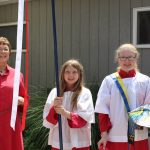
I want to first think about the miracles of God. They are wondrous and infinite; I am looking at a room full of them right now. More specifically though, we must think of the miracles of God through Christ. What first comes to mind when we begin discussing Jesus’s miracles? Christ walking on water in the stormy and turbulent Sea of Galilee, his feeding of the five thousand with few loaves and fishes, raising Lazarus from the dead, his many healings, treating those afflicted with anything from blindness to leprosy, turning water into wine? All of these miracles and the countless others were all performed for the same core purposes: to make others believe in the glory of God, to strengthen the weak of faith, and to teach vital lessons and values to the crowds of all kinds watching these unbelievable feats. I can just imagine an entire village of curious observers watching a strange man, a carpenter’s son from Nazareth, performing these acts, seeing the astounding truth of God for the first time. This miracle though, is different.
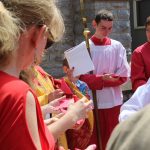
Widely considered by religious historians and scholars one of Christ’s great miracles, the Transfiguration was not performed or made known to the same type of audience. Peter, John, and James, Jesus’s most faithful and outspoken disciples, were already believers, already witnesses to the truth and power of the Lord. Why else would they have even been present? This particular mountain, Mt. Tabor in Galilee, was a treacherous climb in a rugged and inhospitable landscape. These disciples would not have journeyed over one hundred stories skyward over this craggy terrain just to pray if it weren’t with the Son of Man. So, we must then look at context, the events that surround this miracle to understand why God felt these disciples needed to witness it.

We need to look no further than the previous verses in the book of Luke, the event that Luke tells us took place six days before this one: Jesus telling his disciples of his impending death and resurrection. In Luke 9:22,

“The Son of Man must undergo great suffering, and be rejected by the elders, chief priests, and scribes, and be killed, and on the third day be raised.”

As one can imagine, upon hearing this the disciples must have been aghast and alarmed. Their Jesus? Their god? Suffering, rejected, killed? This was first time they were clearly told that the Prince of Peace was to meet his ever-so-violent end. This could have occupied days of conversation… “No Lord, you must not go, you do not deserve it. You don’t have to die; your work has just begun.” But Jesus finished this dialogue with his resistant devotees with a curious foreshadowing. Luke 9:27 tells us,

But truly I tell you, there are some standing here who will not taste death before they see the kingdom of God.”

And Jesus, as always, was exactly right. When on the mountain, two significant figures, Moses and Elijah, came down from heaven as apparitions in dazzling white. This was the aforementioned Kingdom. But it made them no less objectionable to Jesus’s fate, who was speaking to his fellow prophets about that very subject– his departure. But then, when the cloud encompassed them, they too were thrust into God’s conversation.

This is my son, my chosen, listen to him!”

And although these words from God the Father certainly didn’t make them fonder of Jesus’s fate, it made them less resistant. The miracle of the transfiguration was not to establish faith in Christ, but faith in his future, so that he could live and die for our salvation.

But what can we, two-thousand years later, take and learn from this episode? For the mortals in this encounter, specifically Peter, seeing and hearing their God in a brand-new way was a peak moment in their already-strong faiths. And how does he react to this mountaintop experience? By trying to hold onto it, trying to artificially extend his time with three of God’s greatest servants ever to live. Can we blame him for this response? What would you do in the face of Moses, Elijah, and Christ himself? Instead of being continuously paralyzed with awe, as many would be, Peter spoke, made a suggestion, unafraid of being wrong. Peter saw the kingdom of God and wanted more time in it, as we all would.

This sequence of events reminds me of a semi-often occurrence in my own life. Some of my closest moments with God and God’s kingdom are in my dreams, that weary, vulnerable state where we have seemingly no control. But then, just as in a frightening dream, I suddenly awake at the first sense of consciousness and excitement due to a closeness to God. Frustration replaces wonder as I realize what has happened. I may aggressively push my head into my pillow, trying once more to fall asleep, quickly attempting to reconnect and pick up my dream, my experience with God right where I left off. To my dismay this never seems to work.

The lesson we learn from these phenomena is a vital one. We mustn’t try to hold on to these mountaintop experiences. Whenever we see glimpses of the kingdom of God and reach these mountaintops we must let them shape us, our actions, our faith. How was Peter different as he journeyed down that treacherous trail? By letting our intimate encounters with God shape us, however brief or fleeting they may be, we afford ourselves the opportunity to live as servants of the Lord.

The transfiguration allowed Peter and the others an understanding of the future of Christ– no not just his suffering, rejection, death, and resurrection, but this our worship and modeling of the values he so tried to teach. My parish family, this the future of Christ!


A Festive Sunday!

We celebrated and gave witness to the arrival of the Holy Spirit to the church as it began (Feast Day of Pentecost) and to our parish as we continue to live into the mission Jesus presented to his disciples. It was a glorious celebration! We prayed, preached, offered healing comfort and celebrated the renewing sacrament of the Holy Eucharist, only then to take the good news out into the world, as we processed to the Memorial Garden for the release of butterflies. Led by our verger, with sweet smelling incense flowing from the thurible, banners of a butterfly and dove, and envelopes containing butterflies ready to spread their wings, we gathered, prayed, and set the butterflies free. It is always with such delight that we see them take flight, knowing we have released them to live here among us, and to be a symbol of the Holy Spirit taking us out into our community and filling the world with love. I found it particularly poignant that some butterflies seems to purposefully fly directly to the church across the street — could it be the Spirit leading us all into closer connection? !! Here are some photos from our glorious celebration. Come Holy Spirit!