Ways to Pray Formation Series

This past Wednesday evening, after a time of laughter, joy and a meal shared together, we settled down into a deep and profound conversation about our spiritual lives. We had each completed a Spiritual Type Inventory, based upon our natural preferences for the order in worship, in the structure and time of worship, style of prayer, music, preaching, support of causes, membership criteria, ritual and liturgy and concept of God. The four spiritual types articulated in this inventory are “Earth, Water, Air, Fire”.

To complete the inventory, please click on the link below.

We then opened up the conversation, to what specific part of the Sunday worship experience draws your heart the most. The answers were diverse and deeply profound. The idea set within our Christian lives is to deepen that experience. Our current spiritual practices keep us where we are now with God, but our spiritual life is never static, we are always called to go deeper, so we can live into and out of God’s blessing which meets us in our prayer life.

If you would like to talk with Mother Barbara or Dina Carter Ishler, our Field Placement Intern, about this Spiritual Types Inventory or how you might be able to deepen your practice, please reach out to them. You can call the parish office (717-532-8089) and leave a message for them to contact you.

Praying with the Celtic Psalter: Does prayer fit into your day, or does your day fit into your prayer?

As part of our exploration of Celtic Spirituality, Mother Barbara has invited all of us to pray daily (morning and evening) with the book, Sounds of the Eternal: A Celtic Psalter by John Phillip Newell. Here’s a reflection by Jeanine Goodwin on her experience in preparation for our group conversation.

Wanting to get an idea of what this next flight of formation would bring, about two weeks ago I engaged in the prayers in John Phillip Newell’s psalter, Sounds of the Eternal. Soon I found myself sitting with the prayers for a few moments because things were shimmering up off the page, and soon was doing a lectio divina of sorts, reflecting on a phrase to let it lead.

One of the prayers speaks of “rekindling”, “sparks”, and “part of the blazing splendor”. It happened kind of miraculously, on the same day we heard a sermon about God calling to Moses out of a burning bush. That alone got my attention, and the thing that caught me up was that for a moment I was feeling like Moses might have, intimidated by such a big intense heat and brightness, such a clarity of call.
I found myself reaching for my current notebook, to try to capture viscerality of the insight before it slid down back into the depths of unconsciousness and have kept it at hand ever since.
From this morning what prompted a rise of the heart was, “You lift up my soul, O God, and make the eyes sparkle. You give health and life and blessing.” I realized that in the doing, partaking of as one does a sacrament, the daily practice of prayer using Newell’s psalter, I’ve noticed what happens when not doing it, almost more than what happens when I do. Keeping the notebook at hand, I can look back and see what rose up out of the text on a given day. Some days there are two entries, one in the morning, one in the evening. More often than not there’s only one. I notice when not doing it, there’s the opportunity to see what’s taking it’s place instead. I recalled the lives of the brothers at Holy Cross Monastery and saw that this practice of prayer, contemplation, is what shapes their days.
So then it rolled out thus: It’s not how my religion and spiritual practice fit into my day, but how my day fits into my practice.  The practice has started shaping the day, shapes me in my day, becomes the foundation from which my movements, and responses arise.
I’m staying tuned.
Grace. Peace.
Jeanine

Contemplative Practices: Mary Oliver Poetry

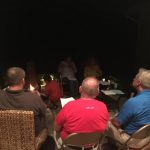
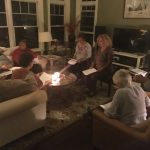
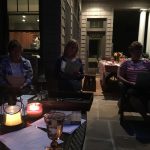
In the dimming light of the evening, draw together by the flame of an oil lamp, we gathered in a circle and read Mary Oliver’s poetry, in a contemplative way, pausing after each reading, allowing time for the words to settle into our souls.

We found her poetry to be beautiful, shocking, challenging, descriptive of the journey of the soul, and the images of nature to be stunning.

We all left a bit calmer, a bit more tuned into the beauty of our world, and a bit more engaged in the spiritual journey of our souls and community.


Praying with our beads.

With our prayer beads in hand, the fire crackling in the chiminea, and the stars glistening above, we sat outside and prayed our beads. We prayed three different forms of prayers, as we worked our way around the beads we had created and strung. We all left in a quiet contented place, prepared to pray the beads ourselves, in the quiet of our homes.

file_000-18

We will gather all the beads one Sunday and bless them all and then use them during the Prayers of the People. We have plenty of supplies left, so if you are interested in making them, just let us know. We’re happy to sit with you and help out anytime.

file_001-12

If you already pray Evening Prayer, you may want to use this form of the prayer with your beads:

An Evening Prayer

The Cross
Glory to the Father, and to the Son, and to the Holy Spirit. as it was in the beginning, is now, and will be for ever. Amen.

The Invitatory
Open my lips, O Lord,
and my mouth shall proclaim
Your praise.

The Cruciforms
Guide us waking, O Lord,
and guard us sleeping;
that awake we may watch
with Christ, and asleep
we may rest in peace.

The Weeks
Jesus, lamb of God, have mercy on us.
Jesus, bearer of our sins, have mercy on us.
Jesus, redeemer of the world, give us your peace.


Stringing beads for prayer

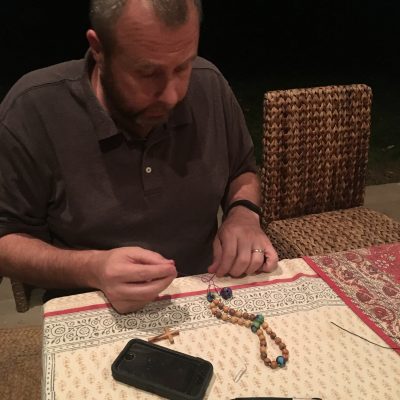
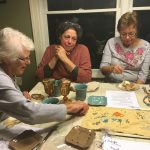
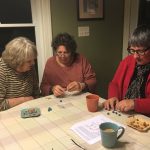
This evening we gathered for companionship along the way, for nourishment for our lives and souls, and we strung our beads, some of which we created last week out of clay, to create our own personalized Anglican Prayer Beads.

Oh, a little bit of fun, before we begin the hard work.

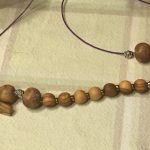
We all used olive wood beads from the Holy Land for our “Weeks beads” (the 7 between each cruciform beads). Seven is an important number in the Bible and symbolizes completion.

Lovely beads that complement the wooden beads

We also chose from a number of colors the spacer beads. It’s totally amazing how many different variations there were. No two were alike. Some used colors to represent the creation. Others picked colors which complemented their clay cruciform beads, while others chose colors which contrasted their clay cruciform beads. That’s part of the process of choosing and stringing your own beads – each string becomes your own and you see it as a way to express your identity and your particular way to interact with God.

Pondering the options

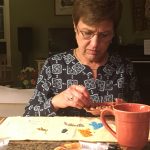
This takes a lot of concentration!

So much fun.
So much fun.

Next week we will gather to pray the beads. Too often we come home from a bead making workshop with a beautiful set of beads and have no idea how to incorporate them into our prayer practice. We want to give everyone a chance to learn how to actually invite and allow them to make a difference in our lives.

We ended this evening with blessing our beads and sharing the Office of Compline together.

A blessing of the beads

A closing Compline service

It was a wonderful and holy time together. Come and join us for our third session next Wednesday.

Anglican Prayer Bead Workshop I

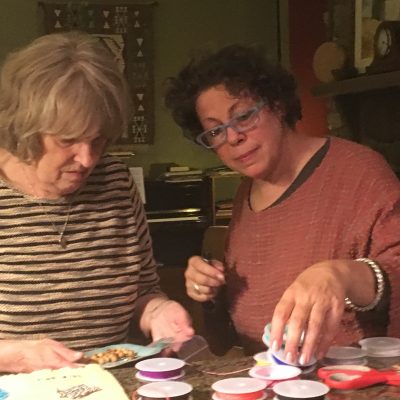
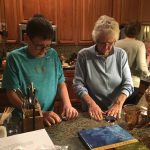
Last Wednesday, fifteen people gathered in fellowship, ate dinner together, and then got busy in the fun work of creating our own beads for our Anglican Prayer Beads. We learned a bit about prayer beads during our dinner time and then rolled out the clay to make our own.

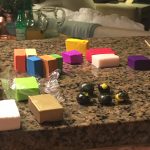
Our bead making supplies

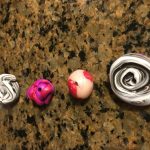
It was SO much fun. We chose 3-4 colors to work with, layered them by rolling them out, and then cutting them into segments, which we then rolled into beads. It was amazing the colors we chose and the results we came up with. It was as much fun to see what others created as it was for us to create.

Showing our creativity

Making beautiful beads
Making beautiful beads.

There was a real sense of community in creating together.

Working together
Working together

Being together
Being together

Our whole group
Our whole group

Enjoying creating together


This coming Wednesday we will take our homemade beads, join them with beads made from olive trees from the Holy Land, and put together our prayer beads. We’ll then bless them and make them holy for our use in finding our way toward God. Come and join us!

Here’s what your Anglican Prayer beads may look like!

anglican-prayer-beads-complete     Come and make your own set.


Simply Scripture

On our rainy Saturday morning, we gathered in the cozy and restful Parish Library and explored scripture together. One of the gifts of our time together is that we never do know where the conversation will go as we sit with and engage the scriptures. This time we looked at the scriptures from the Hebrew Bible (Old Testament) for the month of October.

This time we focused on the harvest imagery which is threaded through the various scripture passages from Lamentations, Jeremiah, and Joel. What was fascinating was how our conversation shifted to the period of dormancy, when God appears to be silent, but just as plants are actually in motion inside while appearing to be at rest or even dead from the outside, we discerned that God offers us silence (not an absence of God, but a quiet time with God) so that we can process what God has already revealed to us. Sometime the timing’s not right yet for us to move forward, sometimes our gifts haven’t come enough to fruition to be ready for use for the kingdom. The truth revealed to us in community and through conversation was that when God comes knocking at our door, our response can be simple (yes or no) but the impact on our life is profound and complex.


Rule of Life

This evening I spent time with the Daughters of the King (DOK) which is an order for women who make a commitment to a life of prayer, study, and work. There is a discernment process for those why may be interested in joining this more intentional walk with Christ in this particular way in community. Mother Barbara was asked to speak to them about forming a Rule of Life.

A rule of life orders our life with God. It grows out of a conversation with God, as we listen to how God is pulling us deeper into relationship. A rule of life often involves all parts of our life: how we worship God (daily prayer, Sunday Eucharist), our commitment to study (scriptures, tradition, with the use of our reason), and Action (outreach, stewardship, and evangelism).

Just like any relationship that we want to nurture, our relationship with God requires attention, presence, commitment, intimacy, time, and a lot of listening.

If you are interested in speaking to Mother Barbara about how to craft a rule of life that deepens your relationship with God, please contact her at 717-333-5590 or by emailing her at: rector@standrewsship.org.


Meditative Hike

In the stillness of the cool evening, we gathered to be intentional around our time with God. We began in prayer, chose a psalm passage, and then headed out to meander by the creek, contemplate and color, find stillness sitting on a rock in the water, crossing the water, and spending time repeating our psalm passage in our hearts.

Pondering
Pondering

Crossing the rocks in thought

Sharing
Sharing

Letting the creek flow on by

After 45 minutes, we gathered to reflect. We all had a greater sense of peace. We all knew this was a good thing to do: to be intentional about quiet restful time with God. We all experienced our time somewhat differently, but also had a sense of being together in a group, even though at different places along the creek.

It is good to “Be still and know that God is God”.

Book of Psalms: How they respond to our life

Tonight, we gathered for dinner, then for a conversation about how the psalms were used in the liturgy of the Jewish temple. We learned that the themes of the psalms connected with major festivals which celebrated pivotal events in the salvation story of the ancient Israelites, such as the Passover and the Day of Atonement. In addition, they were used during rituals of purification, entrance hymns, victory songs, King’s birthdays or wedding times. The psalms responded to and led people forward in their thinking to how the ancient Jews structured their worship lives.

We then looked at how we as Christians use the psalms in our worship — always as a response to the Old Testament Reading. A response mandates that we say the psalm together and also says that the sentiment, or wisdom, or thought process of the psalm offers something that leads us in responding to the Old Testament reading in a faithful manner. We looked at the reading and response for Sunday — the grumbling prophet Jeremiah and the psalmist response, in both the NIV (New International Version of the Bible) and Psalms for Praying by Nan Merrill.

After all this discussion, we looked at how St. Benedict, as he formed the Benedictine community 1500 years ago used the psalms to respond to life, to draw people through the week to a place of faithfulness of God. It’s fascinating how we can use the scriptures to remind us about God and God’s faithfulness and we can structure our practice of praying the psalms so that we use certain ones to offer the support, comfort or challenge we may need (predictably) at the moment throughout the week.

We ended by listening to the chanting of the psalms by SSJE (Society of St. John the Evangelist). Here’s the link to purchase the CD: https://www.amazon.com/Guard-Us-Sleeping-Compline-Prayers/dp/1561012556

file_000-13

In the still of the night, after a long day, by candlelight, we could have all fallen asleep at the moment, lulled by the melodic chanting of the psalms by the monastic community, but woke up to eat pie and ice cream and wish each other a good night.

Our next series of fellowship, conversation, and engagement will be making Anglican Prayer Beads, which will begin on October 5th. Please join us!

Summer Series: Those “nasty” psalms

We gathered this evening, in the midst of the heat and humidity, to find a place of fellowship and fun over dinner outside, as the rain fell around us. There’s a place of peace and ease that’s been developing among us, that’s really lovely ~ AND there’s always the opening for others to join us. Every week it’s always a different group gathered — and always the right one. So, come on out and give it a try, if you’ve been curious or feeling the call to explore the psalms!

psalms-2

This week we explored those nasty psalms that call upon God to wreck havoc and vengeance upon our enemies. We read a portion of Psalm 109 and the honest reaction afterwards was “Good Grief!”. Mother Barbara shared with us some information about this genre of psalm (part of lament psalms) and talked about the different possible reactions (ignore them, be horrified by them, enter into them). One of our parishioners shared her real life experience in feeling these psalms which was powerful and helpful. Mother Barbara then spoke about what God’s retribution actually looks like (not the revenge we may imagine, but a tearing down of barriers that keep us from being honest before each other and God and allowing God’s love to lead us into a new place of healing).

compline

The evening ended with the peace and calm of Compline. Thanks be to God for the grace which was present this evening.