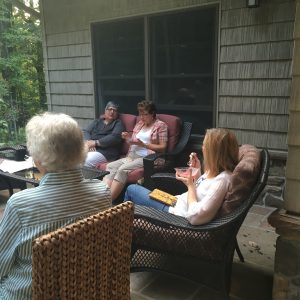
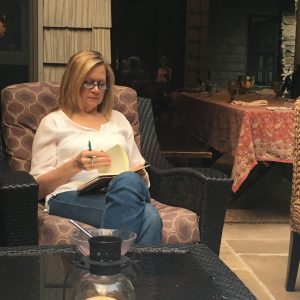
Tonight, we gathered for dinner, then for a conversation about how the psalms were used in the liturgy of the Jewish temple. We learned that the themes of the psalms connected with major festivals which celebrated pivotal events in the salvation story of the ancient Israelites, such as the Passover and the Day of Atonement. In addition, they were used during rituals of purification, entrance hymns, victory songs, King’s birthdays or wedding times. The psalms responded to and led people forward in their thinking to how the ancient Jews structured their worship lives.
We then looked at how we as Christians use the psalms in our worship — always as a response to the Old Testament Reading. A response mandates that we say the psalm together and also says that the sentiment, or wisdom, or thought process of the psalm offers something that leads us in responding to the Old Testament reading in a faithful manner. We looked at the reading and response for Sunday — the grumbling prophet Jeremiah and the psalmist response, in both the NIV (New International Version of the Bible) and Psalms for Praying by Nan Merrill.
After all this discussion, we looked at how St. Benedict, as he formed the Benedictine community 1500 years ago used the psalms to respond to life, to draw people through the week to a place of faithfulness of God. It’s fascinating how we can use the scriptures to remind us about God and God’s faithfulness and we can structure our practice of praying the psalms so that we use certain ones to offer the support, comfort or challenge we may need (predictably) at the moment throughout the week.
We ended by listening to the chanting of the psalms by SSJE (Society of St. John the Evangelist). Here’s the link to purchase the CD: https://www.amazon.com/Guard-Us-Sleeping-Compline-Prayers/dp/1561012556
In the still of the night, after a long day, by candlelight, we could have all fallen asleep at the moment, lulled by the melodic chanting of the psalms by the monastic community, but woke up to eat pie and ice cream and wish each other a good night.
Our next series of fellowship, conversation, and engagement will be making Anglican Prayer Beads, which will begin on October 5th. Please join us!