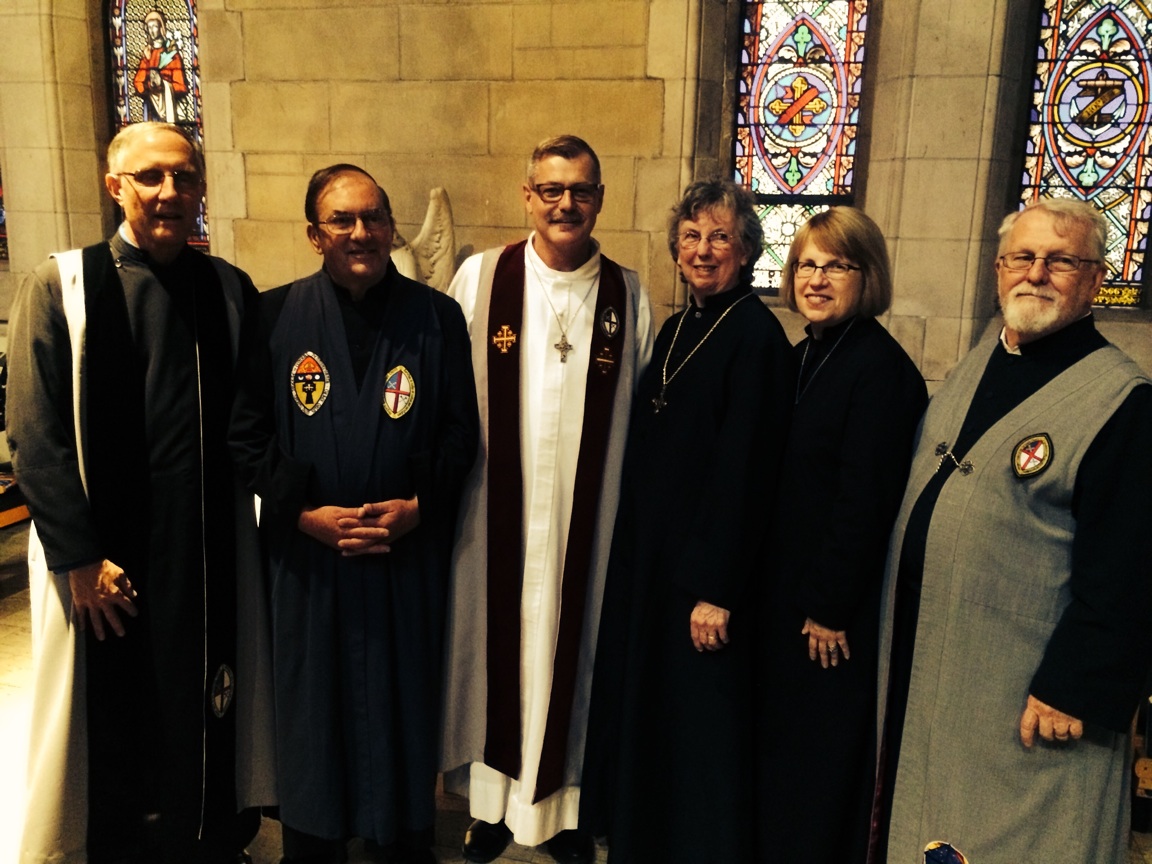
Vergers Voice Installment 18

TIME, TALENT, TREASURE

We hear a lot about this, especially this time of year.  November is stewardship month, a time when the church wants us to start thinking about what we can give in the following year. Like most churches, Episcopal congregations exist mainly on donations from our members. The church budget is based on what we can give of our treasure and this pays for salaries, building upkeep, programs, and outreach.  Since the first two tend to be fixed costs, the more money that is collected, the more a church’s ministry can be expanded into new programs and help those outside the parish.  How much we give is really between God and ourselves.  Giving our treasure to the church is more about cultivating generous hearts than paying bills.  God wants you and me to be generous.  The Lord wants us to be known not by the kind of car we drive, the size of the house we live in, or the jewelry we wear, but by our love. As Christ gave himself away for us, so too are we asked to give of ourselves away to others. So the old adage “give ’til it hurts” comes to mind but, in fact, it could be better phrased as “give ’til it feels good. Bottom line; when the plate gets passed, use your own discretion.  Few people know or care how much money you put in but do know that any contribution will be greatly appreciated.

Our treasure pays the bills but using our time and talents is priceless.  There is just no way that a dollar amount can be put on what you do for the church and for every dollar saved there can be more done to help people that really need it.  Just think of all the possibilities, everyone has some sort of talent but you have to think outside the box.  Just by one person doing something they do anyway either because it is part of your job or maybe a hobby can make a big difference.  Somethings may help the churches finances but more important how many people in need could we help.

Let’s start with our current programs and expenses and throw some ideas around.   Do you like to cook and see people enjoy a good meal? Join one of our community meal teams or start one of your own and Christmas day is not that far off, you can plan on helping at our Christmas day dinner. Do you like to sing, join the choir? Do you like to teach, join our Sunday school staff?  Do you like to sew or would you like to learn? Join our quilters on Monday afternoon.  Are you a clean freak and just can’t find enough to clean.  It costs too much to have our cleaning crew clean everything and you could find lots to do. Do you love flowers, well there is lots to take care of here at St. Andrews and it would save over a thousand dollars a year.  We can always use the help of painters, electricians, handymen, plumbers, lectors, greeters, and counters the list is endless.

You might be thinking about starting something new and here is where your talents can really shine. Is your hobby making jewelry, how about making prayer beads and selling them on e-bay as a fundraiser. Don’t know anything about e-bay, team up with someone who does and make a new friend.  Like to teach but can’t commit to Sunday mornings, start a tutoring program in the evenings in the PLC.  If baking is your passion, we have a kitchen just waiting for you and the people at the Episcopal Square, SPO and our coffee hour hosts would love you for it. Are you an artist or dancer, start a painting or dance class?  Again the list is endless, just think how your talent could help your church and the people around you.

I know time is the hard part, we are all busy with work, family, our children s activities and just all the things that we have to do.  Sometimes we feel like we can’t spare another minute let alone an hour or two. Sometimes I feel this way too, but then I remember the smile of someone I gave communion to at the Episcopal home.  A mother’s face at a community meal knowing her kids just got a hot meal that they might not have got at home.  The excitement of everyone at the Christmas Day dinner and at all the other things we do here.  Come on, share your talent for a hour or two, I know you won’t be able to stop.
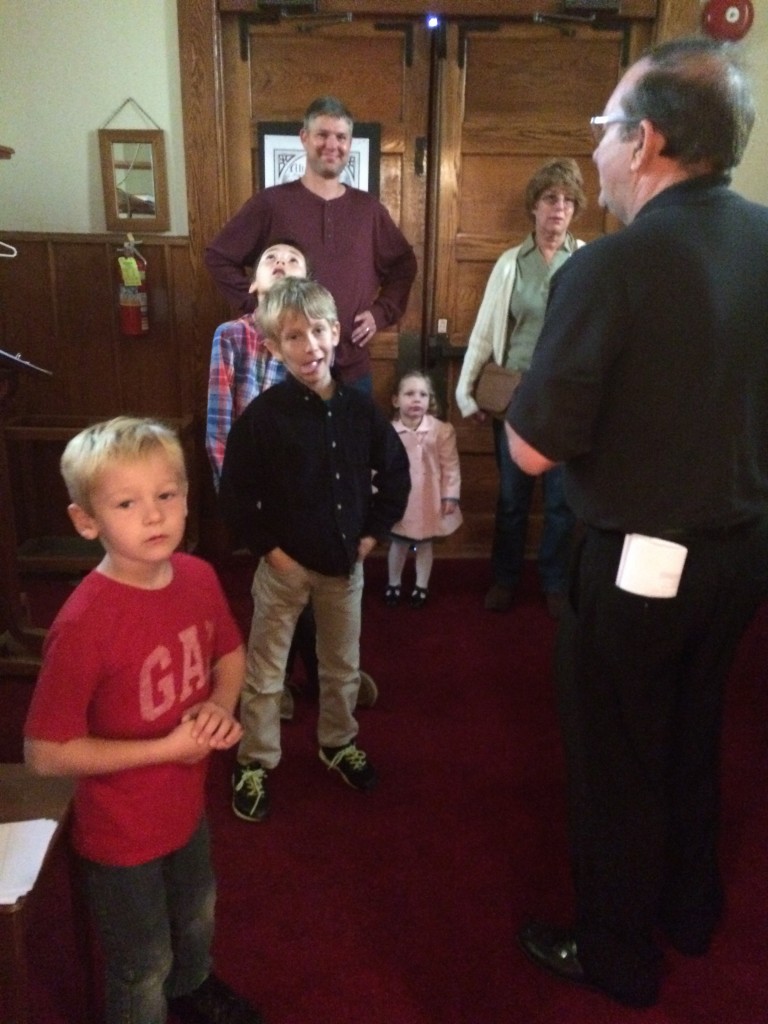
 

Back to the Verger’s Voice!

Verger’s Voice Installment 16

The Liturgy of the Table

There are two parts to an Episcopal Service or Eucharistic rite. The first being the Liturgy of the Word which we discussed last week and second the Liturgy of the Table. This is a convenient, frequently used term for the portion of the Eucharistic Rite which is celebrated at the altar(holy table) titled”The Holy Communion” in the Book of Common Prayer. It consists of four basic actions, preparation of the table; the Eucharistic prayer or Great Thanksgiving; the breaking of the bread and the ministration of communion. These actions are followed by a post communion prayer and a blessing or dismissal.

For a visitor to an Episcopal church “The Holy Communion” may be the hardest part of the service to understand. Most denominations do not have communion every Sunday, limiting it to three or four time a year and considering the Lord’s supper as a symbolic memorial of his death instead of that Christ’s body and blood are truly present.

It starts with the preparation of the table and this starts with the offertory. These are sentences of Scripture, found in the BCP on page 343 and 344 for Rite I and 376 and 377 for Rite II. Ushers will bring the people’s offerings of bread and wine and other gifts to the deacon or celebrant. These will be placed on the altar and the deacon or celebrant will prepare the table. You will see the priest or a deacon uncovering the Chalice and Paten and taking the bread , wine and water from the Crucifer. They will place the wafers on the Paten and pour wine and a little water in the Chalice. They will hand the water back to the Crucifer, who will pour a small amount of water over the priests hands. This is more for interior purification of the priest than it is for physical cleansing.

The Great Thanksgiving starts with a Eucharistic Prayer which could be either prayer I or II in Rite 1 or Prayer A,B,C or D in Rite 2. Prayer I is on page 333 and Prayer II is on page 340 for Rite I, Prayer A is on page 361 with B,C and D start on page 367 for Rite II. You will notice in Prayer A right after the people say “It is right to give him thanks and praise” the instructions read “Then, facing the Holy Table, the Celebrant Proceeds”. At one time the altar would be against the wall so the priest would be facing away from the people, facing the altar, times have changed and it is now proper for the altar to be away from the wall.

The next instructions call for a Proper Preface to be sung or said . A Proper Preface is the continuation of the Prayer just before the bread and wine is consecrated. On most Sundays the Preface that is listed is said but other Prefaces that can be used for the seasons and other occasions can be found on page 377 to 382 in the Book of Common Prayer. As the service continues you will see the celebrant will take the bread and either hold it or lay hands on it and say “ On the night he was handed over to suffering and death, our Lord Jesus Christ took bread: and when he had given thanks to you, he broke it, and gave it to his disciples , and said, Take eat: This is my body, which is given for you. Do this for the remembrance of me.” They will then take the cup and say “After supper he took the cup of wine; and when he had given thanks, he gave it to them, and said, Drink this, all of you: This is my Blood of the new Covenant, which is shed for you and for many for the forgiveness of sins. Whenever you drink it, do this for the remembrance of me. This part of the service will continue until the Lords Prayer.

The last two actions of the Eucharistic Rite, The Breaking of the Bread and ministration of communion may seem to run together but they are two very special actions. The priest will hold the bread raising it so everyone can see and break it, saying “Alleluia. Christ our Passover is sacrificed for us” and the people say “Therefore let us keep the feast. Alleluia.” Then holding the Paten and Cup they will say “The Gifts of God for the People of God” “Take them in remembrance that Christ died for you, and feed on him in your hearts by faith, with Thanksgiving.

Now the ministration of communion starts. This is the most interactive part of the service and for visitors and newcomers can be the most confusing. You may be asking yourself a lot of questions and find it easier to remain in the pew but this is a central event in Episcopal worship so please join in, the Lord invites you. The method of distribution of communion will be a little different depending on local customs of the Episcopal church you are in so the best practice is often to simply to follow the person in front of you and do what they do. In Episcopal churches everyone is welcome at the table, no matter what your faith and if you are not sure if you have been baptisted, don’t worry we don’t ask. Once you get to the altar rail you should kneel but if this is difficult you may stand. To receive the bread make a cross or cradle with your hands, palms up, when the celebrant places the bread in your open hand and says “The body of Christ, the Bread of Heaven” eat the bread. The wine will be served in a large cup or chalice as a sign of unity. Assist the celebrant by placing one hand underneath the cup and the other hand on its side to help the server guide the chalice to your lips. I know what you are thinking, won’t I get sick sharing a communion cup with all these people. Really, it is not as hazardous as you might think. We use real wine and then some; we use fortified wine such as port. This has a high alcohol content, killing off most every germ. You are more likely to get sick from airborne infection than from a shared chalice. If you still aren’t sure about the chalice you may dip the bread or wafer in the wine, this is called intinction, this is from the latin word intingere which means “to dip”. If you are still uncomfortable drinking the wine ( or are a recovering alcoholic), this is not essential to receiving Christ at Communion. Episcopalians believe Christ is equally present in both the consecrated bread and the wine, so receiving one, the other, or both, gets you no more or less of Christ’s presence. Pastoral blessings are available for children or adults who are not communing. Simply cross your arms over your chest if you wish to receive a blessing.

Once you have communed you may return to your pew. This is a good time to join in singing the remaining communion hymns, or pray in silence. Once everyone has taken communion, here at St. Andrews you may notice the ministers disappearing for a few minutes. What they are doing is taking the wine and bread to those in the Episcopal Home and anyone who might be using the soft space. We like to refer to it as taking communion out into the world.

The last part of the service is the post communion prayer, the blessing and dismissal. The post communion prayer is always said by all and the priest or bishop if present will give a blessing. Once the procession gets to the back of the church the priest or deacon will dismiss us with these words “Go in peace to love and serve the Lord” and the people respond Thanks be to God, Alleluia, Alleluia.

Now it is time for the third sacrament , COFFEE HOUR!


Back to the Verger’s Voice!


Verger’s Voice Installment 15

A couple of weeks ago I talked about how our surroundings affects our prayers. I mentioned that in our home parish our architecture becomes so commonplace from seeing it every Sunday that we tend to forget its meaning and how it influences the service. The pews, the altar, the rood screen, the crosses, flags and stain glass windows will not change in appearance but I hope that what I said shows them in a new light.

This past Sunday we had an “Instructed Eucharist” that covered the first part of our service, the liturgy of the word. Mother Barbara, Mother Robyn and Andy did a great job in explaining the meaning behind what we do and say, with a little history about where is came from in the bulletin. I wonder though does what we say and listen to become commonplace too. The creeds, the prayers, confession and even the readings have been heard or said so many times that many of us old timers have them memorized. That’s not a bad thing, but are we just saying the words, instead of listening to what we are saying and are we sitting though the service or are we watching the service unfold around us. The Instructed Eucharist was meant to help our new comers and maybe some of us older members understand the Episcopal faith a little better but let’s look a little closer.

Imagine you are new to St. Andrew’s. You have never been to an Episcopal service but always wondered what it would be like. Maybe you have been to other churches, some large, some small, maybe you never been in a church at all. As you walk toward the front doors you are thinking, what if they don’t like me, am I dressed right, what the service will be like. Let’s put ourselves in that persons shoes for a Sunday morning.

You walk in the door and are greeted by one or two people who hand you a bulletin and say; Good Morning, Welcome to St. Andrew’s, well that wasn’t so bad, they seem nice. You are a little worried you may not understand the service so you decide to sit in a back pew where you can check everything out. You look around and see all the colors of the flags and windows, the wood carvings, and the candles. People are coming in and greeting each other and it gets a little noisy. Then you see the organist and he starts playing the prelude, a slow, quiet hymn that is very soothing and it is meant to be. The prelude is played just before the beginning of the service to quiet everyone and help them prepare themselves for the service ahead. The prelude ends and there is a slight pause, this is where Mother Barbara is saying a prayer with everyone in the procession. The bell is rung and the first hymn begins.

The first person you see is the verger. The verger is not part of the procession but escorting those in the procession to where they need to be. This is a ceremonial role today but in the fourteen to the sixteen century the verger was known as the protector of the procession and would use a virge to move animals and people out of the way. Next is the Crucifer carrying the processional cross and Acolytes (called Torchbearers) carrying candles. The cross is symbolic of the cross Jesus was crucified on and the candles are meant as the light of Christ. The choir is next, followed by the Eucharist ministers and Priest.

Once the hymn is finished the celebrant, the priest leading the service, and everyone else says the Opening Acclamation, which is a formal way of greeting one another. Then there will be a short piece of music praising God or asking for God’s mercy. The words to this are found in the BCP but also in the front of the hymnal under service music. Then the Priest will say a prayer called a collect, which is meant to collect us and our thoughts together as the concluding piece of our gathering.

Finally, we all get to sit down to hear the readings. There is one from the Old Testament; a Psalm; a reading from the New Testament and a reading from the Gospels. These readings are part of a set “Lectionary” which assigns readings for every Sunday on a three year cycle. So, no matter where you are at on any given Sunday, if you go into an Episcopal Church you will hear the same readings.

Because the Gospel, the stories of Jesus’ life and death, are central to our faith, that reading gets special treatment. Normally a hymn is sung to welcome the Gospel and the Gospel book is carried to the middle of the Nave and read by a deacon or priest. Everyone stands for this reading and faces the Gospel Book.

Following the Gospel a sermon is preached, usually by a priest but on occasion it might be a lay person. The sermon is meant to take what we have heard in the reading and engage those learnings with our current lives.

After the sermon, the next several pieces of the service provide a way for us to respond to what we have heard. Because we are actively responding we stand up at this point. We say the Nicene Creed, an ancient statement of faith used by most Christian churches which binds us together with Christians of all generations. We pray the Prayers of the People. These prayers are a series of petitions lead by a lay reader with Reponses from everyone at the end of each one. The petitions include prayers for the Church, the world, the nation, those who are sick and those who have died. The Priest will conclude the prayer with a collect, once again “collecting” our prayers.

After the prayers during most of the year we say the Confession of Sin. The Confession is an opportunity to confess together the way we have not loved God or others. We usually kneel for the confession as a sign of penitence. At the conclusion of the confession, the Priest will say the absolution, words reminding us that God forgives all our sins.

Then the Priest bids “the Peace.” This can be a particularly awkward moment for people who are newcomers or visitors. What we are doing is ritually enacting our need to be in right relationship with one another before we go to communion. We do that by saying “Peace be with you” to one another. People may shake hands or embrace each other. We tend to get a little carried away here at St. Andrew’s because we are so glad to see each other. That is just fine, as long as we do not forget the true meaning of the ritual.

Next week the Liturgy of the Table.

Back to the Verger’s Voice!

Verger’s Voice – How our building shapes our prayer

Verger’s Talk – Your surroundings and your prayer

October 11,2015

Take a moment and look around.  What does all this mean? Is there really an interaction between architecture or your surroundings and liturgy?

I have worshiped in many places over the years, on top of a mountain and inside a cavern.  In large Cathedrals and Churches smaller than this.  In Presbyterian, Lutheran, Brethren, and a Russian Orthodox Church. I even got to visit a Buddhist Temple.  I attended a Jewish service in a butcher shop and prayed on top of a bunker as mortar shells came closer.  Did my surroundings affect the way I felt?

On the mountain it was the silence, of being alone but not alone.  The cavern it was the beauty of the stone made over millions of years one drop of water at a time.  It was all the colors of the Cathedrals and in the small churches the closeness.

My knees hurt from standing through an hour and half service at the Russian Orthodox Church but it was one of the most moving services I have ever been too.  The butcher shop experience was a little strange and on the bunker I was just plain scared.

What affect does St. Andrew’s have on you as you worship?

When you are coming up the walk and see the red doors.  Do you start to feel safer knowing that those red doors means there is a safe haven just inside?  Coming through the narthax do you feel the closest of a small church?  In the Nave, which is the Latin word for ship, have you ever looked up and seen the bottom of a ship?

Have you really looked at the flags?  The St. Andrew’s flag with the sky blue background and the cloud white X shaped cross.  St Andrew was crucified on an X shaped cross because he felt unworthy to be put to death on the same type cross as Jesus.

The Episcopal Church flag was adopted in 1940 only 23 years after it was presented to the General Convention.  You can’t say we Episcopalians hurry our decisions.  The red cross on a white background is an ancient christian symbol, white representing the purity of Jesus and red representing his sacrifice on the cross and the blood of Christian martyrs.  The light blue is traditionally the color of the Blessed Virgin Mary’s clothing and is symbolic of Jesus’ human nature.  The X-shaped cross is the cross of St. Andrew who is the patron saint of Scotland and recalls the churches indebtedness to the Scottish Episcopal Church for consecration of our first Bishop.  The nine smaller crosses represent the nine original American Dioceses.

The United States and Pennsylvania State flag.  I like to to think that they are there to remind us of our freedom to be where we are and the sacrifice a lot of people made to insure that freedom.

Then there is all the wood.  The panels with the St. Andrew and St. George crosses, the rood screen, the pews, the altar, floor, ceiling window sills and walls.  20,000 board feet of lumber went into making St. Andrew’s , that is a lot of trees.

They would have been old growth trees, maybe two or three hundred years old, cut down, sent to a mill to make the lumber that went into the making of this church.  Was that God’s plan?  After all, he planted the seeds, produced the water and sunshine to make the oak, chestnut and maple trees grow. Were those trees meant for this church? I think they were.

Have you really looked at the stained glass windows, beautiful aren’t they.  They were made in England, somewhere around London.  We know this from the color of the glass, since there were only a couple of companies that made that color of yellow.  Why not just plain clear glass? It would have been less expensive, with more natural light and we could see the world outside.  The idea behind stained glass and many other beautiful furnishings in Episcopal churches is that the presence of beautiful objects can lift our souls closer to God.  When we look at stained glass we see God’s story played out in many different levels and when you think about it that is really not a bad way to look out at the world.

I have been around construction most of my life.  I grew up playing in the sawdust piles of a shop that produced cabinets and furniture.  I have helped build houses large and small and worked on building sites that covered several acres.  So when I started attending here I noticed the hand-cut stone, the old style copper rain gutter, the strange little steps going to the ceiling. I also saw the craftsmanship that it took to make the pews, the rood screen, the altar and other carvings.  I looked at the stained glass window above the altar and saw the sun shining in and lighting every ones faces and I thought God really knows what he is doing.

Liturgy is from a Greek word meaning “The Peoples Work”

So how does St. Andrew’s influence the way you work?

IMG_2246

Michael Stitt  FVGEC

VERGER, St. Andrew’s Episcopal Church

Shippensburg, PA

Verger’s Voice Installment 14

The Spirit in Saint Louis – The 27th Annual Conference of the Verger Guild of the Episcopal Church

I took a break from writing the Vergers Voice to get ready for the Vergers Guild conference held at Christ Church Cathedral in Saint Louis, Missouri. This is some of the highlights.

I really cannot express what joy it was to be in Saint Louis for the 27th conference of the Verger’s Guild. Can you imagine 133 vergers under one roof and all of us wanting to lead the procession?
There were vergers there from just about every state in the U.S., from Canada and England. From small parishes to the largest Cathedrals and everything in between.

Things started off early Thursday with Morning Prayer at 7:30 and we were kept busy until 11 that night. The highlight of the day was the Choral Evensong at the Christ Church Cathedral. The Cathedral is beautiful and well worth a visit if you are in or near Saint Louis. Then it was up to the fourth floor dining room for a welcome dinner and a Gospel Concert by the New Life Gospel Choir, believe me they had the whole room rocking. We even got a visit from Fred bird, the mascot of the St. Louis Cardinals. He danced around the room to the delight of everyone, stopping long enough for pictures and to hug the ladies.

Thursday started with Morning Prayer, then the keynote address by James Armstrong, Head Verger, at Carlisle Cathedral in Cumbra, England. The title of the address was “Who do we think we are? Some suggestions on our ancestry as vergers”. James has made an extensive study of the life and times of the verger ministry and over the years has complied quite a library of information. We found out that the earliest record was from 215 AD, we were called Porters back then and were slaves to the Priests. 1800 years later and nothing has changed.

Classes started following the keynote address and I was off to Verger 307 Advanced Discussion Topics for Vergers. After lunch at the Cathedral it was back to the hotel for Verging in-depth “Incense, to burn or not to burn”. Interesting but a smelly subject. Then it was off to Session 3 Using Social Media to Spread the Word. Found out that our Webmaster is doing an outstanding job, which made me look good in class, now we just have to get more people using it. I finished the classroom part of the day with two more sessions, “The partnership Between Clergy and the Verger Ministry” and Including Youth in Worship: Moving from Tokenism to Partnership. Friday evening was the Verger’s Banquet with great food, music from a St. Louis Jazz band and a lot of new friends.

Saturday started out with the Annual Business Meeting then more classes. Session 1 was “Young Adults in Liturgical Service and beyond followed by Interaction between Architecture and Liturgy?
Cindy and I did take a break to see a comic show by the Not Quite Right Improv Troupe and as the name implies they were not quite right and on the backs of their shirts it said they weren’t sorry. One more class for the day and that was “Getting to know you”. This was a really fun class that showed ways to break down barriers that prevent us from getting to know each other better. Finally a little free time and it was off to dinner with some of our new friends.

Sunday was the final day with the Festival Choral Eucharist and Procession of Vergers with the Rev. George Wayne Smith, 10th Bishop of the Diocese of Missouri, presiding and preaching. Luckily it was a beautiful day, the procession lined up outside and it took most of a city block. After the service it was picture time, goodbye to all our friends and a train, plane and car ride home.

To see pictures of the conference go to the vergers face book page.
IMG_1853
Back to the Verger’s Voice!

Verger’s Voice Installment 13

Let’s continue our tour of St. Andrew’s

Last week we talked about the front entrance, the narthex, and nave. This week we are continuing our tour in the chancel, sanctuary, and sacristy.

The Chancel is usually an elevated area where the choir and clergy sit. I say usually because in more modern churches and other denominations this area could be on the same level as the nave and the choir may be in another part of the church. St. Andrew’s is styled after an old English church which is why we have the three steps. Another difference between modern churches and ours is the rood screen, sometimes called a chancel screen, many churches have done away with this practice over the last fifty years. A rood screen can be made of wood, stone, or iron and creates a divider between the nave and chancel. It can be of many different styles but it must have a rood, which is a cross or a crucifix.

As with older churches, the chancel at St. Andrews has pews for the choir, a Deacon’s seat and and a seat for the priest. On the right wall is the console for the mollar pipe organ, which was given in memory of John Phillips. Also on the right is the pulpit, this was not part of the original plans, it was installed later as a memorial. If you look up, you will see the sanctuary lamp, a constantly burning candle (ours is battery powered for safety reasons) which symbolizes the reserved sacrament. We are now at the altar rail.

As we pass through the altar rail gate we are now in the Sanctuary. In many churches the whole church is called the Sanctuary and if you thinking about a safe place, a refuge you would be right. In the Episcopal church only the area where the altar is considered the Sanctuary. For Episcopalians it is a very holy place, where the Eucharist takes place and the reserved sacraments are kept. On the left you will see the paschal candle, it is placed in the middle of the chancel from the Great Vigil of Easter until Ascension Day. You will also see it there whenever there is a baptism. It symbolizes our Lord’s resurrection. Our church banner is displayed here, next to one of our bishop’s chairs, most Episcopal churches are blessed to have just one bishop’s chair, and we have two. Again we go up three steps, which is a tradition in Episcopal churches, the second step is called the deacon’s step. This is where the deacon would stand after setting the altar. As we go behind the Altar, you will see the tabernacle, this is a closed compartment that is used to house the reserved sacrament. Any bread or wine that has been consecrated (blessed by a priest) and not used for communion will be stored here and used as soon as possible.

As we go down the other side of the altar steps you will see the credence. Ours is a shelf but it could be a table, this is where the cruets, vessels for the wine and water, the breadbox, lavabo bowl, lavabo towel, and sometimes extra chalices are placed in readiness for the Holy Communion. Above the credence is our original sanctuary lamp. Let’s go out the choir door to the sacristy.

The sacristy is the room in which the sacred vessels, linens and vestments are kept. Ours didn’t always look the way is does today. The new cabinets has allowed extra room for the altar guild and flower guild. A home for our sound system, and more room for vestments and we may be the only church in the area with a wine rack. The cabinets were a gift from Jan Rose in memory of Bob Rose.

Next week, what are priests and other folks wearing these days.

Back to the Verger’s Voice!

Verger’s Voice Installment 12

A TOUR OF OUR WORSHIP SPACE

Have you ever looked around while sitting in a pew and wondered what it all means. The red doors, the stained glass, the flags, the crosses lining the walls, the altar and the candle hanging from the ceiling. Too many times, things like this become common place and we fail to notice them but everything in our church is meant to be part of worship. Let’s take a walk.

Why is our doors painted red? You might call it tradition, you might think it’s a snappy color but there is a deeper reason. Like many churches, we use red to let the world know what we are about. Red is the color of Christ’s blood. It is the symbol of the sacrifice of the martyrs and it is the presence of the Holy Spirit. It marks the holy ground that lies just beyond those doors. It tells the world that we are safe place, we are a peaceful place and we are a place of refuge. Like hospitals display a red cross, we also like to advertise that we too are a place of healing and restoration. I like to think that our parish helps the wounded put their lives back together, provides comfort in time of need, and is open to all who knock.

As we go through the front doors, we are now in the narthex. Narthex means an entrance hall and gathering space of a church building which leads to the nave. Some churches may refer to this as a foyer, entrance way or vestibule but Episcopalians speak their own language. Ours is rather small compared to others I have been in but it is a nice place to greet and because of its size it is hard to be missed.

Nave comes from the Latin word for “ship”. It is the section of the church building between the narthex and the chancel where the congregation assembles for worship. As you enter, if you look up, you will see the wood beams and the wood paneled ceiling in a V shape, almost looks like the bottom of a ship. While you are looking up notice the flags, there is a United States flag and a Pennsylvania State flag, a Episcopal church flag and a St. Andrews flag. Many churches do not display the U.S. Flag and the State flag sighting the separation of church and state. I believe by flying these flags we honor our country and state that gave us the freedom to be where we are and the men and women who served this country to insure that freedom.

The Episcopal flag was presented to the General Convention of the Episcopal Church about 1923 but it wasn’t adopted until 1940. The flag’s symbolism can be described as: “The red cross is the oldest symbol, dating back to the third century. The white represents purity and the red, the blood of the martyrs. The blue is ecclesiastical blue, light in color and used in the clothing of the Blessed Virgin Mary and, on this flag, represents the human nature of our Lord which he got from his virgin mother. The nine cross lets or Jerusalem crosses represent the nine dioceses that convened in Philadelphia in 1789, when the Constitution of the Protestant Episcopal Church was adopted. The nine cross cross lets are set in the form of a St. Andrew’s cross in memory of the fact that, to avoid swearing allegiance to the British Crown, Bishop-elect Seabury of Connecticut had to go to Scotland to be consecrated by Scottish bishops”. The St. Andrew’s flag is in honor of our patron saint, Andrew.

Along the walls you will see a wood border with St. Andrew’s crosses and St. George’s crosses. The St. Andrews crosses are in honor of our patron saint and the St. George’s crosses is in honor of our link with the Church of England. You will also see the same pattern of crosses on the window sill stands.

We know that our stained glass windows were made in England by a company located just outside of London, we know this by the color of the yellow glass, there were only a few companies making this color but we have no records on which one it was. The idea behind stained glass, and many furnishing in Episcopal churches, is that the presence of beautiful objects can lift our souls closer to God. Like nature, stained glass windows open our eyes to the wonders of God. They remind us of our past and point us to the future. When we look at stained glass we see God’s story played out in myriad different levels. And when we think about it, that’s really not a bad way to look out at the world.

We will finish our tour next week.

Back to the Verger’s Voice!

Verger’s Voice Installment 11

WARDENS AND OTHER TITLES

Last week we talked about Licensed Lay Ministries This week we are going to learn about some of the other titles for lay people that you hear all the time and others that may not be quite so familiar.

Let’s start with vestry. The definition of vestry is a room or building attached to a church used as an office and for changing into vestments. This is how we got the name of our board of directors since they would meet in the vestry. In the Episcopal Church the vestry consists of nine to fifteen persons elected by the members for a three year term. At one time only men could serve on vestry and in many churches the position was passed down from generation to generation. This tended to keep the control of the church in the hands of a few wealthy families for many years. Today the vestry is open to everyone and many churches, like ours, includes a youth member. The vestry also includes the Sr. Warden, Jr. Warden, Vestry Clerk, and Treasurer. These are appointed positions to the vestry.

Although the canons of the Episcopal Church offer little guidance to the roles of the Senior and Junior Wardens, they are both very important to the life of the parish. The Sr. Warden or sometimes known as the rectors warden is appointed by the rector and approved by the vestry. The Jr. Warden or peoples warden is chosen and elected by the vestry. The only specific duty assigned to the Wardens in the national canons is to notify the bishop when a parish is without a rector. The wardens can be elected members of vestry or be appointed from the ranks of the members in good standing of the parish.

Acolyte comes from the Greek word meaning “to follow” ; a lay liturgical assistant (often but not necessarily a youth) who serves in such various roles as crucifer, torchbearer, banner bearer, book bearer, candle lighter , and server.

Thurifer is a person who carries the thurible but what is a thurible. It is the vessel in which incense is burned, it can also be called a censer. It is usually used as part of a high church service and then only in larger churches or cathedrals. We have tried it here a few times but it tends to set our smoke alarms off. That may be why it is sometimes referred to as the holy smoker.

Did you hear about the Sacristan who bought to many cottas and now has a surplice. Sorry, very old joke! The sacristan is the person who is charge of the sacristy, in most churches this would be another name for the head of the altar guild but there are a few places where the sacristan is like the stage manager of the church. They oversee a staff that would include the altar guild, acolytes, vergers and ushers.

A verger by any other name is still a verger. Serving under the leadership of the Rector, the verger could be a sacristan, sexton, acolyte master, head usher, door keeper, protector, grave digger and many more. Many people are doing the work of a verger and do not know it. We were asked by the verger’s guild to come up with a description of a verger in as few words as possible. One person wrote that the verger was the “concierge of the church” and another wrote “as a butler is to his master’s house, a verger is the butler to the house of the master”.

Next week a walk through the Church.

Back to the Verger’s Voice!

Verger’s Voice Installment 10

HOW MANY HATS DO YOU WEAR?

Just like Bishops, Priests, Deacons a Lay person (that’s anyone who isn’t ordained) can have many job titles depending on what they are doing during the worship service or during the week for the upkeep and the administration of the church. In a smaller church like ours many people wear a lot of hats. In a larger church these are sometimes paid positions or a committee might handle the responsibility. Let’s start with Licensed Lay Ministries.

In the Episcopal Church there are seven forms of licensed lay ministries described by the canons. They are Pastoral Leader, Worship Leader, Preacher, Eucharistic Minister, Eucharistic Visitor, Catechist, and Evangelist. In most parishes you will find Eucharistic Ministers and Eucharistic Visitors are very common but the others are authorized only if the need arises.

A Pastoral Leader is a lay person authorized to exercise pastoral or administrative responsibility in a congregation under special circumstances, as defined by the Bishop. In other words this person would be acting as the rector of the parish. A Pastoral Leader must receive training and be examined and found competent by the Bishop in the following subjects: Holy Scriptures, The Book of Common Prayer, The Hymnal, the conduct of public worship, church history, and doctrine as set forth in the Creeds and the Outline of Faith; parish administration including business practices; appropriate canons, and pastoral care. A Pastoral Leader may be licensed only if, in the judgment of the Bishop, the congregation is unable to secure a resident member of the clergy in charge.

A Worship Leader is a lay person who regularly leads public worship under the direction of a member of the clergy. The chief function of the Worship Leader is to lead regularly scheduled public worship like Morning or Evening Prayer. This is common in some larger churches where they may hold Morning and Evening Prayer daily. Training for this ministry should include Holy Scripture, the Book of Common Prayer and Hymnal, the conduct of public worship.

A Preacher is a lay person authorized to preach. They must do so under the direction of the clergy person in charge of the congregation. A lay preacher must receive training and be found competent , by the Bishop in the following subjects: Holy Scriptures, The book of Common Prayer and Hymnal, the conduct of public worship , use of the voice, church history, Christian ethics and moral theology, the church’s doctrine as set forth in the Creeds and the Outline of Faith.

A Eucharistic Minister is a lay person authorized to administer the Consecrated Elements at a Celebration of Holy Eucharist. This is the most common of the licensed ministries. Training usually includes the history and theology of the Eucharist and in the practical aspects of their ministry.

A Eucharistic Visitor is a lay person authorized to take the Consecrated Elements in a timely manner following a Celebration of Holy Eucharist to members of the congregation who, by reason of illness or infirmity, were unable to be present at the Celebration. People licensed as Eucharistic Visitors should be able to adapt to new or unusual situations , feel comfortable in a hospital or health care facility and be a good listener.

A Catechist is a lay person authorized to prepare persons for Baptism, Confirmation, Reception and the Reaffirmation of Baptismal Vows. In a smaller parish this is usually done by the Clergy but in larger churches where larger groups are being confirmed or received this is a huge help to the Clergy. The training needed is about the same a Worship Leader but would also include methods of instruction and catechesis.

An Evangelist is a lay person who presents the good new of Jesus Christ in such a way that people are led to receive Christ as Savior and follow Christ as Lord in the fellowship of the Church. An Evangelist may work with a large outreach program or a group of community Christian leaders for the betterment of the community.

Next week we continue with lay person titles like wardens, sextons, acolyte, sacritan, verger and more.

Back to the Verger’s Voice!

Verger’s Voice Installment 9

BISHOPS AND PRIESTS AND DEACONS, OH MY!

In the Episcopal church we seem to have a lot of titles for our worship leaders and depending on what their job is at any given time may be called something different. Most churches of other faiths have a minister, sometimes called pastor, they may have bishops, that are over a large group of churches and you may hear someone referred as an elder or deacon but that is usually a layperson that is trained to do certain things. The Episcopal language is a little harder, if you are confused about who does what, keep reading.

Lets start with Bishops. Did you know that Episcopal means, pertaining to a Bishop or based on or recognizing a governing order of Bishops. Each bishop(who is also a priest) is the head of a diocese(sometimes called a see), which is a large group of parishes. St. Andrew’s is part of the Diocese of Central Pennsylvania which has sixty-five parishes in seven convocations. A convocation just breaks down the diocese into smaller groups of churches. Bishop-elect Rev. Audrey Scanlan is our current bishop. Dioceses can also elect a Bishop Coadjutor, this is a Bishop that is given jurisdiction to assist and later to succeed the diocesan bishop. There is also a position known as a Suffragan Bishop, this bishop assists the diocesan bishop but does not have the right of succession. Our bishop-elect Rev. Audrey Scanlan is also a member of the House of Bishops which is part of the governing body of the national church. When is comes to the national church we have a Presiding Bishop, the Most Rev. Katharine Jefferts Schori, her nine year term will end soon and the new Presiding Bishop will be the Most Rev. Michael Curry. There is also the title of Archbishop, as in the Archbishop of Canterbury, this is a title used by the Church of England for bishops who are over all the dioceses in a country or large region .

Priests are the second of the three orders of the ordained ministry, they have been ordained by a bishop to administer the sacraments of the Church. Male priests are usually called Father and female priests are referred to as Mother, for example, Mother Barbara or Mother Carenda. Their job title can be rector as long as they are the head of a parish. They can also be a priest in charge , who is appointed by the bishop to head a parish that is without a rector. A vicar is a priest who is appointed by the bishop to head a mission (a parish that is being supported by the diocese). A Dean is a priest that is the head clergy of a cathedral or they could be the clerical head of a seminary. In our diocese we have a dean that is the head of each convocation. Mother Carenda is our curate, a curate can be a newly ordained priest that is working under a more experienced priest or in some larger parishes they would be an assistant rector. Other terms used in reference to a priest are presbyter, pastor, incumbent, chaplain, and archdeacon(this is a priest assisting the bishop in a special program), most of these titles are not used in conversation but they are nice to know when you want to impress your friends.

A Deacon is an ordained person charged particularly with a servant role in behalf of those in need, and to assist bishops and priests in the proclamation of the Gospel and the administration of the Sacraments. Deacons are usually assigned to a parish by the bishop and work under the direction of the rector. It is not a paid position but they may get a stipend to cover expenses. There are two types of deacons, transitional and vocational. A transitional deacon is someone who is working toward becoming a priest, like Mother Betsy a couple of years ago and more recently Mother Carenda. A vocational deacon is someone called to the ministry of serving others. A good example is Deacon Wanda Klosa who helped start SPO and now is head of the diocesan program “ Feed my Sheep”.

As I stated before these titles and terms do not usually come up in general conversation but you will see them in bulletins for special services. Now you will know what they mean.

Back to the Verger’s Voice!

Verger’s Voice Installment 8

DO YOU SPEAK EPISCOPALIAN?

If you are like me and part of the 70% that are not cradle Episcopalians you may be having a hard time understanding the language of the Episcopal Church. Don’t worry, you do not need Rosetta stone but you should study, observe and listen to learn to get the most out of your experience at church. Over the next few weeks I will be talking with you about some of the words and terms used in the Episcopal Church and answering some of the questions that you have had. My hope is that it will give you a deeper understanding of the Episcopal faith and help you enjoy the wonderful liturgy that it offers.

Let’s start with the red book with the gold cross that is found in every pew, “The Book of Common Prayer”. When King Henry VIII separated the Church of England from the authority of the Roman Catholic Church by the Act of Supremacy in 1534, it became necessary to revise the Church’s worship to reflect the change. The first edition went through revisions in 1552 and 1559 before its present authorized form, the 1662 version, was finalized. It remains the official Book of Common Prayer for the Church of England. In 1789 the United States Episcopal Church separated from the Church of England and published its first Book of Common Prayer, based on both the English and the Scottish prayer book. Revisions were made in 1892, 1928, and 1979, this is the version we use today.

Why do we have the Book of Common Prayer? The Book of Common Prayer is unique to Anglicanism. It contains a collection of worship services that all worshipers in an Anglican church follow. It provides a fixed framework but not a rigid one so that it can vary from church to church depending on their tradition and taste. Services though, tend to follow the same basic form, so on any given Sunday you could attend any Episcopal service (and likely any Anglican Church in the Communion) and recognize and participate in the service.

This framework is a great benefit to our worship experience. For each Christian season, the Book of Common Prayer lays out the form that the service should take, and provides the text for most of the prayers. A calendar of readings from the Scriptures, called the “Lectionary” lays out which biblical passages should be read each day. Typical services will mix reading, prayer, hymns and a sermon. In every case, while a priest leads the service, the congregation participates extensively with hymns, prayers, the creed, responses and psalms.

Besides this framework of worship services the Book of Common Prayer contains a wealth of information about our faith. Next Sunday, take a look at the table of contents. Like the Bible, I wouldn’t suggest reading it cover to cover but consider it a reference guide. Start with the preface, this gives you a lot of information about the Book of Common Prayer. Then go to page 845, An Outline of the Faith, or Catechism, at one time most of us have attended classes on this but it is always good to go back and refresh our memories. Want to know when Easter or other Holy days will be, go to page 880.

Then check out the Historical Documents of the Church (page 864), this is really good stuff, if you ever had doubts about your beliefs, this will change your mind.

The Book of Common Prayer is a treasure chest, full of devotional and teaching resources for individuals and congregations, but it is also the primary symbol of our unity. We are many and diverse, come together in Christ through our worship, our common prayer.

If you would like a copy to study at home, please ask for one or the 1979 Book of Common Prayer can be found online.

Back to the Verger’s Voice!

Verger’s Voice Installment 7

ALLELUIA. “THE LORD IS RISEN” AND ST. ANDREW’S IS DONE , WELL ALMOST

It is Easter day, April 19,1908 and the first regular service is being held at St. Andrew’s.  Everyone is seated in the choir area since that is the only place that is finished.  Still it must have been exciting and a blessing to be out of the cramped space of the newspaper office that was known as the St. Andrew’s chapel.

In the weeks and months before this the pews and woodwork you see today were being made in the Phillips furniture factory.  Oak and chestnut lumber was used for the pews and woodwork, the lumber being cut from trees harvested from forests that surrounded the area.  The walls have been plastered directly over the stone and painted a light green.  Lights were hung from the ceiling but not the ones we have today, at the time they were just a white globe with one bulb.

Several months before this the stained glass windows would have been designed and ordered.   We know our windows were made in a craft factory just outside of London, England.  This was a large industry at the time, some companies employing over a hundred men. We know that our windows came from England and the area in which they came because of the yellow glass.  The area was known for making this color of glass and it was not allowed to be shipped anywhere else.  There were several factories making stained glass windows and unfortunately we have no records to tell us which one.

It would be another six months before the building was completely done.  On the next St. Andrew’s day, Monday, November 30, 1908 the building was consecrated.  As told by the News-Chronicle in an article written in 1940.  Bishop Darlington and his Chaplain, the Rev. John Costello of Waynesboro, were admitted to the church by J. Clifford Phillips and Joseph Mifflin, wardens.  Mr. Phillips, who gave the church building as a memorial to his mother, read the instrument of donation and the Rev. Alexander McMillan of St. John’s Episcopal Church, Carlisle, read the charter of incorporation. The Bishop celebrated Holy Eucharist and preached The Rev. E. V. Collins and Rev M.A. Thathen,

newly-appointed rector, both participated in the service and made brief addresses.  Peter Neff, Mrs. Reed, Mrs. Coy and Miss Kathleen Reed were confirmed at the service.

I often wonder what people thought as they walked up the smooth sandstone steps and in the front doors for the first time.  To walk in and smell the fresh plaster and new paint.  To sit on pews that no one had ever sat on and to look up to see the wood panels with the different crosses.  To see the reredos and a wood altar lighted with candles.  To look around to see the stained glass and see the light shining through.

When I started attending here about fifteen years ago, I walked up those same steps, well-worn from hundreds of footsteps.  I walked through the same doors that John Phillips had built just for this church.  I saw the oak pews, a little worn after ninety some years, the painted walls now an off white and peeling in places, the chestnut wall panels and the hand craved altar.  I saw light shining through the stain glass and knew it was something special.  I knew I had found a home.

I would like to know what you thought the first time you walked in the front doors.  It doesn’t matter if you have been coming here forty years or your first time was last week.  A few things have changed, the sandstone steps are covered up with stone pavers, the walls were painted a few years ago, new hymnal racks were installed but things are pretty much the way they were.  E-mail me what you thought, it just might make a good vergers voice.

Back to the Verger’s Voice!